
Failed All-on-4 Dental Implants: Specialist Revision
Failed All-on-4 implant revision and correction. Dr. Marlin solves all-on-4 problems including fracture, bone loss, implant failure. DC.
Failed All-on-4 Dental Implants: What Went Wrong and What Comes Next
All-on-4 dental implants represent a significant advance in implant dentistry, allowing patients to replace all teeth with a fixed or semi-fixed prosthesis supported by four implants rather than eight or more. For many patients, All-on-4 provides excellent long-term results and dramatically improved quality of life.
However, All-on-4 failures do occur, and when they do, patients face difficult decisions about whether the implants can be salvaged, whether revision is advisable, and what realistic outcomes can be expected from corrective treatment. Understanding what went wrong with your All-on-4 is the first step toward moving forward with successful revision.
Common All-on-4 Failures and Their Causes
Implant Loss or Early Implant Failure
Some All-on-4 patients experience loss of one or more implants, particularly the angled anterior implants that are often positioned at 45-degree angles to provide support. Angled implants are more prone to early failure than straight implants because the angled position creates rotational forces that stress the implant-bone interface.
Early implant failure (failure within the first few months) is typically caused by insufficient osseointegration (bone attachment to the implant), trauma to the implant site, or infection at the surgical site. Late implant failure (failure after months or years of successful function) is typically caused by progressive bone loss or biomechanical problems.
When implants fail in an All-on-4 configuration, the forces that those implants were supporting are suddenly redirected to the remaining implants, creating abnormal stress that can lead to progressive failures of the remaining implants if not corrected promptly.
Prosthesis Fracture and Material Failure
All-on-4 prostheses are often fabricated from acrylic material because it is less expensive and easier to adjust than all-ceramic prostheses. However, acrylic is significantly weaker than zirconia or other high-strength ceramics. Under chewing forces, acrylic prostheses can fracture, particularly if the prosthesis is not supported by adequate implant positioning or if occlusal design concentrates forces at weak points in the prosthesis.
Prosthesis fractures can be repaired but repair work is often temporary, requiring repeat repairs over time. When fractures become frequent, the prosthesis should be replaced with a higher-strength material.
Additionally, acrylic absorbs stain and odor, which is problematic for prostheses that cannot be removed for cleaning. Over time, acrylic can become discolored and can develop an odor that is difficult to eliminate.
Bone Loss Around Angled Implants
The anterior angled implants in an All-on-4 configuration experience unique biomechanical challenges. When these implants are positioned at 45-degree angles, chewing forces create vector forces that stress the bone around the implant neck (where the implant enters the bone). Over time, this chronic stress can lead to progressive bone loss around angled implants.
Significant bone loss around implants compromises implant stability and creates aesthetic problems by making the implant body more visible. Additionally, bone loss changes the biomechanical stress distribution, potentially leading to problems in remaining implants.
Aesthetic Dissatisfaction
Some patients are dissatisfied with the aesthetic result of their All-on-4 prosthesis. The prosthesis may not match the expected tooth shape, position, or shade. Gingival aesthetics may be compromised by prosthesis design. The overall smile may not harmonize with facial features.
Aesthetic revision requires evaluation of whether the existing prosthesis can be modified or whether a new prosthesis with improved design would be necessary.
Bite and Jaw Comfort Problems
Some All-on-4 patients experience persistent bite problems where the prosthesis does not feel balanced, or jaw pain and discomfort that suggest the occlusal design is problematic. These functional problems are often related to the positioning of the implants or to the occlusal design of the original prosthesis.
Correction of bite problems requires comprehensive evaluation of implant positioning, bite relationships, and occlusal design to determine what is causing the discomfort.
Why Commercial All-on-4 Centers Struggle with Complications
Large commercial centers that specialize in rapid All-on-4 placement often prioritize speed and efficiency over careful diagnostic planning and meticulous execution. This approach increases the risk of complications.
Limited Diagnostic Planning
Proper All-on-4 planning requires detailed 3D imaging (cone-beam computed tomography), virtual surgical planning, assessment of bone quality and quantity, and individualized evaluation of optimal implant positioning. Some commercial centers skip these steps, using basic radiographs and standard surgical templates instead of customized surgical guides.
Without detailed pre-surgical planning, implants are positioned based on general principles rather than optimized for the individual patient’s anatomy. This increases the risk of implants being positioned in locations that will not provide ideal support, or in locations where they create excessive forces on bone.
Single-Stage Surgery Without Adequate Tissue Evaluation
Some centers place all four implants in a single surgical visit and load them with a prosthesis the same day or within a few days (which is the premise of All-on-4). While this approach is biomechanically sound when executed properly, it requires that the surgical team has high expertise and meticulous technique.
When surgical technique is suboptimal or when implants are placed without adequate consideration of bone quality, early failures result. Rapid loading (placing prostheses immediately after implant placement) is demanding of the implants and of the patient’s ability to protect the implants during healing.
Use of Acrylic Rather Than Superior Materials
To reduce costs and fabrication time, some centers use acrylic prostheses rather than higher-strength zirconia or hybrid designs. Acrylic is adequate if the implants are well-positioned and if occlusal design is excellent. However, when problems occur, acrylic is more prone to fracture and is more difficult to manage long-term.
Inadequate Aftercare and Attachment Maintenance
Successful All-on-4 requires regular attachment maintenance (locator systems wear out and require replacement), annual evaluations, and prompt response to any problems that emerge. Some commercial centers do not provide comprehensive aftercare, leaving patients to seek care elsewhere when problems arise.
Limited Expertise in Revision
When All-on-4 failures occur, revision requires sophisticated expertise in implant reconstruction and prosthesis design. Some commercial centers do not have capacity to handle complex revision cases, requiring patients to seek specialized care at significant additional cost.
Comprehensive Evaluation of Failed All-on-4
When All-on-4 fails, thorough diagnosis determines what went wrong and what options exist for correction.
Imaging Assessment and Implant Status
We perform cone-beam computed tomography imaging to evaluate:
Implant position and angulation. Whether implants are still in place and osseointegrated. Bone level around each implant and whether bone loss is progressive. Whether the implants are positioned optimally for biomechanical support. Whether the implants are positioned in locations where they can support a new prosthesis.
We compare recent imaging to pre-treatment imaging to determine whether bone loss is expected remodeling or progressive loss.
Implant Stability and Longevity Assessment
For implants that are still in place, we assess stability using clinical examination and radiographic evaluation. We determine whether implants are likely to support a new prosthesis successfully or whether they should be considered for replacement.
Prosthesis Design and Occlusal Assessment
We evaluate the existing prosthesis design to understand what specific problems it has. We assess bite relationships and determine whether occlusal design is creating excessive forces at certain locations.
Biomechanical Analysis
We analyze the overall biomechanical situation: implant positioning, bone support, prosthesis design, and chewing forces. We determine whether the current implant configuration can be expected to support a new prosthesis successfully or whether additional implants or implant replacement would improve long-term success.
Revision Options for Failed All-on-4
New Prosthesis on Existing Implants
If the implants are well-positioned, stable, and have adequate bone support, a new prosthesis with improved design can often resolve many problems. The new prosthesis can feature:
Superior material properties (all-zirconia rather than acrylic). Improved occlusal design that distributes forces optimally. Improved aesthetic design that addresses previous dissatisfaction. Updated attachment system with better longevity. Better fit and retention that accommodates tissue changes.
This approach preserves existing implants and avoids the expense and morbidity of implant removal and replacement.
Adding Implants to Existing All-on-4
If the existing four implants are positioned reasonably well but there are problems with retention, stability, or force distribution, adding additional implants (creating a 6-implant or 8-implant configuration) can dramatically improve outcomes. Additional implants provide:
Greater retention and stability for the prosthesis. Better distribution of bite forces over more support points. Improved long-term success by reducing stress on each individual implant. Ability to design the prosthesis with better biomechanics.
Adding implants is less invasive than removing and replacing existing implants and can significantly improve long-term success.
Removing and Replacing Implants
If the existing implants are severely malpositioned or if multiple implants have failed, removal and replacement may provide superior long-term outcomes. This approach allows optimal implant positioning from the beginning but requires additional surgical time and healing time.
When implants are replaced, we ensure that the positioning and design address whatever problems caused the original failures.
Converting to All-on-6, All-on-8, or Hybrid Design
Some patients benefit from converting from All-on-4 to a configuration with more implants, which provides improved retention and stability. Others benefit from converting from a fully removable prosthesis to a fixed hybrid design that combines implant support with tooth structure.
The optimal approach depends on your specific situation, implant status, bone support, and long-term goals.
The Revision Timeline
Evaluation Phase: 1 to 2 Weeks
Initial evaluation, imaging analysis, and determination of whether existing implants can be salvaged or need replacement.
Planning Phase: 2 to 4 Weeks
If new implants are needed, detailed surgical planning and implant position optimization. Diagnostic mock-up development for aesthetic refinement.
Surgical Phase (if needed): 1 Day
Implant placement (if new implants are needed) or simply placement of healing abutments (if using existing implants).
Osseointegration and Healing: 3 to 6 Months
For new implants, osseointegration requires 3 to 4 months. During this time, you wear a temporary prosthesis.
Prosthesis Design and Fabrication: 4 to 8 Weeks
Your permanent prosthesis is designed and fabricated with attention to optimal biomechanics and aesthetic refinement.
Seating and Refinement: 2 to 4 Hours
Comprehensive evaluation and refinement of the final prosthesis.
Follow-Up: 6 Months
Scheduled follow-up visits to verify stability and address any emerging issues.
Your Next Step
If your All-on-4 implants have failed or are experiencing problems, schedule a comprehensive evaluation with a specialist prosthodontist who has extensive experience in implant revision. We will evaluate your implants, determine what went wrong, assess whether your implants can be salvaged, and present realistic options for correction.
Your smile and quality of life can be restored with proper revision treatment planned and executed by a prosthodontist with expertise in complex implant reconstruction.
Your Best Smile Is Within Reach
Schedule a consultation with Dr. Gerald Marlin to discuss your treatment options and take the first step toward a healthier, more confident smile.
Frequently Asked Questions
What are the most common All-on-4 failures?
The most frequent All-on-4 failures include: implant loss or failure (angled implants are more prone to early failure than straight implants), prosthesis fracture (acrylic is more prone to fracture than zirconia), bone loss around angled implants (especially the anterior implants), aesthetic dissatisfaction with the tooth position or appearance, functional problems with bite or jaw comfort, attachment system failure (locator systems wear out), and complications from inadequate aftercare. Additionally, many patients are dissatisfied with the restrictive diet required (all-on-4 prostheses are more fragile than natural dentition), or with the fit and retention of the prosthesis over time as tissues change.
Why do commercial All-on-4 centers have higher failure rates?
High-volume All-on-4 centers prioritize speed and efficiency over individualized treatment planning. Common issues include: limited diagnostic imaging and planning before implant placement, use of surgical templates that may not account for individual anatomy variations, rapid implant placement in single surgical visits without adequate assessment of tissue healing, use of acrylic rather than higher-strength materials, minimal laboratory customization, inadequate follow-up care and attachment system maintenance, and limited ability to manage complications. Additionally, when failures occur, these centers may have limited expertise in revision treatment, requiring patients to seek specialized care elsewhere at significant additional cost.
Can an existing failed All-on-4 be salvaged with a new prosthesis if the implants are still in place?
Yes, if the existing implants are stable and positioned adequately, a new prosthesis on the existing implants can often resolve many problems. A new fixed or semi-fixed prosthesis with updated attachment systems, improved occlusal design, and higher-quality materials can provide improved function and stability compared to the original prosthesis. However, if the implants are positioned poorly (angles that create excessive forces, insufficient anterior-posterior spread), or if bone loss around implants is significant, the implants may not be able to support a new prosthesis. A comprehensive imaging and evaluation determines whether implants can be retained or whether replacement is necessary.
When do failed All-on-4 implants need to be replaced rather than worked around?
Implants need replacement when they are failing (loose, mobile, showing progressive bone loss), when they are positioned so poorly that they create biomechanical problems that a new prosthesis cannot solve, when they are in positions where subsequent failures will be likely, or when there are insufficient implants remaining to support prosthesis retention and stability. Some patients have four implants remaining but they are positioned in a way that makes prosthesis design extremely difficult. In these cases, adding additional implants improves retention, stability, and long-term success compared to working with inadequately positioned implants. A comprehensive evaluation determines whether your implants can be salvaged or whether replacement would provide superior long-term outcomes.
What is the difference between removing and replacing four implants versus adding implants to an existing All-on-4?
Removing and replacing all four implants is more invasive than adding additional implants to existing ones, but it allows optimal implant positioning from the beginning. Adding implants to an existing All-on-4 preserves the existing implants and avoids removal surgery, but the new implants must work around the positioning of the existing implants. If the existing implants are positioned reasonably well, adding implants creates a more favorable 6-implant or 8-implant configuration with better retention and stability. If the existing implants are severely malpositioned, replacement may provide superior long-term outcomes despite requiring additional surgery.
How long does recovery take after All-on-4 implant revision?
If you are retaining existing implants and receiving only a new prosthesis, the timeline is 4 to 8 weeks from impression to final prosthesis placement. If additional implants are being added, the timeline is 3 to 4 months to allow osseointegration before final prosthesis placement. If implants are being removed and replaced, the timeline is 4 to 6 months for initial healing and osseointegration, followed by prosthesis design and fabrication. Throughout these timelines, you will have functional temporary prostheses allowing you to eat and speak normally.
What is the success rate of All-on-4 revision compared to the original All-on-4?
Revision success rates depend heavily on what specific changes are made. If the revision involved only replacing the prosthesis on existing well-positioned implants with a better-designed prosthesis and improved materials, success rates exceed 95% at five years. If the revision involved adding implants to optimize biomechanics, success is very high (95% or better). If revision involves removing and replacing implants, success rates depend on whether the problems that caused the original failures are corrected. A prosthodontist's revision that carefully diagnoses original failures and implements different treatment approaches has high success; a revision that uses similar approaches to the original has lower success. Your prosthodontist's expertise in diagnosing and correcting failures is the primary predictor of revision success.
Related Patient Success Stories
Explore similar patient success stories demonstrating our expertise in advanced prosthetic dentistry.

Temporary Crowns Restore Patient's Smile in Just One Day with an Immediate Smile Makeover
A patient from Potomac, Maryland, came to Elite Prosthetic Dentistry with the chief complaint of pain from a failing dental implant and its significant impact on her appearance.
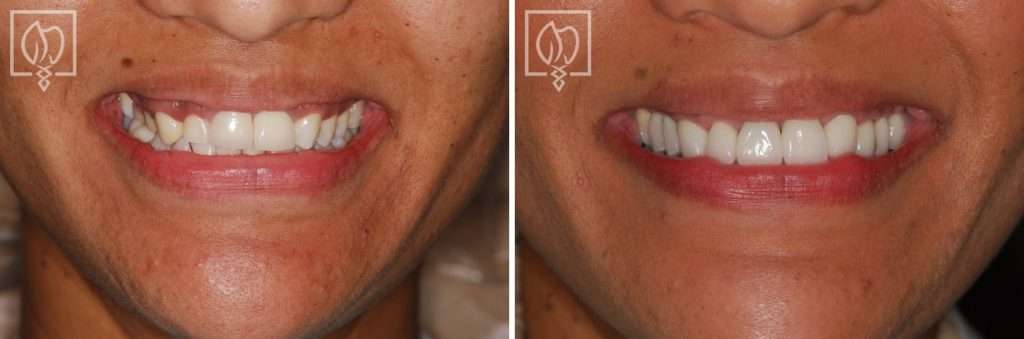
Multi-Faceted Treatment for Patient Unhappy With Her Artificial-Looking Crowns, Teeth and Gums
Many patients come to Elite Prosthetic Dentistry unhappy with the appearance of their smile. However, this particular patient presented with multiple interconnected problems that together created a smile she found deeply unsatisfying.
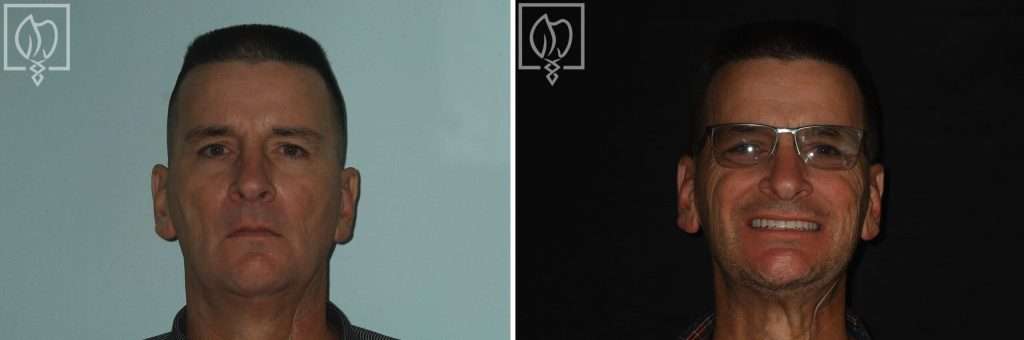
Treating Kevin’s Collapsed Bite with a Complete Smile Makeover with New Dentures
Dentures are sometimes not created to the ideal aesthetic and functional scheme. When improperly fabricated, dentures can make an individual appear almost a generation older than their actual age. They can have a poor fit that feels loose and unstable when eating or speaking, and they can actually accelerate bone loss over time.
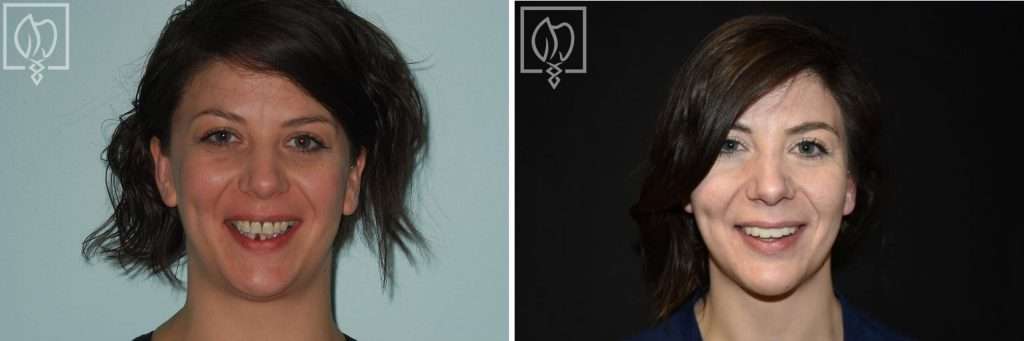
Salvaging Ms. N’s Severely Broken-Down Upper and Lower Teeth from Gum and Bone Disease
Many people in the U.S. suffer from extensive periodontal disease characterized by significant bone loss and shrinkage of the gum tissue. This condition can begin at a very young age and worsen quickly due to hereditary factors and lack of early diagnosis by their dentist.

Rejuvenating Maria’s Severely Worn Down Implant Overdentures
Many times, per year, patients come to us frustrated because their implant prosthesis is so severely worn down that they are very self-conscious and cover up their smile. They look and feel much older than their age as a result of the extensive wear of their appliance(s).
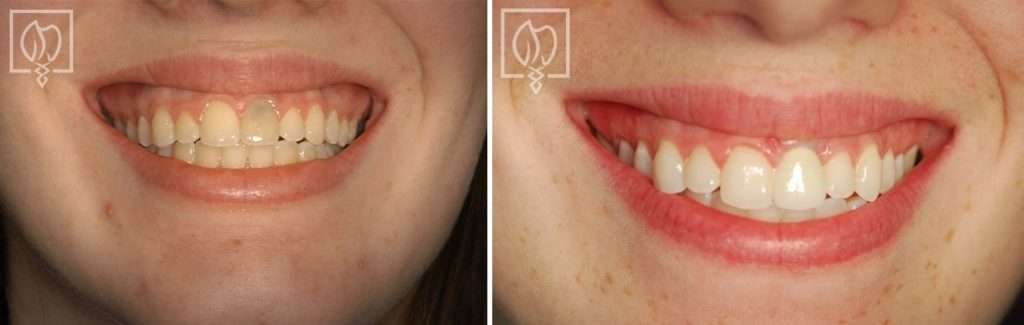
Replacing a Discolored Front Tooth with a Precision Placed Implant
Some of the most challenging restorations occur when fabricating an anterior crown to fit on an implant. Not only does one have the difficulty of matching the single front tooth to the other ones in the high visibility zone, but the dentist must also ensure the position of the underlying implant is precise through accurate preplanning and placement.
Related Articles
Deepen your knowledge with additional insights on this topic.
 Dental Implants
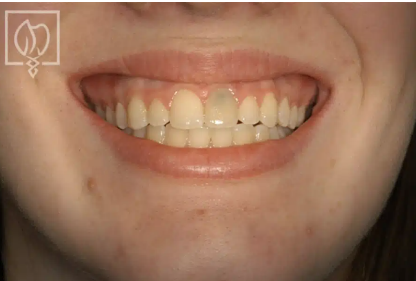
 If a Single Front Tooth is Replaced with an Implant, can it Look Natural?
A single front tooth implant can look completely natural with precision placement, custom abutments, and hand-crafted porcelain crowns. Washington, DC.
 Dental Implants
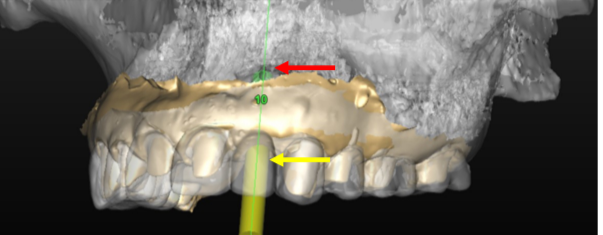
 What is Precision Implant Placement (PIP)?
Learn what Precision Implant Placement (PIP) is and how meticulous planning ensures optimal implant positioning for long-lasting results in Washington, DC.
 Dental Implants
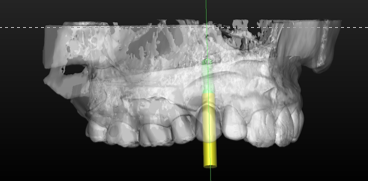
 What is the ideal Surgical Guide for Precision Implant Placement?
CBCT-based surgical guides allow virtual implant planning for precise positioning in optimal bone, ensuring predictable results in Washington, DC.
 Dental Implants
 When Should an Implant not be Done?
Not every patient is a candidate for dental implants. Learn when healthy roots, fragile bone, or steep angles may make alternatives the better choice.
 Dental Implants
 What is Staged Implant Therapy?
Staged implant therapy replaces teeth gradually using existing teeth as temporary support. A personalized alternative to All-on-X for full-arch cases.
Unveiling the Four Types of Dental Implants: Which One's for You?
Learn about the four types of dental implants - endosteal, subperiosteal, zygomatic, and mini implants - and which option may be right for your needs.
Failed All-on-4 Dental Implants: Specialist Revision Near You
Dr. Gerald Marlin provides failed all-on-4 dental implants: specialist revision services to patients throughout the Washington, DC metropolitan area. Select your community to learn more.
Ready to Transform Your Smile?
With 40+ years of experience and 3,900+ dental implants placed, Dr. Gerald Marlin delivers results that last. Schedule your consultation today.