
Full Mouth Reconstruction Revision in Vienna, VA
Vienna reconstruction revision specialist. Dr. Marlin treats failing reconstructions, bite problems, and complex prosthodontic failures.
Vienna Residents Choosing Specialized Care
Vienna residents make a deliberate choice to access specialized prosthodontic care. The 25-minute drive via I-66 East to Route 29 connects Vienna to expertise focused specifically on complex reconstruction revision. This distance is worthwhile when local options don’t provide the specialized expertise reconstruction revision requires.
Vienna’s affluent and educated population values quality in all professional services. When your full mouth reconstruction fails, accepting anything less than expert-level revision contradicts the decision-making that likely led you to the reconstruction in the first place. Specialized prosthodontic care is fundamentally different from general restorative dentistry.
Understanding Reconstruction Failure Patterns
Reconstruction failures in Vienna patients typically follow predictable patterns based on the original design approach. Some failures stem from all-on-4 implant designs that concentrate forces excessively. Others result from poor integration between natural tooth and implant-supported components. Some develop from bite force imbalances that place excessive stress on specific restorations.
Understanding which pattern applies to your situation determines the appropriate revision strategy. A reconstruction designed with proper centric relation, balanced occlusion, and force distribution across adequate support structures succeeds far more consistently than one built without these considerations. When revision becomes necessary, addressing the underlying design failure prevents repeating the same mistakes.
Early Intervention Versus Delayed Treatment
Reconstruction failure doesn’t improve without intervention. Delaying treatment typically means more problems develop in sequence. Natural tooth loss might occur adjacent to failing restorations as bite forces shift. Bone loss might progress around implants bearing excessive load. Jaw joint problems might develop from improper bite mechanics.
Eventually, delayed treatment leads to a situation far more complex and expensive to fix. Early intervention while problems are manageable often proves easier and more successful than waiting until problems become severe. Vienna residents who act promptly typically experience more straightforward revision outcomes than those who delay.
Bite Collapse and Vertical Dimension Loss
One common Vienna reconstruction failure involves gradual bite collapse. This occurs when the vertical distance between your upper and lower jaws slowly decreases. Initial signs include restorations that feel loose, contact adjustments becoming necessary every few months, or a worn appearance to front teeth accelerating beyond normal wear patterns.
Advanced bite collapse creates facial changes including wrinkles around the mouth becoming more pronounced and a “sunken” appearance. This happens because the original reconstruction wore or failed under improper load distribution. Once bite collapse begins, every restorative contact point shifts, creating a cascade of secondary failures.
Occlusal Imbalance and Stress Concentration
Some Vienna reconstructions fail because the bite is fundamentally imbalanced. Certain teeth contact heavily while others barely touch. This imbalance accelerates wear on heavily loaded teeth. Those teeth fail first, which shifts remaining bite forces to adjacent teeth, creating sequential failures throughout the arch.
Recognizing occlusal imbalance requires detailed articulation analysis. We mount models on a proper face-bow, examine contact patterns during closing, and assess lateral movement mechanics. We identify what we call “premature contacts” where certain teeth contact before achieving proper centric relation. These premature contacts concentrate force and lead to accelerated failure.
Partial Reconstructions and Selective Revision
Not all reconstructions involve all teeth. If only anterior teeth are failing while posterior teeth remain sound, selective revision of just the anterior teeth is often appropriate. This approach preserves sound restorations while addressing the problematic areas.
However, selective revision requires ensuring proper integration between anterior and posterior components. The new anterior restorations must function smoothly with existing posterior teeth, creating unified bite mechanics rather than incompatible contact patterns that might lead to future problems.
Material Failures and Fatigue Patterns
Different materials fail in different ways. Porcelain can fracture catastrophically across multiple units when subjected to excessive stress or incorrect bite force direction. Gold restorations sometimes loosen at cement lines due to improper adhesive protocol or moisture contamination during placement. Composite materials might show accelerated wear or discoloration.
Understanding material failure modes informs material selection in revision. In your new reconstruction, we select materials specifically validated for your anticipated bite forces and functional demands. Our in-house laboratory allows material testing before final commitment, ensuring selections prove durable in your specific situation.
Implant-Supported Reconstruction Failures
Implant-related reconstruction failures often trace to positioning errors or bone loss patterns. An implant positioned slightly too far forward might direct bite forces abnormally, concentrating stress on the abutment. An implant positioned at incorrect angulation creates mechanical stress incompatible with implant design parameters.
Some implant failures result from bone loss around one or more implants. This can stem from improper implant positioning, excessive bite forces, or biological factors affecting bone stability. Revision might involve adding implants to distribute forces across more support points, removing and repositioning failing implants, or transitioning to a different prosthetic design entirely.
TMJ Considerations in Revision Design
Some Vienna patients experience jaw joint problems that their original reconstruction created or worsened. Incorrect vertical dimension, improper centric relation, or unbalanced bite mechanics place stress on jaw joint structures. This stress can trigger inflammation, pain, or clicking sensations.
Properly designed reconstruction revision often resolves jaw joint problems by establishing correct jaw position and balanced bite mechanics. This requires meticulous attention to establishing your jaw’s most neutral position before designing restorations. It requires ensuring smooth, non-interfering movement patterns both in closing and during lateral movements.
Embarrassment About Failing Reconstructions
Feeling embarrassed about a failing reconstruction is completely normal and understandable. Reconstruction failure is not a reflection on your character or self-care choices. We address failing restorations regularly in our practice, regardless of how extensive the failure appears.
Our evaluation is completely non-judgmental. We see the problem objectively, understand what caused it, and focus entirely on solutions. You’re not being judged for the failure. You’re being helped to move forward.
Centric Relation and Reconstruction Success
Establishing correct centric relation is foundational to reconstruction revision success. Centric relation is your jaw’s most neutral, muscularly relaxed position. Reconstructions designed at incorrect centric relation create ongoing muscular stress as jaw muscles constantly try to reposition the jaw toward its true neutral position.
This muscular stress damages restorations progressively. Supporting muscles develop tension and fatigue. Eventually, the reconstruction fails or creates secondary problems like jaw pain. In revision, establishing correct centric relation before designing restorations prevents this cascade of problems.
Getting Here from Vienna
I-66 East to Route 29 provides the primary access route from Vienna to Georgetown. The 25-minute drive is reliable during off-peak hours. During rush periods, allow slightly longer. The route is straightforward once familiar with main arterial directions.
Vienna residents commuting to downtown DC regularly use this route, making access predictable. Our Georgetown location on Wisconsin Avenue is easily reached from Route 29 using well-marked turns.
Progressive Problem Assessment and Intervention Timing
Minor reconstruction problems often signal developing failure. We assess whether small problems like occasional looseness, minor cement loss, or small porcelain chips are stable or trending toward more significant failure. This assessment helps you decide whether to intervene proactively or monitor carefully.
The data strongly suggests that intervening early, before problems cascade, prevents major future complications. Waiting for “complete failure” typically means more extensive revision becomes necessary, requiring longer treatment timelines and greater overall cost.
Vienna Resident Values and Practice Philosophy
Vienna residents typically value quality, stability, and thoughtful decision-making. A reconstruction revision should reflect these values. Choosing specialized care despite the 25-minute distance reflects Vienna’s commitment to quality outcomes.
Our practice approach aligns with Vienna values. We explain thoroughly. We respect your intelligence. We acknowledge that you’re a sophisticated patient who understands complex concepts and deserves straightforward, detailed information rather than oversimplification.
Specialized Prosthodontic Knowledge and Training
Reconstruction revision requires specialized expertise beyond general restorative dentistry. A prosthodontist brings focused doctoral training on bite mechanics, occlusal physiology, materials science, and restoration design. This specialized knowledge determines whether revision succeeds or fails.
The difference between general dentistry attempts at revision and expert prosthodontic revision is substantial. That difference often determines your long-term outcome.
Comprehensive Diagnostic Precision
Our evaluation uses contemporary diagnostic tools. Cone beam imaging shows bone anatomy three-dimensionally, revealing bone loss patterns and implant positioning precisely. Digital bite records capture your jaw position with accuracy impossible using traditional methods.
This diagnostic precision ensures accurate assessment of what failed and why, forming the basis for appropriate revision planning.
Material Science and Durability in Revision
Materials science is core to prosthodontic training. Different materials perform differently under stress, time, and various oral conditions. Gold behaves differently than porcelain. Zirconia differs from lithium disilicate. Composite materials have entirely different properties and longevity expectations.
We select materials specifically proven for situations similar to yours, accounting for your specific bite forces, functional demands, and maintenance capability. Our in-house laboratory allows material testing and comparison before committing to your definitive restoration.
Treatment Timeline Flexibility for Vienna Patients
While typical revision timelines range from 4-6 months, we maintain flexibility for Vienna patients. We might recommend compressed timelines to minimize travel burden if preferred. Alternatively, we can extend timelines if you prefer gradual treatment with shorter appointment intervals.
We work directly with you on practical considerations balancing clinical needs with your scheduling preferences.
Comprehensive Evaluation Process
Our evaluation for Vienna patients includes all contemporary diagnostic tools. Cone beam imaging, detailed bite records using precise jaw tracking, and comprehensive restoration assessment by unit provide the complete basis for your revision plan. We document all findings clearly and explain them thoroughly before treatment.
Long-Term Success and Revision Durability
Properly designed revision reconstructions often achieve 15-20+ year longevity. This success requires addressing all failure factors from the original reconstruction rather than repeating the same approach. It requires meticulous attention to occlusal design, appropriate material selection, and commitment to maintenance protocols.
Your follow-up care and maintenance support long-term success. Regular examinations allow us to monitor stability and address any emerging concerns promptly.
Driving Distance and Investment in Quality
Driving 25 minutes for reconstruction revision confidence is a reasonable investment. The difference between expert prosthodontic revision and general dentistry attempts can be substantial. That difference often determines whether your revision succeeds or fails and how long it lasts.
For Vienna patients, the extra time is worthwhile for that certainty.
Related Resources
- Full Mouth Reconstruction Failure: Overview of why reconstructions fail and revision options
- Full Mouth Reconstruction: Proper reconstruction planning and prosthodontic design
- Dental Implants in Vienna: Implant-supported solutions for reconstruction
- Repairing Failing Implants: Solutions for implant problems
- Second Opinion Dentistry: Expert evaluation of your reconstruction
- Meet Dr. Gerald Marlin: His training and approach to complex cases
- In-House Laboratory: How our laboratory enables superior outcomes
- Patient Success Stories: Results from complex reconstruction cases
- Schedule Your Consultation: Begin your reconstruction revision evaluation
Your Vienna Reconstruction Revision
If you’re a Vienna resident considering reconstruction revision, schedule a consultation with Dr. Marlin. We’ll understand precisely what failed and why. We’ll develop a revision plan addressing all identified problems completely, preventing recurrence of similar failures.
Schedule Your Consultation or call (202) 244-2101 to discuss your reconstruction revision.
Frequently Asked Questions
If my reconstruction is failing but my life is very stable and I don't want to make changes, how do I think about this?
Reconstruction failure doesn't improve without intervention. Delaying treatment typically means more problems develop over time. Natural tooth loss might occur. Bone loss might progress. Eventually, the situation becomes worse and more complex to fix. Early intervention while problems are manageable often proves easier and more successful than waiting until problems become severe.
Can I have just my front teeth revised if my back teeth are fine?
Yes. Not all reconstructions involve all teeth. If only anterior teeth are failing and posterior teeth are sound, we revise just the anterior teeth. We ensure proper integration between anterior and posterior teeth so the revision functions optimally.
What if I'm embarrassed about my failing reconstruction when I come in for evaluation?
Feeling embarrassed is completely normal and understandable. Reconstruction failure is not a reflection on you. We address failing restorations regularly. Our evaluation is completely non-judgmental. We see the problem, understand it, and focus on solutions. You're not being judged. You're being helped.
How important is establishing centric relation for my revision to succeed?
Absolutely critical. Centric relation is your jaw's neutral position. Reconstructions designed at incorrect centric relation create ongoing muscular stress. Your jaw muscles constantly try to reposition your jaw to find neutral position. This stress damages restorations. Establishing correct centric relation is foundational to revision success.
If my reconstruction has lasted many years with just minor problems, should I wait until it completely fails before revising?
Minor problems often signal developing failure. Waiting until complete failure occurs allows more damage to develop. Intervening while the situation is manageable often prevents major future problems. We assess whether minor problems are stable or trending toward failure.
Related Patient Success Stories
Explore similar patient success stories demonstrating our expertise in advanced prosthetic dentistry.
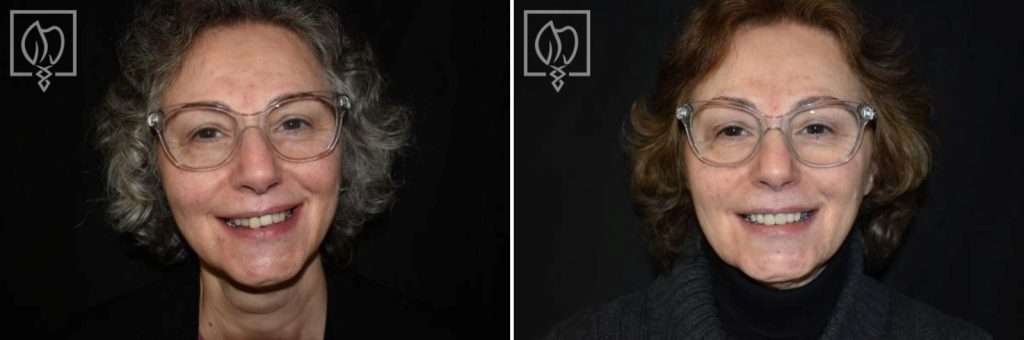
Temporary Crowns Restore Patient's Smile in Just One Day with an Immediate Smile Makeover
A patient from Potomac, Maryland, came to Elite Prosthetic Dentistry with the chief complaint of pain from a failing dental implant and its significant impact on her appearance.
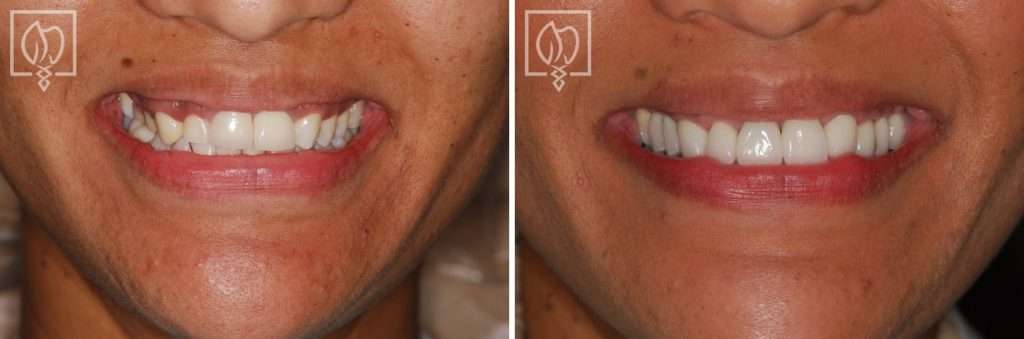
Multi-Faceted Treatment for Patient Unhappy With Her Artificial-Looking Crowns, Teeth and Gums
Many patients come to Elite Prosthetic Dentistry unhappy with the appearance of their smile. However, this particular patient presented with multiple interconnected problems that together created a smile she found deeply unsatisfying.
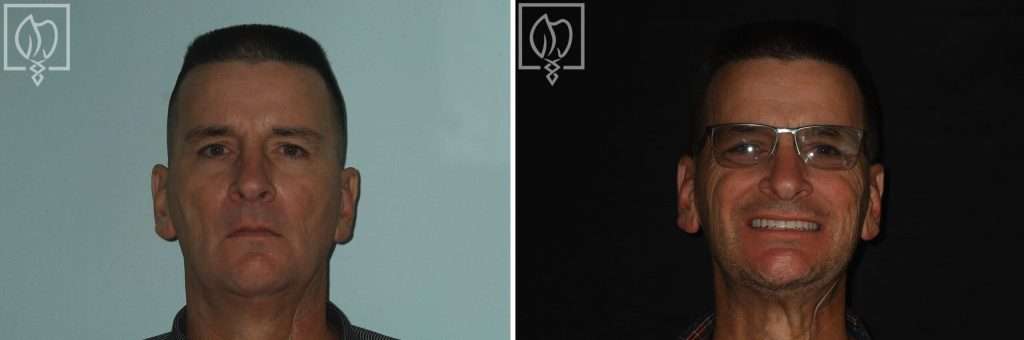
Treating Kevin’s Collapsed Bite with a Complete Smile Makeover with New Dentures
Dentures are sometimes not created to the ideal aesthetic and functional scheme. When improperly fabricated, dentures can make an individual appear almost a generation older than their actual age. They can have a poor fit that feels loose and unstable when eating or speaking, and they can actually accelerate bone loss over time.
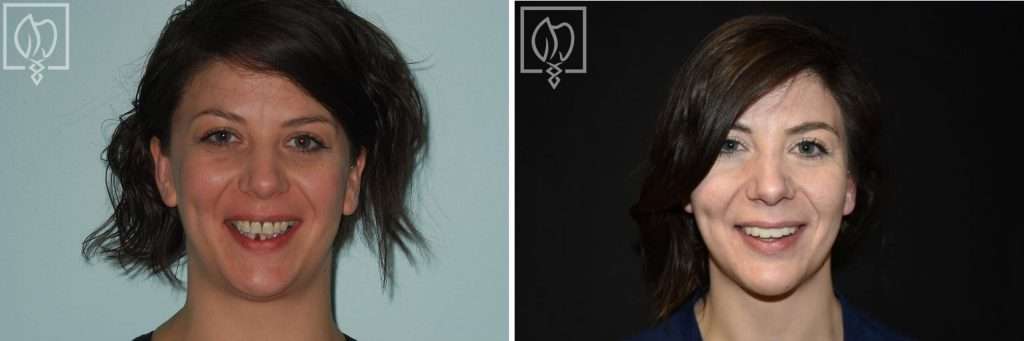
Salvaging Ms. N’s Severely Broken-Down Upper and Lower Teeth from Gum and Bone Disease
Many people in the U.S. suffer from extensive periodontal disease characterized by significant bone loss and shrinkage of the gum tissue. This condition can begin at a very young age and worsen quickly due to hereditary factors and lack of early diagnosis by their dentist.
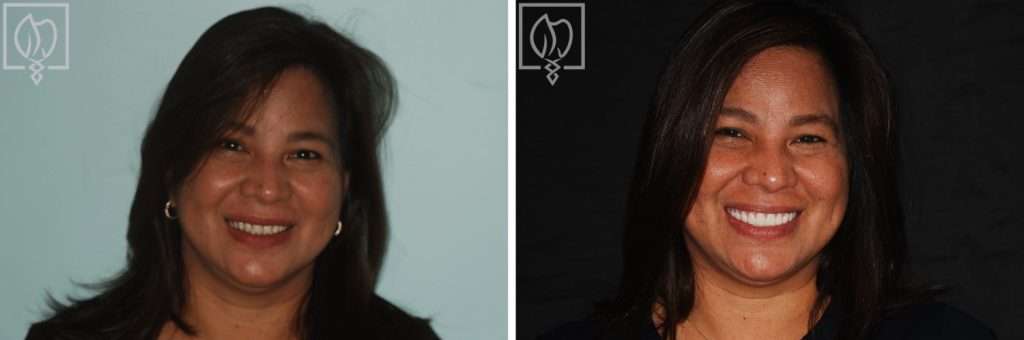
Rejuvenating Maria’s Severely Worn Down Implant Overdentures
Many times, per year, patients come to us frustrated because their implant prosthesis is so severely worn down that they are very self-conscious and cover up their smile. They look and feel much older than their age as a result of the extensive wear of their appliance(s).
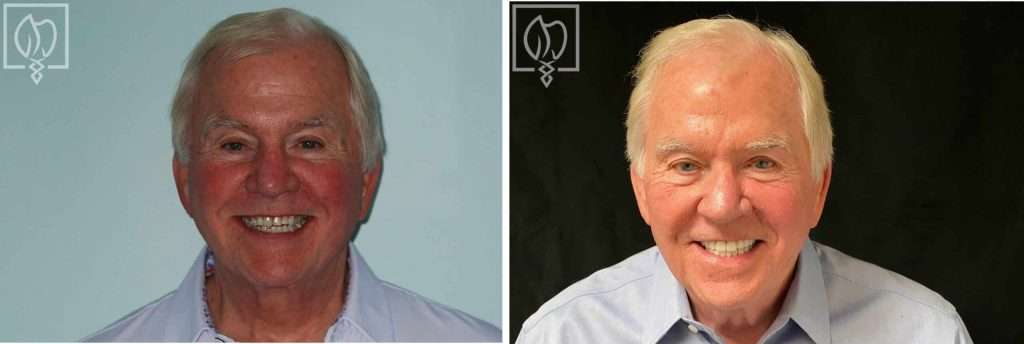
A Smile Transformation in Just Four Months: A Patient’s Dental Crown Restoration for a TV Series
A patient with dental crowns that were in poor shape was going to appear on a streaming video series on a major TV network that was scheduled to begin filming soon. Our patient, John, an author about to embark on a book tour, was anxious as his teeth were not up to his standards to appear on television.
Related Articles
Deepen your knowledge with additional insights on this topic.
 Dental Implants
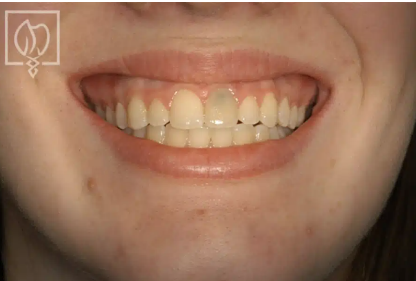
 If a Single Front Tooth is Replaced with an Implant, can it Look Natural?
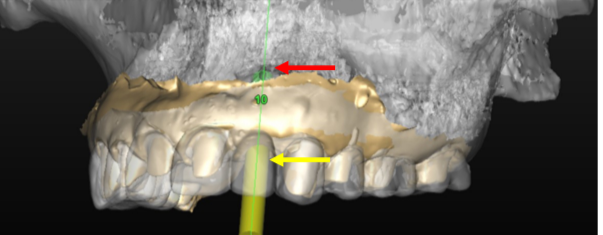
A single front tooth implant can look completely natural with precision placement, custom abutments, and hand-crafted porcelain crowns. Washington, DC.
 Dental Implants
 What is Precision Implant Placement (PIP)?
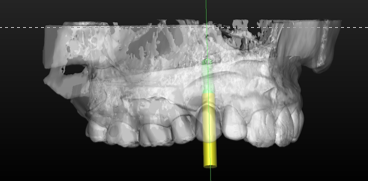
Learn what Precision Implant Placement (PIP) is and how meticulous planning ensures optimal implant positioning for long-lasting results in Washington, DC.
 Dental Implants
 What is the ideal Surgical Guide for Precision Implant Placement?
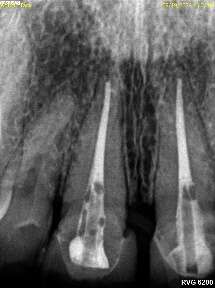
CBCT-based surgical guides allow virtual implant planning for precise positioning in optimal bone, ensuring predictable results in Washington, DC.
 Dental Implants
 When Should an Implant not be Done?
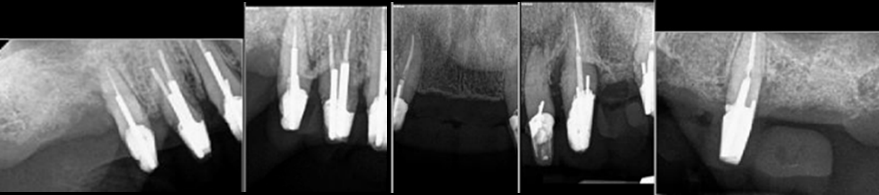
Not every patient is a candidate for dental implants. Learn when healthy roots, fragile bone, or steep angles may make alternatives the better choice.
 Dental Implants
 What is Staged Implant Therapy?
Staged implant therapy replaces teeth gradually using existing teeth as temporary support. A personalized alternative to All-on-X for full-arch cases.
Unveiling the Four Types of Dental Implants: Which One's for You?
Learn about the four types of dental implants - endosteal, subperiosteal, zygomatic, and mini implants - and which option may be right for your needs.
Our Services in Vienna
Beyond reconstruction-revision, Vienna patients rely on Dr. Gerald Marlin for a full range of advanced dental care.
More services available in Vienna:
reconstruction-revision Near Vienna
Dr. Gerald Marlin also provides reconstruction-revision services for patients in these neighboring communities.
Getting Here from Vienna
Elite Prosthetic Dentistry is conveniently located near Vienna, VA.
Vienna residents reach our office 25 minutes via I-66 East to Route 29
Address:
4400 Jenifer Street NW, Suite 220
Washington, DC 20015
Phone: (202) 244-2101
Schedule ConsultationSchedule Your Consultation from Vienna
Vienna residents trust Dr. Gerald Marlin for precision dental care. With 3,900+ implants placed and 40+ years of experience, your smile is in expert hands.