

Full Mouth Reconstruction Failure: Expert Revision
Failed full mouth reconstruction revision by specialist. Dr. Marlin diagnoses systemic failures and rebuilds smiles correctly. DC prosthodontist.
Full Mouth Reconstruction Failure: Why It Happens and How We Rebuild
A full mouth reconstruction represents one of the most significant investments in dental treatment. You make this investment hoping for improved appearance, improved function, and long-term stability. When a full mouth reconstruction fails, it affects not only your mouth but your confidence, your financial investment, and your trust in dental treatment.
The crucial understanding is that full mouth reconstruction failures are often systemic rather than random. A single error in overall design, material selection, or vertical dimension can cascade through all your restorations, causing progressive failure of multiple teeth over time. Understanding this systemic nature is essential to ensuring that corrective treatment succeeds.
Why Reconstructions Fail as Systems
Unlike individual restoration failure, which affects one or two teeth, systemic reconstruction failure affects multiple restorations in patterns that suggest a common underlying cause.
Occlusal Design Errors
The occlusal design is how your teeth contact each other during biting, chewing, and jaw movement. Incorrect occlusal design creates stress concentration at certain teeth, leading to progressive failure at those stress points. For example, if posterior restorations are not positioned to receive occlusal force directly down their long axes, they experience lateral forces that stress the restoration and the underlying tooth structure. Over time, restorations at stress concentration points fracture or fail.
An occlusal design that creates excessive force on anterior teeth while insufficient force is directed to posterior teeth distributes bite forces unevenly. This imbalance causes anterior restorations to work too hard while posterior restorations are inadequately engaged. The result is progressive anterior restoration failures while posterior restorations remain stable.
When occlusal design is correct, bite forces are distributed evenly across all restorations, with each tooth receiving force appropriate to its anatomy and material properties. Incorrect occlusal design creates predictable failure patterns that appear to be many different problems but are actually all caused by one design error.
Vertical Dimension Miscalculation
Vertical dimension refers to the vertical distance between your upper and lower teeth when your jaws are closed. If vertical dimension is set too low (meaning your jaws are closed more than they should be), every restoration experiences excessive bite force. Over time, all restorations experience accelerated wear, fatigue, and failure from constant excessive force.
If vertical dimension is set too high, your bite feels uncomfortable, your jaw muscles are strained, and you may experience TMJ problems. Additionally, restorations designed with excessive vertical dimension may create aesthetic problems such as excessive gum show or a surprised expression.
Many failed reconstructions have incorrect vertical dimension. The prosthodontist may have miscalculated during original treatment, or the vertical dimension may have been correct initially but has shifted over time due to restoration wear, implant settling, or jaw remodeling.
Material Incompatibility or Inadequate Selection
Different restorative materials have different strength properties and different failure modes. When materials are selected without considering the patient’s specific bite force, chewing patterns, or functional demands, failure results.
For example, acrylic restorations can be adequate for patients with low bite force and minimal parafunction, but they are inappropriate for patients with high bite force or bruxism (teeth grinding). An acrylic reconstruction prescribed for a patient with heavy bite force will fail rapidly. Similarly, some ceramics are appropriate for individual restorations but inadequate when used for all-ceramic reconstructions spanning multiple teeth without sufficient support.
Additionally, when different materials are used in the same mouth (some teeth ceramic, some acrylic, some composite), the different wear rates and different mechanical properties can create cascading problems where wear in one material creates problems in adjacent materials.
Progressive Failure From Single Point of Failure
In systemic failures, one restoration or one area of the reconstruction may fail first, and this initial failure becomes a stress concentration point that causes progressive failure of adjacent or opposing restorations. For example, if a posterior crown fractures and is not replaced promptly, the gap in your bite causes adjacent teeth to experience abnormal forces. These adjacent teeth then fail, propagating the failure pattern.
Similarly, if the implant fails in an implant-supported reconstruction, the forces that implant was carrying are suddenly redirected to natural teeth or other implants, creating stress concentration that causes sequential failures. A single point of failure can initiate a cascade of failures throughout the reconstruction if the cause of the initial failure is not diagnosed and corrected.
Commercial Dental Center Problems and Volume-Driven Shortcuts
Large commercial dental centers that specialize in all-on-x implant reconstructions and other high-volume procedures often have higher failure rates than specialized prosthodontic practices. This is not because the dentists are less competent but because the economic model drives toward efficiency and speed rather than customization and meticulous execution.
The ClearChoice Model and Its Limitations
The ClearChoice model, which operates as a franchise of high-volume implant centers, has become known for this volume-driven approach. While some ClearChoice cases succeed, failure rates appear to be significantly higher than in specialized prosthodontic practices, based on patient reports and independent analyses.
ClearChoice cases often involve:
Minimal face-to-face consultation time with patients. Limited diagnostic imaging (sometimes only basic radiographs). Standard surgical templates rather than customized surgical guides based on detailed planning. Rapid implant placement in a single day without adequate consideration of individual anatomy. Limited laboratory time for prosthesis fabrication, with assembly-line production methods. Use of less expensive materials (acrylic rather than zirconia, for example). Minimal chairside refinement and adjustment time. Limited follow-up care and responsiveness to complications.
When these shortcuts are taken, the reconstruction may look acceptable initially but is often susceptible to failures that appear months or years later. By that time, the patient is responsible for costly revision treatment.
General Dentist Limitations
General dentists may lack the specialized training to diagnose and manage complex reconstruction failures. They may recognize that something is wrong but may not have the expertise to determine what caused the failure or what comprehensive approach would correct it. Attempting to revise a failed reconstruction without specialized prosthodontic expertise often results in repeated failure because the root cause of the original failure was not diagnosed and addressed.
The Specialist Evaluation Protocol
When a full mouth reconstruction fails, proper diagnosis requires systematic evaluation that identifies the specific causes and determines what comprehensive approach will succeed.
Clinical Records Review and Timeline Analysis
We begin by obtaining all records from the original reconstruction: treatment planning records, radiographs, photographs, bite records, prosthesis design documentation, and notes about any problems that have occurred since placement. We analyze the timeline of failures to determine if they are random or follow a pattern.
If all restorations failed simultaneously, the cause is likely material failure or a catastrophic event. If restorations failed sequentially with a pattern (for example, all posterior crowns failing first, then anterior teeth failing later), this suggests systemic stress concentration or progressive failure from a single point. The timeline of failures tells us much about what went wrong.
Bite Evaluation and Vertical Dimension Assessment
We perform comprehensive bite evaluation using centric relation records (position of your jaws with muscles relaxed, not forced), face-bow mounting (recording your jaw position relative to your facial anatomy), and articulator analysis (analyzing bite relationships on a mechanical model). This evaluation determines whether the original vertical dimension is correct, whether occlusal design is appropriate, and whether bite relationships are contributing to your failures.
We compare current bite relationships to photographs and records from before your original reconstruction to determine whether vertical dimension or bite relationships have changed since original treatment.
Assessment of Individual Restoration Failures
We examine each failed restoration to determine the specific failure cause: fracture, decay, margin breakdown, loose abutment, or other problems. When we examine multiple restorations, we look for patterns that suggest a common cause affecting all of them.
Comprehensive Material Assessment
We evaluate what materials were used in your original reconstruction and assess whether those materials are appropriate for your specific bite force and functional demands. We evaluate wear patterns in existing restorations to determine your bite force characteristics. We assess whether material incompatibility exists between different restorations.
Radiographic and Imaging Analysis
If implants are involved in your reconstruction, we perform detailed imaging to assess implant position, bone support around implants, implant survival, and any progressive bone loss. We compare recent imaging to original imaging to determine whether bone loss is progressive or stable.
Functional Analysis
We assess your chewing patterns, bite force, and whether parafunction (bruxism or clenching) is present. These functional characteristics significantly influence what materials and what designs will succeed in your mouth. A reconstruction designed without considering your high bite force will fail; a reconstruction designed for your specific functional demands will succeed.
The Revision Approach
Revision of a failed full mouth reconstruction must be fundamentally different from the original treatment approach that failed.
Complete System Redesign
Rather than attempting to repair individual failed restorations, we address the entire reconstruction system. We establish correct vertical dimension based on your facial anatomy and functional requirements. We design occlusal relationships that distribute bite forces evenly. We select materials appropriate for your bite force and function. We establish comprehensive treatment goals that address appearance, function, comfort, and stability.
This systemic redesign prevents the cascade of failures that occurred with your original reconstruction.
Diagnostic Wax-Up and Bite Record Establishment
Before any tooth preparation, we fabricate a diagnostic wax-up that shows your corrected smile and allows you to evaluate the redesigned aesthetics. We establish comprehensive bite records that will guide all subsequent work. Your approval of the diagnostic design ensures that the reconstruction will match your aesthetic and functional goals.
Staged Reconstruction Approach
Rather than replacing all restorations simultaneously, we often use a phased approach where we replace restorations in stages, verifying that each phase is working correctly before proceeding to the next. This allows us to identify and correct any problems early rather than discovering them after all restorations are placed.
Laboratory Fabrication With Iterative Refinement
Your permanent restorations are fabricated with direct prosthodontist oversight, ensuring that each restoration is designed and fabricated to the specific principles that will allow your reconstruction to succeed. We verify material properties, check occlusal design throughout fabrication, and ensure that every restoration is being fabricated to the highest standards.
Extensive Chairside Refinement
When your restorations are placed, we spend considerable time evaluating occlusion, refining bite relationships, adjusting contours, and verifying that every aspect of the reconstruction is working properly. This chairside time is when we verify that the reconstruction is correct before you leave the office.
Comprehensive Follow-Up Protocol
We schedule follow-up visits at one week, one month, three months, six months, and one year to verify stability, identify and address any emerging problems, and ensure that your reconstruction is functioning optimally. This extended follow-up identifies problems early when they are easiest to correct.
Why Rushing Revision Leads to Repeat Failure
One reason reconstructions fail is that the original treatment was rushed, with inadequate diagnostic time, limited planning, and minimal chairside refinement. When revision is attempted, the same rushing often occurs, resulting in the revision failing for similar reasons.
Proper revision requires time:
Time for comprehensive diagnosis of what went wrong. Time for detailed treatment planning and bite record establishment. Time for diagnostic mock-ups and patient approval. Time for careful tooth preparation and temporary restoration placement. Time for meticulous laboratory fabrication with iterative refinement. Time for extensive chairside adjustment and refinement. Time for adequate follow-up to verify long-term success.
Revision that skips these phases to save time and cost almost inevitably fails. The investment in time during revision treatment is the investment that prevents future failures.
Your Next Step
If you have experienced failure of a full mouth reconstruction, do not accept that your situation is hopeless or that revision will inevitably fail. Systemic failures can be corrected through comprehensive diagnosis and properly planned, properly executed revision treatment.
Schedule a consultation with a specialist prosthodontist to evaluate your failed reconstruction. We will diagnose what specifically went wrong, explain why the original treatment failed, and present a realistic plan for reconstruction that will succeed. Your smile can be restored to function and appearance that meets your long-term expectations.
Your Best Smile Is Within Reach
Schedule a consultation with Dr. Gerald Marlin to discuss your treatment options and take the first step toward a healthier, more confident smile.
Frequently Asked Questions
Why do some full mouth reconstructions fail as complete systems rather than just individual restorations?
Full mouth reconstructions involve multiple restorations (often eight or more teeth) that must work together as an integrated system. The bite design, vertical dimension, posterior support, and material selections all influence how every restoration functions. When systemic errors occur in the original reconstruction, the failure cascades through all the restorations. For example, if the original vertical dimension was set too low, every restoration will experience excessive force during chewing, leading to progressive failures. If occlusal design creates stress concentration at certain locations, restorations fail sequentially at those stress points. A single error in overall design can cause multiple restorations to fail over time, making it appear as if many things went wrong when actually one fundamental design error caused all the failures.
What is the difference between individual restoration failure and systemic reconstruction failure?
Individual restoration failure means one or two restorations fail while others remain stable and functional. This suggests the failure is localized to the fabrication or material properties of specific restorations. Systemic reconstruction failure means multiple restorations fail sequentially, often in patterns that suggest a common cause affecting all restorations. For example, if all your posterior crowns fracture within a short timeframe, this suggests systemic problems (excessive bite force, inadequate material strength, vertical dimension too high, or parafunction such as bruxism). If multiple restorations fail with different problems (some decay, some fracture, some have aesthetic issues), this suggests the entire treatment approach was flawed. Distinguishing between individual and systemic failure is critical because the correction approach differs fundamentally.
How do commercial dental centers like ClearChoice create higher failure rates?
Commercial all-on-x implant centers operate on high-volume, cost-driven models where efficiency and speed are prioritized over customized treatment planning and meticulous execution. Common shortcuts include: inadequate patient assessment and face-to-face evaluation time, limited diagnostic imaging and planning, using standard implant positioning templates rather than customized placement, using less expensive materials (acrylic rather than zirconia), minimal laboratory time per case, assembly-line prosthesis fabrication with limited refinement, and inadequate follow-up care to catch early problems. Additionally, these centers may have limited expertise in handling complications or revising failed cases. The volume-based economic model creates incentive to move cases through quickly rather than investing the time that complex cases require. This results in higher failure rates and patients who need extensive, expensive revision treatment.
What does a prosthodontist evaluate when assessing a failed reconstruction?
A specialist assessment includes: reviewing all clinical records and radiographs from the original reconstruction, analyzing bite records and occlusal relationships to determine if vertical dimension is correct, evaluating all restorations for individual failure causes, examining the pattern of failures to identify systemic problems, assessing material properties to determine if materials are appropriate, evaluating the timeline of failures to determine if they are progressive from a single cause, evaluating jaw function and whether parafunction is present, assessing your current facial appearance and whether vertical dimension or facial support has changed, and analyzing whether the original treatment plan was fundamentally sound or conceptually flawed.
Can some teeth from a failed reconstruction be salvaged, or does everything need to be replaced?
Some restorations from a failed reconstruction may be salvageable if they are structurally sound and the original design was adequate. However, in most systemic failures, replacing all restorations is advisable because the original design was fundamentally flawed. Keeping some failed restorations while replacing others creates a mixed system where new restorations must work around the problems of old ones. Additionally, if the original vertical dimension was incorrect or the original occlusal design was flawed, keeping any of those restorations propagates the original systemic problem to the new restorations. Most prosthodontists recommend starting fresh with complete replacement and establishing correct vertical dimension, appropriate occlusal design, and suitable materials throughout.
How long does revision of a failed full mouth reconstruction take?
Comprehensive revision of a failed full mouth reconstruction typically requires eight to twelve months from initial evaluation to completion of all restorations and follow-up phases. This timeline includes thorough evaluation of the original failure (2-4 weeks), comprehensive treatment planning with bite records and face-bow mounting (2-3 weeks), diagnostic mock-ups for patient approval (1-3 weeks), tooth preparation and temporary restoration placement (1-2 weeks), permanent restoration fabrication with iterative refinement (6-8 weeks), seating and extensive chairside refinement (2-4 hours minimum), and follow-up visits to verify long-term stability (6 months). Rushing this timeline increases the risk of repeating the original failure. Time invested in proper planning and execution prevents revision failures.
What causes a revision full mouth reconstruction to fail when the original already failed?
Revision failures happen when the prosthodontist does not adequately diagnose what caused the original failure, repeats similar treatment approaches, or fails to establish fundamentally different treatment principles. For example, if the original vertical dimension was too low and caused the failures, but the revision is also done with vertical dimension set too low, the revision will fail similarly. If the original occlusal design was flawed and the revision uses a similar approach, systemic failures will recur. Revision success requires thorough diagnosis of original failures, establishment of different and more sound treatment principles, material selection appropriate for your specific bite force and function, and commitment to adequate fabrication time and chairside refinement.
Related Patient Success Stories
Explore similar patient success stories demonstrating our expertise in advanced prosthetic dentistry.

Temporary Crowns Restore Patient's Smile in Just One Day with an Immediate Smile Makeover
A patient from Potomac, Maryland, came to Elite Prosthetic Dentistry with the chief complaint of pain from a failing dental implant and its significant impact on her appearance.
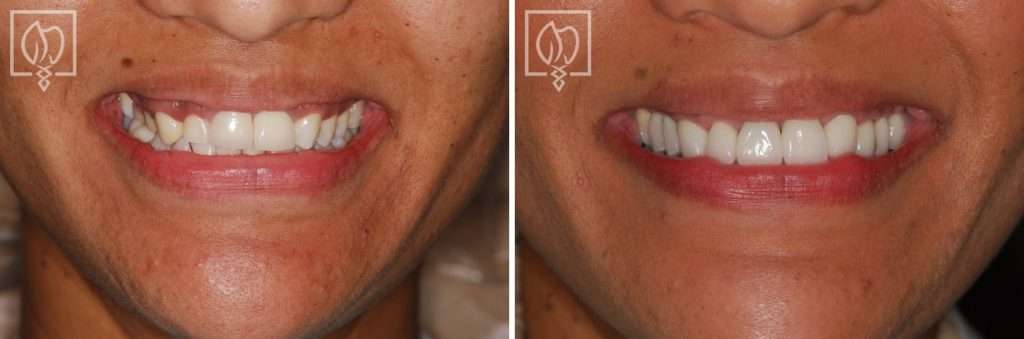
Multi-Faceted Treatment for Patient Unhappy With Her Artificial-Looking Crowns, Teeth and Gums
Many patients come to Elite Prosthetic Dentistry unhappy with the appearance of their smile. However, this particular patient presented with multiple interconnected problems that together created a smile she found deeply unsatisfying.
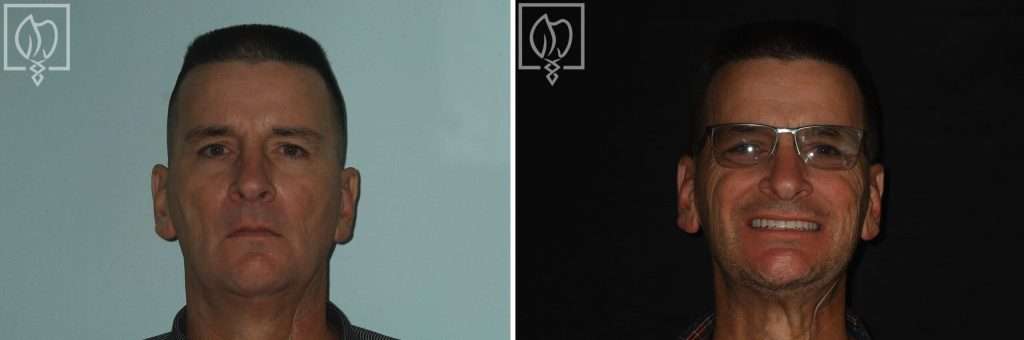
Treating Kevin’s Collapsed Bite with a Complete Smile Makeover with New Dentures
Dentures are sometimes not created to the ideal aesthetic and functional scheme. When improperly fabricated, dentures can make an individual appear almost a generation older than their actual age. They can have a poor fit that feels loose and unstable when eating or speaking, and they can actually accelerate bone loss over time.

Salvaging Ms. N’s Severely Broken-Down Upper and Lower Teeth from Gum and Bone Disease
Many people in the U.S. suffer from extensive periodontal disease characterized by significant bone loss and shrinkage of the gum tissue. This condition can begin at a very young age and worsen quickly due to hereditary factors and lack of early diagnosis by their dentist.

Rejuvenating Maria’s Severely Worn Down Implant Overdentures
Many times, per year, patients come to us frustrated because their implant prosthesis is so severely worn down that they are very self-conscious and cover up their smile. They look and feel much older than their age as a result of the extensive wear of their appliance(s).
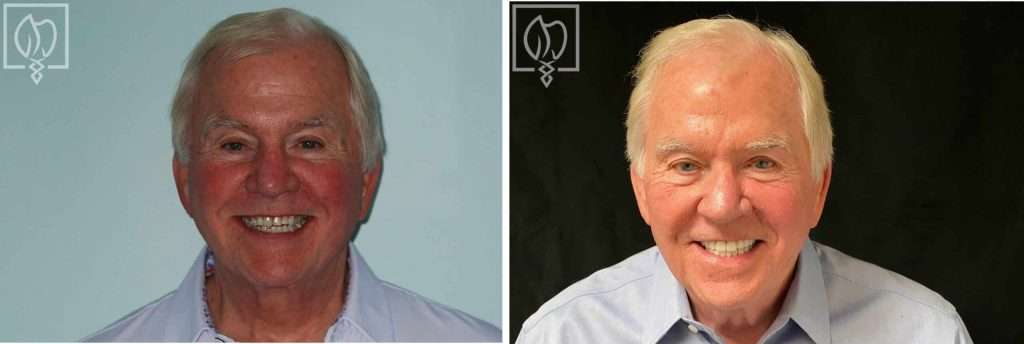
A Smile Transformation in Just Four Months: A Patient’s Dental Crown Restoration for a TV Series
A patient with dental crowns that were in poor shape was going to appear on a streaming video series on a major TV network that was scheduled to begin filming soon. Our patient, John, an author about to embark on a book tour, was anxious as his teeth were not up to his standards to appear on television.
Related Articles
Deepen your knowledge with additional insights on this topic.
 Dental Implants
 If a Single Front Tooth is Replaced with an Implant, can it Look Natural?
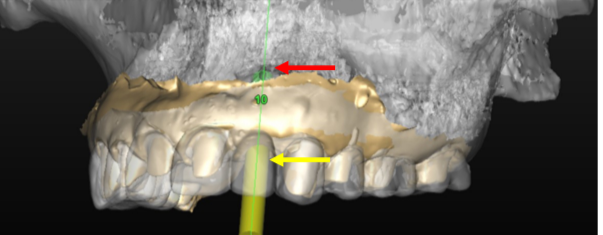
A single front tooth implant can look completely natural with precision placement, custom abutments, and hand-crafted porcelain crowns. Washington, DC.
 Dental Implants
 What is Precision Implant Placement (PIP)?
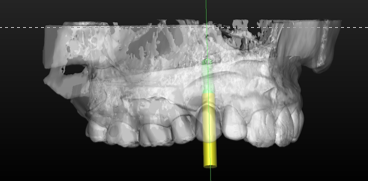
Learn what Precision Implant Placement (PIP) is and how meticulous planning ensures optimal implant positioning for long-lasting results in Washington, DC.
 Dental Implants
 What is the ideal Surgical Guide for Precision Implant Placement?
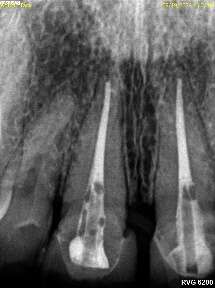
CBCT-based surgical guides allow virtual implant planning for precise positioning in optimal bone, ensuring predictable results in Washington, DC.
 Dental Implants
 When Should an Implant not be Done?
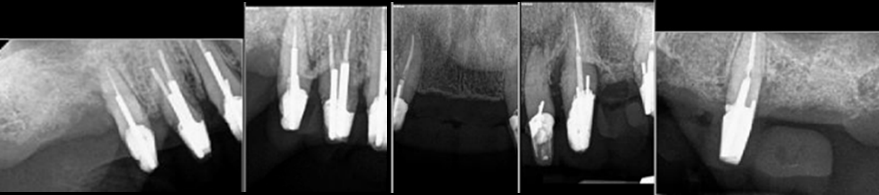
Not every patient is a candidate for dental implants. Learn when healthy roots, fragile bone, or steep angles may make alternatives the better choice.
 Dental Implants
 What is Staged Implant Therapy?
Staged implant therapy replaces teeth gradually using existing teeth as temporary support. A personalized alternative to All-on-X for full-arch cases.
Unveiling the Four Types of Dental Implants: Which One's for You?
Learn about the four types of dental implants - endosteal, subperiosteal, zygomatic, and mini implants - and which option may be right for your needs.
Full Mouth Reconstruction Failure: Expert Revision Near You
Dr. Gerald Marlin provides full mouth reconstruction failure: expert revision services to patients throughout the Washington, DC metropolitan area. Select your community to learn more.
Ready to Transform Your Smile?
With 40+ years of experience and 3,900+ dental implants placed, Dr. Gerald Marlin delivers results that last. Schedule your consultation today.