

Crown & Bridge Problems in McLean, VA
McLean residents with failing crowns and bridges receive expert evaluation and specialized care from Dr. Marlin, a specialty-trained prosthodontist just 15 minutes away via Georgetown Pike or Chain Bridge Road.
McLean’s affluent neighborhoods, estates, and country-club culture attract successful professionals and families who value quality in every aspect of their lives. McLean residents typically maintain high standards for their dental care and expect expert evaluation when crown or bridge problems develop.
Being just 15 minutes away via Georgetown Pike or Chain Bridge Road, Dr. Marlin’s practice is conveniently located for McLean residents seeking specialist consultation for complex restorative issues.
The Quality Question: When Adjustment Isn’t the Best Solution
Some McLean patients are offered crown adjustment or recementation when they suspect the restoration might actually need replacement. The tension between cost (adjustment is cheaper) and long-term value (replacement might be better) creates uncertainty.
Getting a prosthodontic second opinion resolves this doubt. Dr. Marlin can assess whether adjustment will provide adequate long-term solution or whether replacement is the wiser approach. Sometimes adjustment works fine. Other times, it’s a temporary fix that delays inevitable replacement.
Understanding When Replacement Is the Better Investment
For McLean residents who invest carefully in major purchases, understanding when crown replacement is the better long-term investment helps decision-making. A crown that needs adjustment now and will likely need adjustment again in a few years is less economical long-term than replacing it now with a properly designed restoration.
Dr. Marlin presents these long-term cost-benefit analyses, helping McLean patients make decisions aligned with their financial priorities.
Complex Build-up and Post Scenarios
Some McLean patients have compromised tooth structure beneath their existing crowns. Internal decay, previous root canal therapy, or fracture may have destroyed significant tooth structure. Rebuilding the tooth to support a new crown becomes necessary.
Options include placing a post into the root canal for retention, building up lost internal structure, or in some cases, implant replacement if the tooth is too compromised. Dr. Marlin evaluates these situations in detail and makes specific recommendations.
Getting Here from McLean
From McLean, take Georgetown Pike or Chain Bridge Road heading toward Washington D.C. The drive is approximately 15 minutes depending on traffic. Both routes offer scenic drives through established areas.
Adjacent Crown Relationships
McLean patients sometimes have multiple crowns adjacent to each other. How one crown is designed and positioned affects the adjacent crown. When replacing one crown while adjacent crowns remain, the new crown should be designed considering the neighboring restoration.
Sometimes replacing adjacent crowns together produces better overall esthetic and functional results than replacing only the problematic one.
Material Longevity and Cost-benefit Analysis
For McLean patients evaluating material options for crown replacement, understanding the relationship between material cost and expected longevity helps guide selection. A more expensive zirconia crown that lasts 20+ years may be more economical long-term than a less expensive material requiring replacement in 10-12 years.
Dr. Marlin discusses this analysis with McLean patients to help them make material selections aligned with their long-term thinking.
Preventive Monitoring Strategy
For McLean residents with multiple crowns or bridges, Dr. Marlin recommends a preventive monitoring approach: periodic professional evaluation to catch early problems, digital imaging every few years to identify decay or bone loss, and strategic treatment planning to replace crowns before they fail rather than after.
This proactive approach prevents emergencies and often proves more economical than crisis management.
Scenario: The Crowns Failing Sequentially
Some McLean patients experience crowns failing sequentially rather than all at once: one crown becomes loose, it’s replaced, then another crown develops problems a few years later. This pattern often indicates systemic issues (like aggressive decay or bite problems) rather than coincidence.
Comprehensive evaluation helps identify whether a bite problem is predisposing multiple crowns to failure, allowing treatment that prevents further failures.
Esthetic Expectations for McLean Patients
McLean residents often value appearance highly and want restorations that look natural and beautiful. Lithium disilicate and high-quality all-ceramic restorations meet these expectations. The in-house dental laboratory allows Dr. Marlin to oversee fabrication personally, ensuring esthetic results that McLean patients desire.
Consultation and Detailed Planning
Dr. Marlin’s consultation with McLean patients includes thorough examination, digital imaging, detailed explanation of findings, and comprehensive discussion of options. McLean residents appreciate the time invested in careful evaluation and planning.
Bridge Viability in Long-term Planning
McLean residents with bridges sometimes ask whether their bridge will last another decade or whether replacement should be planned soon. Evaluation of abutment tooth health, bone support, and bridge condition guides this assessment.
Some bridges can be confidently maintained for many more years. Others show early signs of problems and should be replaced proactively.
Related Resources
Learn more about crown and bridge problems at our Crown and Bridge Problems page. To understand Dr. Marlin’s specialty training and approach, visit Meet Dr. Gerald Marlin. Explore our dental crowns in McLean and prosthodontist services in McLean for expert care nearby.
McLean residents with crown and bridge concerns deserve evaluation by a specialist who understands complex restorative situations thoroughly and communicates clearly about long-term implications. Dr. Marlin provides that expertise just 15 minutes from McLean.
Clinical Pearls for Crown Success
For McLean patients, understanding specific clinical factors that determine crown success helps with informed decision-making. A crown’s success depends on multiple factors working together.
Margin positioning is crucial. A margin placed too far below the gum line creates cleaning challenges and accelerates gum disease. A margin placed too far above the gum line may be visible and may not seal the tooth adequately.
Margin preparation should be smooth and well-defined, creating a finish line that the lab technician can detect and replicate. The crown material must be selected appropriately for the tooth’s location and function.
The supporting tooth must have adequate remaining structure. A tooth with minimal healthy tooth structure remaining requires additional support through post and core placement.
The bite must be properly integrated so the crown doesn’t receive excessive force or interfere with the patient’s normal bite pattern.
The Missing Tooth Scenario: Bridge vs. Implant
For McLean patients missing a tooth and considering replacement, understanding the fundamental differences between bridges and implants helps with decision-making.
A bridge uses adjacent teeth as support. It requires the adjacent teeth to have orthodontic preparation and crown placement. The bridge will eventually need replacement, just as the supporting crowns will. The procedure is less expensive initially.
An implant replaces the missing tooth directly with a titanium post integrated into the bone. It doesn’t require modification of adjacent teeth. Implants have high success rates (95%+ in appropriate candidates) and can last decades or longer. The initial cost is higher, but long-term value may justify the investment.
For McLean patients planning their treatment, considering both options with realistic understanding of each helps guide the best decision for their individual situation.
Understanding Crown Fracture Risk
Some McLean residents have experienced crown fractures. Understanding which materials are most fracture-resistant helps prevent recurrence.
All-ceramic crowns are beautiful but fracture more readily when heavy forces are applied. Zirconia is exceptionally fracture-resistant and rarely fractures. Lithium disilicate offers good balance of esthetics and fracture resistance.
For McLean patients with history of crown fractures or heavy bite forces, material selection emphasizing durability helps prevent future fractures.
Digital Imaging and Early Problem Detection
Modern digital radiography reveals problems invisible to visual examination. Decay developing at a crown margin appears as a radiolucent area on the radiograph. Bone loss around teeth appears as reduced bone height. Margin gaps show as dark lines between crown and tooth.
For McLean residents, periodic digital imaging (every 2-3 years for crowns older than 10 years) helps detect problems early. Early detection prevents problems from becoming advanced.
Addressing Bite Complications
Some McLean residents experience bite problems after crown replacement. The new crown may contact opposing teeth at a slightly different angle than the original crown did. Excessive contact (the new crown hits before other teeth) creates occlusal trauma.
Bite adjustment is usually straightforward. The dentist adjusts the new crown’s surface until the bite feels normal and balanced. This is typically done at the delivery appointment or shortly after.
Understanding Recurrent Crown Problems
Some McLean residents experience the same crown problem repeatedly. A crown becomes loose, it’s recemented, months later it’s loose again. This pattern indicates the underlying crown margin isn’t sealed properly.
Recementation is temporary. The crown must be replaced for permanent solution. The new crown’s margin is designed and positioned more carefully to prevent recurrence.
Bridge Durability and Design
When McLean residents require bridge replacement, bridge design significantly impacts longevity. A bridge that distributes forces evenly across abutment teeth lasts longer than one concentrating forces.
A prosthodontist considers the specific abutment teeth’s anatomy and strength and designs the bridge accordingly. The design can be customized to optimize force distribution.
Early Diagnosis and Prevention
For McLean residents with aging crowns, early diagnosis of problems prevents escalation. A crown showing marginal deterioration can be replaced before decay develops. A crown with early marginal gaps can be replaced before the gap widens.
Waiting for problems to become obvious often means problems have already advanced significantly.
(202) 244-2101
Frequently Asked Questions
Is it possible that my crown needs replacement but my dentist is recommending adjustment because it's less expensive?
This is a legitimate concern some McLean patients have. The answer depends on the specific situation. If the crown margin is poorly positioned or if underlying problems are developing, replacement is the better long-term solution even though adjustment is less expensive initially. A prosthodontist's second opinion clarifies the true situation.
What's the purpose of a build-up or post when replacing a crown?
When a tooth has lost significant internal structure to decay or fracture, a build-up (core restoration) or post is placed to provide retention and support for the new crown. A post anchors into the root canal. A build-up adds back internal tooth structure. Both help ensure the new crown has adequate support.
Can a bridge be temporarily repaired while I'm deciding on replacement?
Limited temporary repairs are sometimes possible, such as adhesive reinforcement of the margin. However, these are truly temporary and will likely fail again. Rather than multiple temporary repairs, definitive evaluation leading to permanent treatment is usually more practical.
Should I be concerned about multiple crowns in a row affecting each other?
Yes. Adjacent crowns should be designed with consideration for how forces distribute between them. If one crown is replaced and the adjacent crown is old, the replacement crown should be designed considering the neighboring restoration. Sometimes adjacent crowns benefit from being replaced together for optimal results.
How do I know if my crown is too tight or too loose?
A crown that's too tight would feel jammed or uncomfortable when seated and would require force to unseat. A crown that's too loose would feel unstable or move when you touch it with your tongue. Properly adapted crowns feel comfortable and stable without being jammed.
Related Patient Success Stories
Explore similar patient success stories demonstrating our expertise in advanced prosthetic dentistry.

Temporary Crowns Restore Patient's Smile in Just One Day with an Immediate Smile Makeover
A patient from Potomac, Maryland, came to Elite Prosthetic Dentistry with the chief complaint of pain from a failing dental implant and its significant impact on her appearance.
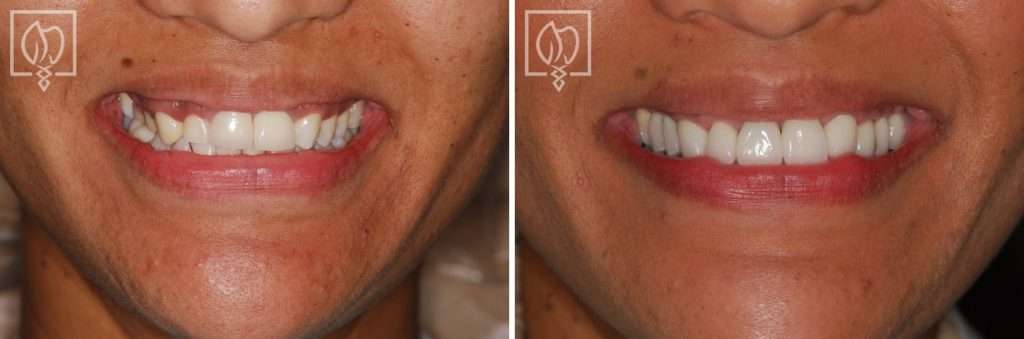
Multi-Faceted Treatment for Patient Unhappy With Her Artificial-Looking Crowns, Teeth and Gums
Many patients come to Elite Prosthetic Dentistry unhappy with the appearance of their smile. However, this particular patient presented with multiple interconnected problems that together created a smile she found deeply unsatisfying.

Salvaging Ms. N’s Severely Broken-Down Upper and Lower Teeth from Gum and Bone Disease
Many people in the U.S. suffer from extensive periodontal disease characterized by significant bone loss and shrinkage of the gum tissue. This condition can begin at a very young age and worsen quickly due to hereditary factors and lack of early diagnosis by their dentist.
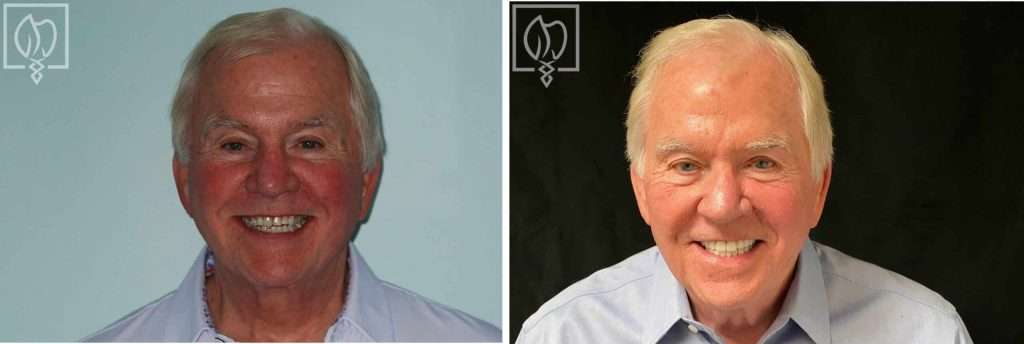
A Smile Transformation in Just Four Months: A Patient’s Dental Crown Restoration for a TV Series
A patient with dental crowns that were in poor shape was going to appear on a streaming video series on a major TV network that was scheduled to begin filming soon. Our patient, John, an author about to embark on a book tour, was anxious as his teeth were not up to his standards to appear on television.
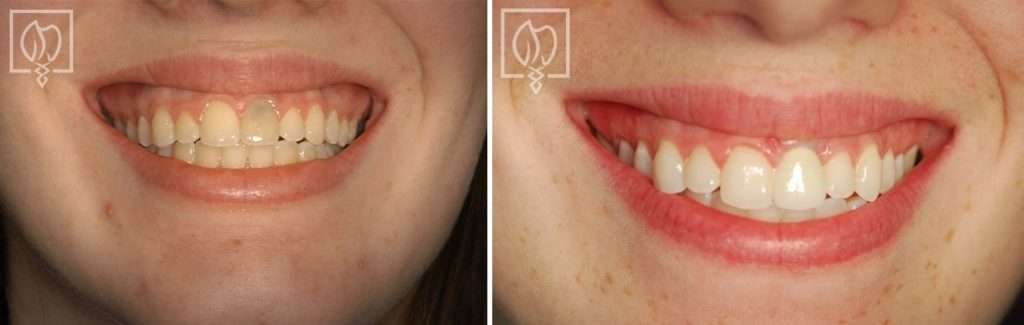
Replacing a Discolored Front Tooth with a Precision Placed Implant
Some of the most challenging restorations occur when fabricating an anterior crown to fit on an implant. Not only does one have the difficulty of matching the single front tooth to the other ones in the high visibility zone, but the dentist must also ensure the position of the underlying implant is precise through accurate preplanning and placement.
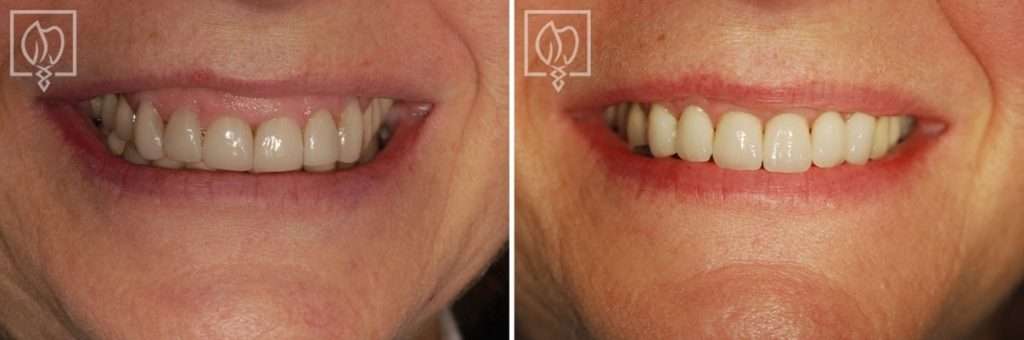
Patient Was Dissatisfied With Her 'Gummy' Smile
Excessive gingival tissue, commonly referred to as a "gummy smile," can significantly impact the appearance of a person's smile and their self-confidence. When someone smiles and a large amount of gum tissue is visible above the teeth, it can create the perception that the teeth are too small or short, even when they are actually normal size.
Our Services in McLean
Beyond crown-problems, McLean patients rely on Dr. Gerald Marlin for a full range of advanced dental care.
More services available in McLean:
crown-problems Near McLean
Dr. Gerald Marlin also provides crown-problems services for patients in these neighboring communities.
Getting Here from McLean
Elite Prosthetic Dentistry is conveniently located near McLean, VA.
McLean residents reach our office in 15 minutes via Georgetown Pike or Chain Bridge Road
Address:
4400 Jenifer Street NW, Suite 220
Washington, DC 20015
Phone: (202) 244-2101
Schedule ConsultationSchedule Your Consultation from McLean
McLean residents trust Dr. Gerald Marlin for precision dental care. With 3,900+ implants placed and 40+ years of experience, your smile is in expert hands.