

Crown & Bridge Problems in Great Falls, VA
Great Falls residents experiencing crown and bridge problems receive expert evaluation and specialized care from Dr. Marlin, a specialty-trained prosthodontist trained in complex restorative assessment and treatment.
Great Falls’ estate neighborhoods, equestrian culture, and rural character appeal to DC-area residents seeking larger properties and a more country-like setting. Great Falls families often develop long-term dental relationships but may face crown or bridge issues that their general dentist refers to specialists.
For Great Falls residents dealing with complex crown or bridge problems, Dr. Marlin’s expertise is accessible via a 20-minute drive on scenic Georgetown Pike, providing professional consultation without extensive travel.
The Long-term Crown That Suddenly Fails
Great Falls residents sometimes experience the scenario where a crown that’s been fine for many years suddenly develops problems. The crown starts feeling loose, or it breaks. This can seem to appear suddenly, but usually, problems have been developing silently for a while.
A crown that’s worked for 10 or 15 years may be reaching the end of its serviceable life. Materials fatigue. Margins deteriorate. Decay develops at the margin over years without causing obvious symptoms until it’s advanced enough to be painful.
Understanding this long-term progression helps Great Falls patients accept that replacement, while seemingly sudden, often reflects cumulative deterioration rather than an unforeseen event.
Progressive Marginal Breakdown
Margins of crowns gradually deteriorate over time through a combination of mechanical wear, thermal cycling, and bacterial acid attack. The deterioration is slow and invisible until it’s advanced enough to allow leakage. Once leakage begins, decay develops behind the crown.
For Great Falls residents with crowns that have served well for a long time, periodic evaluation to catch marginal breakdown early allows replacement before decay becomes advanced.
Bite Changes Over Years
Great Falls residents’ bites sometimes shift over decades. Teeth move slightly. Existing restorations wear or shift. These gradual changes can eventually cause a crown or bridge that was previously well-positioned to develop problems.
A crown that was excellent initially but now contacts your opposing teeth at a different angle or with different force distribution can cause problems: wear on the crown, accelerated wear on the opposing tooth, or strain on the supporting tooth.
Recognizing bite changes allows proactive adjustment or replacement before problems escalate.
Getting Here from Great Falls
From Great Falls, take Georgetown Pike heading toward Washington D.C. The drive is approximately 20 minutes depending on traffic. For Great Falls residents requiring specialist evaluation, this drive provides access to prosthodontic expertise not typically available locally.
Addressing Jaw Pain and Headaches
Great Falls residents sometimes develop jaw discomfort or headaches traced to a crown or bridge that’s altering their bite. A crown that’s slightly too high or that changes your bite pattern can cause jaw muscle strain and referred headaches.
Bite adjustment through crown modification or, if necessary, crown replacement, often resolves these symptoms. For Great Falls patients experiencing jaw discomfort or headaches, evaluation specifically for crown and bridge bite relationships can identify whether your restorations are contributing to the problem.
Scenario: The Estate Owner with Multiple Aging Restorations
A common Great Falls scenario involves a resident in their 60s or 70s who’s had multiple crowns and bridges placed over decades. Some are functioning well. Others are showing age. Determining which need replacement now versus which can be maintained requires strategic assessment.
Dr. Marlin helps Great Falls patients develop comprehensive long-term plans rather than addressing problems crisis-by-crisis. This approach typically results in better overall outcomes and more efficient use of resources.
Material Selection for Great Falls Patients
When Great Falls patients require crown replacement, material selection significantly impacts longevity and performance. For Great Falls patients with heavy bite forces or history of teeth grinding, zirconia offers superior fracture resistance. For patients prioritizing esthetics, lithium disilicate provides excellent balance of strength and appearance.
Material choice also considers the crown’s location: front teeth visible when smiling might warrant different material than back teeth.
Temporary Crown Protection
Great Falls patients having crowns replaced should understand that temporary crowns protecting the prepared tooth require gentle care. Hard chewing, flossing roughly around the temporary, or allowing the temporary to become loose risks damage to the prepared tooth.
Temporary crowns sometimes stain or become slightly discolored, which is normal and corrects once the final crown is in place.
Consultation and Collaborative Planning
Dr. Marlin’s consultation with Great Falls patients includes thorough evaluation, detailed explanation, discussion of options, and collaborative planning. For Great Falls patients accustomed to making thoughtful decisions about significant matters, this thorough approach is appreciated.
Preventive Strategies
Dr. Marlin works with Great Falls patients to develop strategies maximizing crown and bridge longevity: excellent home care, protective night guard if grinding is present, avoiding hard foods, and regular professional monitoring.
Great Falls patients committed to these preventive practices often maintain their restorations well into their 70s and beyond.
Related Resources
Learn more about crown and bridge problems at our Crown and Bridge Problems page. To understand Dr. Marlin’s specialty training, visit Meet Dr. Gerald Marlin. Explore our prosthodontist services in Great Falls and dental crowns in Great Falls for comprehensive care.
Great Falls residents experiencing crown or bridge problems deserve evaluation by a specialist trained to diagnose complex situations accurately and plan treatment strategically. Dr. Marlin provides that expertise within reasonable distance from your community.
Understanding Cement Failure and Bond Loss
Cement bonds a crown to the prepared tooth. This bond should last as long as the crown itself. When cement fails prematurely (within a few months or years), it indicates either technique problems or marginal leakage.
If marginal leakage occurs, bacteria and saliva infiltrate beneath the crown margin. The cement gradually dissolves or loses adhesion. The crown becomes loose.
Recementation addresses the symptom but not the cause. If the crown margin is poorly adapted, recementation provides only temporary relief. The crown will become loose again.
For Great Falls residents experiencing recurrent looseness, crown replacement is often the better long-term solution.
Bridge Framework Failures
A bridge’s framework is its structural backbone. The framework connects the pontic to the abutment crowns through framework arms.
Framework fractures are serious. The structure is compromised. The bridge can’t be reliably repaired. Replacement is necessary.
For Great Falls residents, understanding that bridges have structural integrity that can be compromised helps with realistic expectations.
Abutment Tooth Fracture Risks
Bridge abutment teeth carry extra stress supporting the pontic. If the root of an abutment tooth fractures, serious problems develop.
Root fractures are often irreparable. Extraction may become necessary.
For Great Falls residents, managing bite forces appropriately and addressing grinding protects abutment teeth and prevents fracture risk.
Digital Imaging and Radiographic Assessment
Modern digital radiographs provide detailed information about tooth and bone status. Radiographs reveal decay, bone loss, root resorption, and other problems not obvious clinically.
For Great Falls residents with crowns or bridges, radiographs every 2-3 years help catch developing problems early.
Preventive Maintenance Strategy
For Great Falls residents committed to maintaining their restorations well, a preventive maintenance strategy is valuable. Excellent oral hygiene, protective night guard if grinding is present, regular radiographic assessment, and professional evaluation every 6 months all extend restoration longevity.
Understanding Bridge Problems and Abutment Failures
One significant issue Great Falls residents sometimes encounter is bridge failure due to abutment tooth problems rather than bridge structure failure. The bridge itself may be intact and well-designed, but decay, bone loss, or damage to the supporting teeth destabilizes the entire restoration.
For Great Falls patients, understanding that a bridge is only as good as the teeth supporting it helps with realistic expectations. Maintaining excellent periodontal health and preventing decay in abutment teeth is essential to bridge longevity.
Digital imaging periodically assesses abutment tooth health. Early detection of decay or bone loss allows treatment before it compromises bridge support.
PFM Crown Degradation and Modern Alternatives
Many Great Falls residents have porcelain-fused-to-metal (PFM) crowns placed 10-20 years ago. These crowns were standard for decades. However, they have some limitations that modern materials address better.
In PFM crowns, a metal substructure is covered with porcelain. Over time, the porcelain can chip or wear. If the porcelain chips significantly, the metal substructure becomes visible, creating an esthetic problem. The metal can corrode or discolor. Metal ions can leach out, occasionally creating discoloration or sensitivity.
Modern all-ceramic and zirconia crowns eliminate these metal-related problems. They’re more esthetic, more durable, and more resistant to chipping. For Great Falls residents requiring replacement of older PFM crowns, upgrading to modern materials often results in superior long-term results.
Managing Bite Problems Affecting Multiple Teeth
Some Great Falls residents develop bite problems that affect multiple teeth. One crown may be too high, creating excessive contact and causing that tooth to hurt. This excessive contact can also create stress in adjacent teeth, eventually causing problems there too.
A comprehensive bite analysis identifies whether multiple crowns or bridges are affected by bite problems. Addressing the bite problem through adjustment of the problematic restoration or, if necessary, replacement that corrects the bite pattern prevents cascading problems in other teeth.
For Great Falls residents with multiple crown concerns, comprehensive bite evaluation adds significant value by preventing future problems.
(202) 244-2101
Frequently Asked Questions
Can a crown that's been fine for years suddenly start causing problems?
Yes. Crown problems often develop gradually. A crown that worked fine for a decade might begin leaking at the margin, allowing decay to develop silently. Or changes in bone support, bite forces, or restoration wear accumulate until problems become noticeable. This is why periodic evaluation remains important even for crowns that have been trouble-free.
Is bonded crowns or bridges something I should consider?
Bonded restorations are sometimes used for specific situations, but traditional crowned and bridged restorations remain the standard for most cases. Bonding strength and longevity don't match traditional restorations in most situations, though newer techniques continue to improve.
What should I eat after having a crown replaced?
Avoid hard foods for the first few days while the bite adjusts and you become accustomed to the new crown. Soft foods are safer until you're confident the crown is comfortable and secure. Permanent crowns are durable, but respecting them during the adjustment period helps ensure successful adaptation.
Can my crown cause headaches or jaw pain?
Yes. A crown that alters your bite can cause strain in your jaw muscles and temporomandibular joint, resulting in headaches or jaw discomfort. Bite adjustment usually resolves these symptoms. If symptoms persist, additional evaluation may be needed to identify the cause.
How often should I have my crowns evaluated?
Regular dental checkups every 6 months typically include crown evaluation. As crowns age past 10-15 years, more frequent assessment becomes valuable. Digital X-rays every few years help identify decay or bone loss developing around crowns.
Related Patient Success Stories
Explore similar patient success stories demonstrating our expertise in advanced prosthetic dentistry.

Temporary Crowns Restore Patient's Smile in Just One Day with an Immediate Smile Makeover
A patient from Potomac, Maryland, came to Elite Prosthetic Dentistry with the chief complaint of pain from a failing dental implant and its significant impact on her appearance.
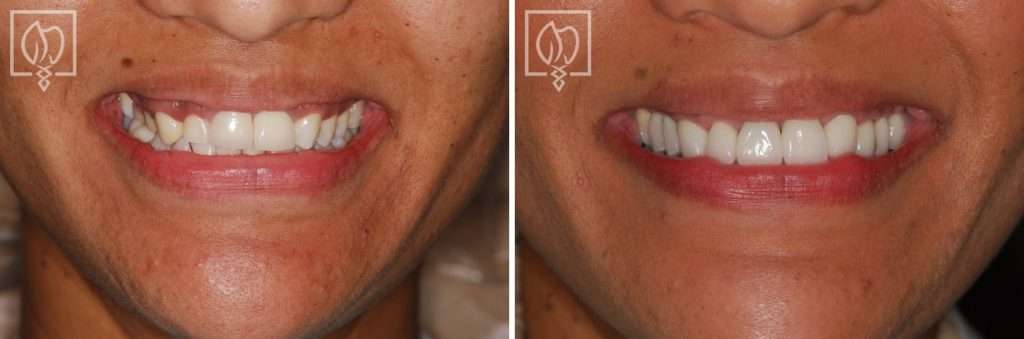
Multi-Faceted Treatment for Patient Unhappy With Her Artificial-Looking Crowns, Teeth and Gums
Many patients come to Elite Prosthetic Dentistry unhappy with the appearance of their smile. However, this particular patient presented with multiple interconnected problems that together created a smile she found deeply unsatisfying.

Salvaging Ms. N’s Severely Broken-Down Upper and Lower Teeth from Gum and Bone Disease
Many people in the U.S. suffer from extensive periodontal disease characterized by significant bone loss and shrinkage of the gum tissue. This condition can begin at a very young age and worsen quickly due to hereditary factors and lack of early diagnosis by their dentist.
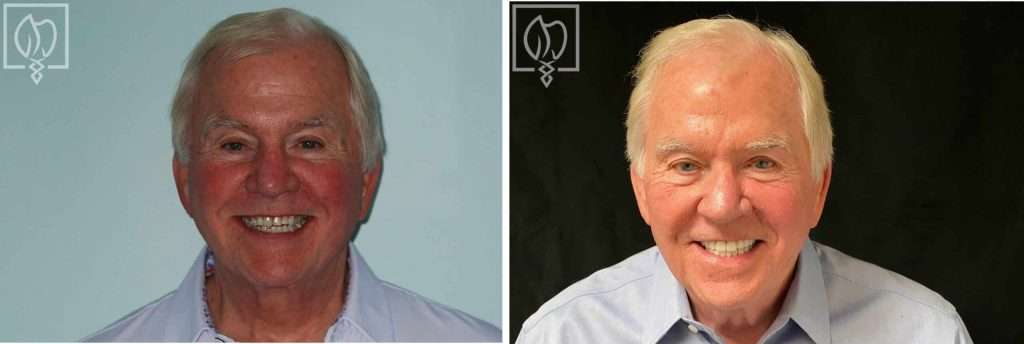
A Smile Transformation in Just Four Months: A Patient’s Dental Crown Restoration for a TV Series
A patient with dental crowns that were in poor shape was going to appear on a streaming video series on a major TV network that was scheduled to begin filming soon. Our patient, John, an author about to embark on a book tour, was anxious as his teeth were not up to his standards to appear on television.
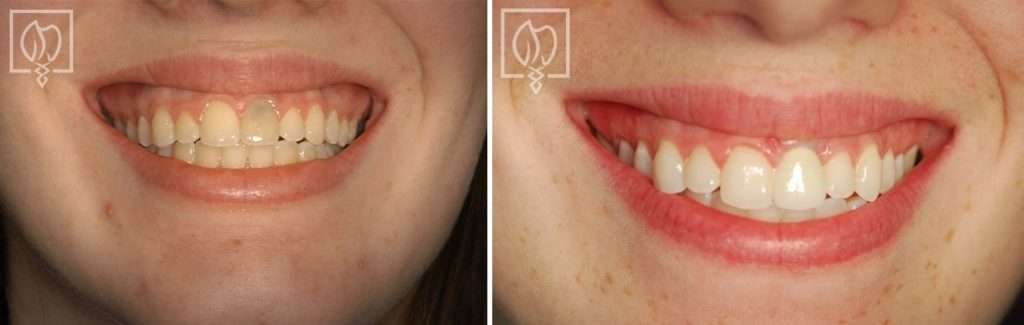
Replacing a Discolored Front Tooth with a Precision Placed Implant
Some of the most challenging restorations occur when fabricating an anterior crown to fit on an implant. Not only does one have the difficulty of matching the single front tooth to the other ones in the high visibility zone, but the dentist must also ensure the position of the underlying implant is precise through accurate preplanning and placement.
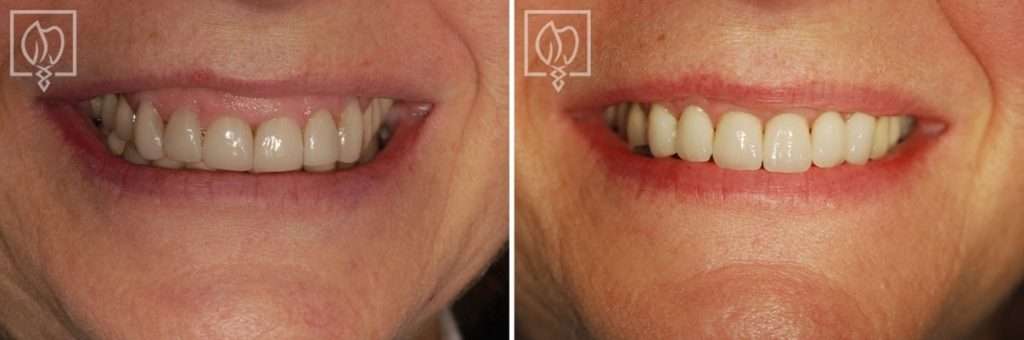
Patient Was Dissatisfied With Her 'Gummy' Smile
Excessive gingival tissue, commonly referred to as a "gummy smile," can significantly impact the appearance of a person's smile and their self-confidence. When someone smiles and a large amount of gum tissue is visible above the teeth, it can create the perception that the teeth are too small or short, even when they are actually normal size.
Our Services in Great Falls
Beyond crown-problems, Great Falls patients rely on Dr. Gerald Marlin for a full range of advanced dental care.
More services available in Great Falls:
crown-problems Near Great Falls
Dr. Gerald Marlin also provides crown-problems services for patients in these neighboring communities.
Getting Here from Great Falls
Elite Prosthetic Dentistry is conveniently located near Great Falls, VA.
Great Falls residents reach our office in 20 minutes via Georgetown Pike
Address:
4400 Jenifer Street NW, Suite 220
Washington, DC 20015
Phone: (202) 244-2101
Schedule ConsultationSchedule Your Consultation from Great Falls
Great Falls residents trust Dr. Gerald Marlin for precision dental care. With 3,900+ implants placed and 40+ years of experience, your smile is in expert hands.