

Loose Dental Crown in Potomac, MD
Loose crown in Potomac? Understand how decay develops under crowns and why detection requires expert evaluation. Learn prevention strategies.
Hidden Decay Under Your Loose Crown: Why It Happens and How We Find It
One of the most challenging aspects of loose crowns is that they often mask a larger problem that you can’t see or feel: decay developing under the crown. A loose crown might seem like a simple cement failure requiring straightforward re-cementation. But X-rays reveal that decay has been progressing silently for months or even years beneath the crown, waiting to be discovered.
For Potomac patients, understanding this hidden threat is crucial. It changes how you approach loose crown treatment and why professional evaluation matters so much.
The Hidden Danger: How Decay Develops Under a Crown
A crown is designed to seal and protect the tooth it covers. When everything is working properly, bacteria can’t get under the crown to cause decay. However, when the cement bond fails or the crown margins don’t fit perfectly, that seal breaks down.
When a crown becomes loose, the cement that bonded it to the tooth has started degrading. This degradation creates microscopic gaps. Saliva, bacteria, and food particles seep through these gaps and reach the underlying tooth. The crown, while now loose, still covers the tooth, creating a dark, moist environment, perfect for bacteria to thrive and decay to develop.
The tooth’s margin, where it meets the crown, is particularly vulnerable. This is the first place decay typically develops when the cement seal fails. The decay starts at the margin and works its way down the tooth structure, potentially reaching the root.
Because the crown still covers the tooth, you can’t see the decay. You don’t feel it developing. You might notice the crown becoming loose, but you have no idea that decay is progressing underneath.
In many cases, patients come in thinking they need simple re-cementation, only to have X-rays reveal that decay has progressed extensively under the crown. What seemed like a straightforward repair becomes a more involved treatment.
Why Detection Requires Professional Evaluation and X-rays
Visual examination alone can’t detect decay under a crown. Even careful clinical examination of the crown’s margins might not reveal what’s happening beneath.
X-rays are essential. A periapical X-ray taken at the right angle shows us the tooth under the crown, the crown’s relationship to the tooth, and any decay that might be developing. An experienced prosthodontist reading these X-rays can detect decay that’s invisible clinically.
Sometimes decay appears as a dark area on X-rays where it shouldn’t be. Sometimes it shows as a loss of bone density around the tooth, suggesting chronic infection from decay. Sometimes it appears as a subtle change in the pattern of the tooth, indicating decay development.
Without X-rays, we might miss this critical finding. With X-rays, we can identify decay even when it’s early and more easily treated.
This is why we always take X-rays when evaluating a loose crown. It’s not just routine; it’s essential to detecting hidden problems.
How Much Decay is Under There: The Extent Matters
When we discover decay under a crown, we need to determine how extensive it is. This determines how complex your treatment will be.
If decay is limited to the crown’s margin and the outer surface of the tooth, we can often remove the decay and place a new crown without additional treatment. The tooth structure is still sound, and a new restoration will protect it. Our CAD/CAM restorations technology ensures precise fabrication. We can also discuss whether in-house lab fabrication might offer faster turnaround.
If decay has progressed to involve a significant portion of the tooth’s crown portion but hasn’t reached the root, we still treat it relatively straightforwardly. We remove the decay, restore the tooth, and place a new crown.
However, if decay has progressed onto the root surface or has progressed extensively, we might need to do additional preparation. We might need to place a build-up restoration to reconstruct lost tooth structure before placing a new crown. For complex cases, advanced restorative dentistry techniques enable optimal outcomes.
In the most serious cases, if decay has progressed deeply into the tooth or if significant root structure is involved, you might need a root canal before crown replacement. If decay extends below the gum line or if the tooth’s remaining structure is compromised, we might recommend extraction and dental implants replacement instead of attempting to save the tooth.
The earlier decay is caught, the less extensive the treatment needs to be. This is why checking a loose crown early matters.
The Risk of Repeated Loosening with Undetected Decay
A particularly problematic scenario occurs when a crown is re-cemented without addressing underlying decay. The crown is put back, but the decay continues progressing under the fresh cement.
Months or a year later, the crown becomes loose again. The patient returns for re-cementation. The same problem repeats. The patient might go through this cycle multiple times, each time not realizing that decay is advancing underneath.
Eventually, the decay becomes so extensive that the tooth loses its structural integrity. What could have been managed with one crown replacement and one decay removal becomes a tooth that can no longer support a crown.
This cycle is entirely preventable. Take X-rays. Look for decay. If decay is present, address it properly during crown treatment, not with repeated re-cementation cycles.
This is one reason we advocate for careful evaluation before deciding on re-cementation. If decay is present, re-cementation is absolutely the wrong approach.
Decay on the Root Surface: A Particularly Aggressive Problem
When decay develops on the root surface of a tooth under a crown, it progresses faster than decay on the crown portion of the tooth.
The root is covered with cementum, which is softer than enamel. Decay in root structure progresses more rapidly. Root decay can destroy a significant amount of tooth structure in months that would take years on the crown portion. Early detection through regular second opinion exams is critical.
Additionally, root decay is harder to detect clinically. It’s hidden under the crown and doesn’t always show clearly on X-rays, depending on the X-ray angle.
Root decay often doesn’t cause pain initially, so patients remain unaware that a serious problem is developing.
When root decay is extensive, it can destroy the tooth’s structural integrity below the gum line, making the tooth impossible to save. In these cases, extraction and replacement with an implant becomes necessary. For severe cases, full mouth reconstruction might address multiple failing restorations at once.
This is why detecting decay early, before it extends to the root, is so critical.
The Importance of Crown Margins and Fit
The quality of the crown’s margins directly impacts whether decay develops under it. Well-fitting margins with minimal gaps are less likely to allow bacterial infiltration. Poorly fitting margins with gaps create environments where decay develops.
This is one reason that when we place new crowns, we obsess over margins. We prepare the tooth precisely. We ensure the crown fabricated has tight margins that adapt perfectly to the tooth.
When your loose crown is evaluated, we assess the margins carefully. If margins are compromised, a new crown is warranted rather than re-cementation.
The Cement’s Role in Protecting Against Decay
The cement that bonds a crown to the tooth plays a major role in decay prevention. A high-quality cement that creates a strong seal protects the tooth better than a weaker cement. When the cement fails, decay risk increases dramatically.
As cement degrades over time, decay risk increases. This is part of why older crowns have higher decay risk. The cement that was strong when the crown was placed has weakened significantly after 10 or 15 years. With our in-house lab, we control every step of the process for optimal cement sealing. For advanced technique options, our prosthodontic approach uses the latest materials.
When we place new crowns or re-cement existing ones, our cement selection matters. We use high-quality cements that create strong seals and resist degradation.
Characteristics of Teeth at Higher Decay Risk Under Crowns
Some teeth are at higher risk for developing decay under crowns than others.
Teeth with aggressive histories are at risk. If you had decay on this tooth before the crown was placed, you’re at higher risk for decay under the crown.
Teeth in patients with overall gum disease or periodontal problems are at risk. Gum disease and crown decay often go hand in hand.
Teeth in patients with poor oral hygiene are at risk. Plaque accumulation around crown margins increases decay risk dramatically.
Teeth in patients with dry mouth or reduced saliva flow are at risk. Saliva has antimicrobial properties and helps prevent decay. When saliva flow is reduced, decay risk increases.
Teeth in patients who consume frequent acidic or sugary foods and drinks are at risk. The oral environment becomes more conducive to decay.
Understanding your risk factors helps you take preventive action.
Prevention: Keeping Decay Away From Your Crowns
Your habits play a significant role in whether decay develops under your crowns.
Maintain excellent oral hygiene. Brush twice daily and floss once daily, paying particular attention to the areas where crowns meet your teeth. If you have difficulty flossing around a crown due to its position, consider water flossing as an alternative. For patients with multiple crowns, our concierge dentistry program provides detailed preventive guidance.
Come in for regular checkups and cleanings. Professional cleanings remove tartar that accumulates around crowns and create decay risk. Regular examinations and X-rays catch problems early.
Avoid very sticky foods that create excessive stress on crown margins and can open gaps in the cement. Avoid hard foods that create stress on the crown and underlying tooth.
Manage your overall oral health. Address gum disease. Maintain good saliva flow if possible.
Maintain a diet lower in sugar and acidic foods and drinks. These feed decay-causing bacteria and acidify your mouth, accelerating decay.
If you grind your teeth, wear a nightguard. Grinding creates stress on crown margins and can widen gaps in the cement.
What to Do If Your Loose Crown Shows Decay on X-rays
If your loose crown is being evaluated and X-rays reveal decay, the treatment approach changes. Re-cementation is no longer an option.
We’ll explain the extent of the decay and what treating it involves. In many cases, we’ll recommend crown replacement with decay treatment. We remove the crown, assess and treat the decay, and place a new crown.
If decay is extensive or involves the root, we might discuss whether saving the tooth with a new crown is possible or whether extraction and implant replacement is more appropriate long-term.
We’ll discuss the timeline and cost implications. Decay treatment adds a step to crown replacement, but it’s essential.
The Cost of Waiting Too Long
Delaying treatment of a loose crown that involves decay increases the cost and complexity significantly.
Early decay that’s addressed during straightforward crown replacement costs less than extensive decay that requires root canal treatment.
Decay that progresses into the root and below the gum line might make the tooth unsalvageable. You go from a crown replacement (manageable) to extraction and implant replacement (much more involved and expensive).
Preventing decay or catching it early saves you money and avoids unnecessary treatment complexity.
Questions to Ask During Your Loose Crown Evaluation
When you come in for evaluation of a loose crown, ask about decay explicitly.
Ask whether the X-rays show any signs of decay. Ask what the margins of your crown look like. Ask whether your crown is a good candidate for re-cementation or if replacement is recommended.
Ask what preventive measures you should take with your remaining crowns to minimize decay risk.
Ask about your specific risk factors and whether you need more frequent checkups or any special preventive care.
These questions help you understand what’s happening with your loose crown and why we’re recommending the treatment we recommend.
Long-Term Thinking About Your Crowns
Rather than thinking of your loose crown as an isolated problem, think of it as an opportunity to evaluate the health of all your crowned teeth.
When we address your loose crown, we’ll examine all your other crowns too. We’ll take X-rays that let us assess all of them. We’ll identify any early signs of problems.
This comprehensive evaluation helps us catch and address problems early, before they become emergency situations.
Moving Forward: Getting Your Loose Crown Evaluated
If you have a loose crown, don’t assume it’s just a simple cement failure. The only way to know what’s really happening is professional evaluation with X-rays.
Call our Potomac practice to schedule an appointment. We’ll examine your crown thoroughly, take X-rays, and tell you honestly what we find. If decay is present, we’ll explain what that means and what treatment involves. If finances are a concern, dental financing options make treatment accessible.
If no decay is present and the crown is in good condition, we’ll recommend re-cementation. If problems exist, we’ll recommend the treatment that addresses them properly. For patients interested in comprehensive care planning, concierge dentistry provides coordinated, priority services.
Either way, you’ll move forward with full knowledge of your situation and confidence in your treatment plan. For anxious patients, sedation dentistry makes evaluation and treatment more comfortable.
For more about crown problems, visit our crown problems page. To learn more about our prosthodontic approach, read our prosthodontist page. For information about preventing dental problems, check our preventive dentistry approach. For information about dental crown solutions, visit our custom crafted crowns page. Potomac patients interested in comprehensive care can explore our full mouth reconstruction and concierge dentistry services. For implant options, check our dental implants page. Interested in cosmetic improvements? Visit our cosmetic dentistry and veneers pages.
Don’t let hidden decay compromise your teeth. Get your loose crown evaluated today.
Frequently Asked Questions
Can decay develop under my crown without me knowing?
Absolutely, yes. Decay can develop under a crown progressively without any symptoms, especially if it starts at the crown's margin and works its way down the root. Because the crown seals off the area, you can't see the decay developing, and it might not cause pain until it's quite advanced. This is why X-rays and professional evaluation are critical. Decay under a crown often only becomes apparent when the crown becomes loose or needs replacement.
How does decay get under a crown if the crown is supposed to protect the tooth?
Decay develops under crowns when bacteria gain access to the tooth through gaps at the crown margins. When the cement bond fails or when the crown's margins don't fit tightly, saliva and bacteria seep in. Over time, this leads to decay development. The crown itself doesn't cause decay, but a poor-fitting crown or failed cement seal creates the environment where decay can start.
If decay is found under my loose crown, what does treatment involve?
We'll remove the crown to access the decay. We'll remove the decayed portion of the tooth and restore it. Depending on how much decay is present, we might place a filling or a build-up restoration. Once the tooth is restored to health, we'll place a new crown. In rare cases where decay extends deep into the tooth or below the gum line, you might need a root canal before crown replacement.
How can I prevent decay from developing under my future crowns?
Maintain excellent oral hygiene around the crown, including careful flossing or water flossing if the crown is in a position where flossing is possible. Come in for regular checkups where we can examine the crown's margins and take X-rays to detect early decay. Avoid very sticky or hard foods that create stress on the crown margins. Avoid grinding your teeth, which can create gaps in the cement. Regular professional cleanings remove tartar that accumulates around crown margins.
If my X-rays show decay under my crown, is it always serious?
Not necessarily. Decay detected early, especially if it's limited to the crown side of the tooth, can often be treated with relatively straightforward decay removal and crown replacement. However, if decay has progressed significantly, has involved the root, or extends below the gum line, treatment becomes more complex and might require root canal treatment. Early detection makes a huge difference in how treatment-intensive the problem becomes.
Related Patient Success Stories
Explore similar patient success stories demonstrating our expertise in advanced prosthetic dentistry.

Temporary Crowns Restore Patient's Smile in Just One Day with an Immediate Smile Makeover
A patient from Potomac, Maryland, came to Elite Prosthetic Dentistry with the chief complaint of pain from a failing dental implant and its significant impact on her appearance.
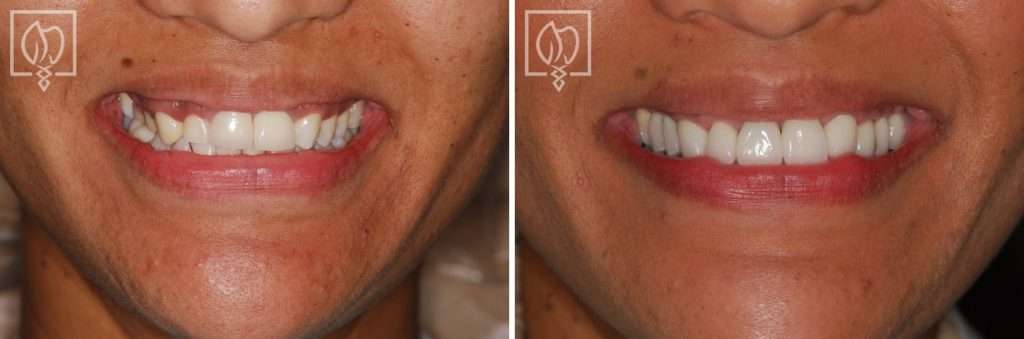
Multi-Faceted Treatment for Patient Unhappy With Her Artificial-Looking Crowns, Teeth and Gums
Many patients come to Elite Prosthetic Dentistry unhappy with the appearance of their smile. However, this particular patient presented with multiple interconnected problems that together created a smile she found deeply unsatisfying.

Salvaging Ms. N’s Severely Broken-Down Upper and Lower Teeth from Gum and Bone Disease
Many people in the U.S. suffer from extensive periodontal disease characterized by significant bone loss and shrinkage of the gum tissue. This condition can begin at a very young age and worsen quickly due to hereditary factors and lack of early diagnosis by their dentist.
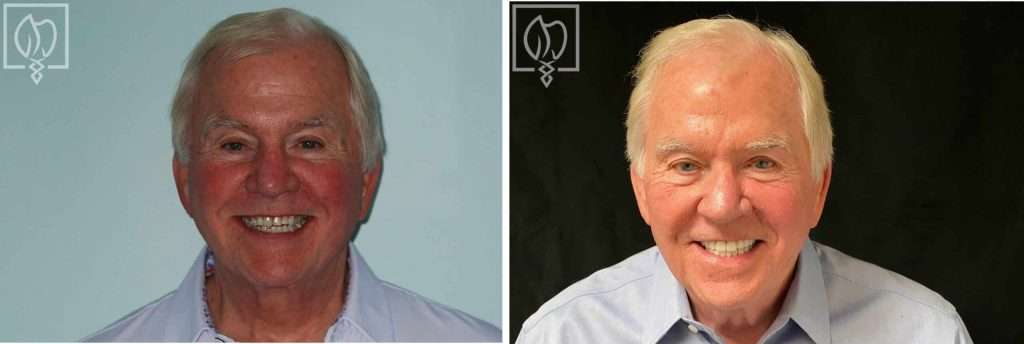
A Smile Transformation in Just Four Months: A Patient’s Dental Crown Restoration for a TV Series
A patient with dental crowns that were in poor shape was going to appear on a streaming video series on a major TV network that was scheduled to begin filming soon. Our patient, John, an author about to embark on a book tour, was anxious as his teeth were not up to his standards to appear on television.
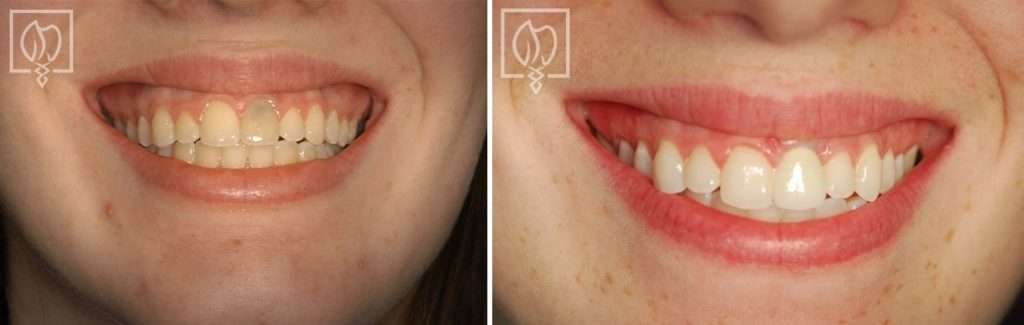
Replacing a Discolored Front Tooth with a Precision Placed Implant
Some of the most challenging restorations occur when fabricating an anterior crown to fit on an implant. Not only does one have the difficulty of matching the single front tooth to the other ones in the high visibility zone, but the dentist must also ensure the position of the underlying implant is precise through accurate preplanning and placement.
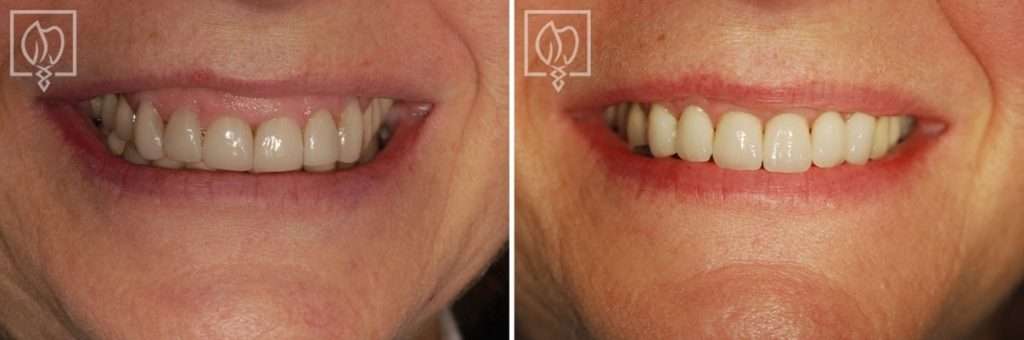
Patient Was Dissatisfied With Her 'Gummy' Smile
Excessive gingival tissue, commonly referred to as a "gummy smile," can significantly impact the appearance of a person's smile and their self-confidence. When someone smiles and a large amount of gum tissue is visible above the teeth, it can create the perception that the teeth are too small or short, even when they are actually normal size.
Our Services in Potomac
Beyond loose-dental-crown, Potomac patients rely on Dr. Gerald Marlin for a full range of advanced dental care.
More services available in Potomac:
loose-dental-crown Near Potomac
Dr. Gerald Marlin also provides loose-dental-crown services for patients in these neighboring communities.
Getting Here from Potomac
Elite Prosthetic Dentistry is conveniently located near Potomac, MD.
Potomac residents are about 12 minutes from our practice via River Road or Maryland Routes. We accommodate Potomac's affluent, suburban families with comprehensive prosthodontic care.
Address:
4400 Jenifer Street NW, Suite 220
Washington, DC 20015
Phone: (202) 244-2101
Schedule ConsultationSchedule Your Consultation from Potomac
Potomac residents trust Dr. Gerald Marlin for precision dental care. With 3,900+ implants placed and 40+ years of experience, your smile is in expert hands.