
Loose Dental Crown in McLean, VA
Loose crown in McLean? Learn when re-cementation is the right choice versus when crown replacement gives you better long-term value and stability.
Loose Crown in McLean: Repair or Replace? Making the Economically Smart Choice
A loose crown presents McLean patients with a decision point. You need the crown stabilized, but you have two potential pathways: re-cementation or replacement. Both are valid options in different circumstances, but choosing the right one for your specific situation can save you money and hassle long-term.
McLean’s discerning professionals and residents often ask tough questions about value and long-term investment. When it comes to loose crowns, the same principle applies. A decision that seems economical upfront might not be the wisest choice when you consider the next five to ten years.
Understanding the Two Options: What They Are and How They Differ
Re-cementation involves removing your existing crown, cleaning off the old cement, and installing it again with fresh cement. This preserves your original crown and typically costs less upfront than replacement. The process usually takes one appointment.
Replacement means we’ll fabricate a completely new crown. We’ll remove the existing crown, prepare the tooth, take impressions, send them to our laboratory, and once the new crown is fabricated, seat it. This takes multiple appointments and costs more upfront. However, the new crown is custom-designed to your tooth and bite and incorporates current materials and techniques.
Understanding which option is right for you requires honest evaluation of your crown’s condition and your long-term needs.
The Case for Re-Cementation: When It Makes Sense
Re-cementation is the appropriate choice when your crown is in excellent condition but the cement has simply failed. This happens naturally over time as saliva seeps along crown margins and gradually dissolves the cement bond. Our prosthodontic evaluation distinguishes between simple cement failure and more complex problems.
How do we determine that your crown is in excellent condition. We examine it clinically for visible damage, chips, cracks, or wear patterns. We look at the margins where the crown meets your tooth, checking for gaps or openings. We take X-rays to assess the underlying tooth.
If the crown appears pristine, the margins are tight, there’s no evidence of decay under the crown, and the underlying tooth is healthy, re-cementation has an excellent chance of success. We’ll clean the crown thoroughly, removing all old cement. We’ll inspect the underlying tooth and ensure it’s clean and dry. We’ll place a fresh, high-quality cement and reset your crown.
This approach gives you another 5 to 10 years of service from your existing crown, which might have had another 5 to 10 years of life left regardless.
The upfront cost advantage of re-cementation is genuine. You’re paying for one appointment and the cement, not multiple appointments and a new crown. If this buys you several more years of service, it’s cost-effective.
Re-cementation also makes sense if your crown is quite new and the loosening is clearly due to cement failure rather than crown degradation. A crown that’s only three or four years old that loosens due to cement failure is a good candidate for re-cementation.
The Case for Replacement: When It’s the Smarter Long-Term Investment
Crown replacement is the right choice in several circumstances, and it’s often more economical long-term than re-cementation, even though the upfront cost is higher.
If your crown shows visible wear, your bite polished away the chewing surface, or the crown otherwise demonstrates that it’s aged significantly, replacement is wiser. A worn crown will continue to wear whether you re-cement it or replace it. The wear accelerates margin breakdown and cement failure. Rather than re-cement a crown that will continue wearing and likely loosen again, replacement gives you a fresh restoration that will perform better.
If your crown has marginal gaps, visible food traps around it, or other design issues, those problems don’t disappear with re-cementation. You’re putting fresh cement into a crown with poor margins. Decay is likely to develop again because the margins aren’t tight. Within a few years, you might be back dealing with the same problem. Replacement eliminates the design flaw.
If X-rays or clinical examination reveals decay beneath your crown, replacement is necessary. The decay must be removed and treated. Simply re-cementing leaves decay underneath to progress further. This requires removing the crown, treating the decay, and placing a new restoration. It’s not truly re-cementation; it’s crown replacement with additional decay treatment.
If your crown is more than 12 to 15 years old, we often recommend replacement even if it’s technically repairable. An older crown has already given you years of service. A new crown is an investment in another 10 to 15 years of stability and esthetics. Over that extended period, replacement is often more economical than multiple re-cementation procedures.
If you’ve had your crown re-cemented once already and it’s loosening again, the pattern suggests it might keep loosening. Rather than re-cement repeatedly, a replacement with better design or materials might finally solve the problem permanently.
If your bite has changed, your tooth has shifted, or your jaw mechanics have altered since the crown was placed, the crown might not fit optimally into your current bite. A new crown fabricated to your current bite distributes forces better and will be more stable long-term.
The Math of Multiple Re-Cementations Versus One Replacement
Consider this scenario: each re-cementation visit has a cost, and a full replacement crown has a higher upfront cost. If you re-cement once, twice, or three times before the crown finally fails, your cumulative spending can exceed or match the cost of having replaced the crown the first time around.
If that crown, even if it’s currently repairable, has a history of loosening or shows signs of wear, the probability of multiple re-cementation cycles is real. In this scenario, replacing now is more economical than the inevitable replacement plus multiple re-cementation procedures.
Conversely, if your crown is young, in pristine condition, and loosening is clearly due to isolated cement failure, one re-cementation might be sufficient. You might get another 7 to 8 years before any further treatment is needed. Over that period, the re-cementation was cost-effective.
This is why evaluation matters so much. We are not trying to upsell you into replacement. We are honestly assessing your crown’s condition and helping you make the economically intelligent choice.
Quality of Life Considerations: New Crown Advantages
Beyond pure economics, a new crown often provides advantages that matter to McLean’s quality-conscious patients.
A new crown might match your adjacent teeth more precisely. Crown shade, translucency, and contour can be customized to blend seamlessly with your remaining natural teeth or other restorations. If you have porcelain veneers on adjacent teeth, your new crown will be designed to coordinate perfectly. Our cosmetic dentistry services ensure esthetic harmony across all your restorations.
A new crown can improve the gum contour and shape. If your original crown was placed years ago, today’s design standards might improve how your restoration sits relative to your gums and how your smile appears.
A new crown with proper margins is easier to clean. Food and bacteria are less likely to accumulate around it, meaning better long-term gum health. This preventive benefit is often maintained through concierge dentistry programs that provide enhanced support.
A new crown with optimal bite integration distributes your chewing forces better, reducing stress on adjacent teeth and reducing your overall risk of future dental problems. Advanced technology like CAD/CAM restorations ensures perfect fit.
These quality of life advantages are real, even if they’re harder to quantify financially than the cost difference between re-cementation and replacement.
Material Advances: Why New Crowns Perform Better
Materials science has advanced significantly in recent years. Crowns made today are stronger, more esthetic, and more durable than crowns fabricated 10 to 15 years ago.
All-ceramic materials are now stronger and more lifelike than older porcelain-fused-to-metal crowns. If your existing crown is older, a new crown made with modern all-ceramic materials will likely perform better and look better. For patients seeking maximum durability, advanced restorative dentistry options include zirconia and other premium materials.
Dental cements have also improved. Modern cements have better retention and greater resistance to saliva seepage than cements used a decade ago. This is one reason a new crown has a better chance of not loosening again.
Computer-aided design and milling have improved crown fit. Crowns fabricated using digital design and CAD/CAM milling are more precisely adapted to your tooth than crowns made using older laboratory techniques. Our in-house dental lab utilizes this technology for superior results.
These aren’t minor improvements. They translate into crowns that last longer, look better, and stay seated more reliably. When deciding between re-cementation and replacement, these material and technical improvements are worth factoring into your decision. For comprehensive planning, full mouth reconstruction services ensure all your restorations work together optimally.
The Role of Your Prosthodontist in Decision-Making
Not all dentists recommend replacement with the same frequency. Some practices lean toward re-cementation because it’s simpler and faster. Some practices recommend replacement too often.
A conscientious prosthodontist evaluates each crown objectively. We’re not trying to maximize treatment volume or upsell patients. We’re recommending the option that gives you the best long-term outcome for your investment.
If your crown is truly a good candidate for re-cementation, we’ll tell you so honestly. If replacement is the wiser choice, we’ll explain our reasoning clearly.
We also present both options, outline the advantages and disadvantages of each, and let you make an informed decision. Your preferences matter too. If you’d prefer to try re-cementation first and replace later if needed, that’s a valid choice if the crown meets certain criteria for successful re-cementation.
Timeline and Scheduling Considerations
Re-cementation is quick. One appointment, and you’re done. If you’re busy and prefer minimal time in a dental chair, re-cementation appeals to you.
Replacement takes longer. You’ll need an initial evaluation and preparation appointment, a second appointment where we seat the final crown, and potentially an intermediate temporary crown. The total timeline is typically 1 to 2 weeks from start to finish.
For busy McLean professionals, the scheduling difference matters. However, it shouldn’t be the primary factor in deciding between re-cementation and replacement. The best long-term solution should take priority over scheduling convenience.
When to Choose Re-Cementation: Summary Checklist
Your loose crown is a good candidate for re-cementation if:
- The crown is less than 10 years old
- The crown shows no visible wear, chips, or cracks
- The crown margins are tight with no visible gaps
- X-rays show no decay under the crown
- The underlying tooth is healthy
- This is the first time the crown has loosened (or second time maximum)
- You have no history of repeated loosening with other crowns
If most of these are true, re-cementation offers a cost-effective solution.
When to Choose Replacement: Summary Checklist
Your loose crown is a better candidate for replacement if:
- The crown is 12 or more years old
- The crown shows visible wear or damage
- The crown has been re-cemented one or more times already
- X-rays reveal decay under the crown
- The crown has poor margins or visible gaps
- You’ve had multiple loose crowns, suggesting a systemic issue
- Your bite has changed significantly since the crown was placed
- The crown material is older (porcelain fused to metal versus all-ceramic)
If several of these apply, replacement is likely the smarter investment.
The Honest Recommendation Approach
We won’t know which option is best for you until we examine your crown. When you come in, we’ll look at it carefully, take X-rays, assess your bite, and discuss the crown’s history with you.
Then, we’ll give you our professional recommendation, explain the reasoning behind it, and discuss the pros and cons of both options. We’ll answer your questions honestly, even if the answer is “We recommend replacement, but if you’d prefer to try re-cementation, it’s worth attempting once.”
Your long-term oral health and the value you get from your investment matter to us. We’ll help you make the decision that’s right for your situation.
Next Steps: Getting Your Loose Crown Evaluated
If you’re experiencing a loose crown and wondering whether re-cementation or replacement is right for you, the next step is a professional evaluation.
Call our McLean practice to schedule an appointment. Bring the crown with you if it has already fallen out, or mention that it’s loose during your call so we can prioritize the appointment. We offer second opinion dentistry services if you’d like an expert evaluation of recommendations from another dentist.
During your visit, we’ll examine everything thoroughly, discuss your options, and help you decide. Whether you choose re-cementation or replacement, you’ll move forward with confidence knowing you’ve made the economically and clinically sound choice for your situation. If finances are a concern, dental financing options are available.
For more about crown problems, visit our crown problems page. To learn more about prosthodontic expertise, read our prosthodontist page. If you’re interested in implant-based solutions, check our dental implants page. For information about custom crowns, visit our custom crafted crowns page. McLean patients can also explore cosmetic dentistry, veneers, and smile makeover options. For financing concerns, check our financing options page. Emergency services are available through our emergency dental program.
Your loose crown is worth expert evaluation. Contact us today, and let’s determine the best path forward for you.
Frequently Asked Questions
Is it always cheaper to just re-cement my loose crown instead of replacing it?
Not necessarily. While re-cementation costs less upfront, if the crown is old, worn, or likely to loosen again, replacement might be more economical long-term. If a re-cemented crown fails again within a few years, you're paying for two procedures instead of one. A new crown lasting 10 to 15 years is often better value than repeatedly re-cementing an aging restoration.
My crown is only five years old. Shouldn't re-cementation be sufficient?
Age alone doesn't determine whether re-cementation is appropriate. A five-year-old crown that loosens due to cement failure and shows no decay or damage might be an excellent candidate for re-cementation. However, if that crown shows wear, marginal gaps, or decay underneath, replacement might be the smarter choice despite its relative youth. We evaluate each crown individually.
How can you tell if my crown is going to keep loosening?
We examine the crown's fit, margins, and integrity. We check whether the underlying tooth or implant shows any problems. We assess your bite and habits. If the crown has a poor fit, open margins, or other design flaws, it will likely keep loosening even if we re-cement it. If those factors look good but the cement simply failed, re-cementation has a better chance of success.
If I choose replacement, how much better will the new crown be than re-cementing my old one?
A new crown is custom-designed to your tooth's current anatomy and your current bite. Modern materials are stronger and more esthetic. Digital design ensures better fit. The new crown will have optimal margins, proper occlusal anatomy, and contours that support the health of adjacent teeth and gums. It's not just a bandaid; it's a fresh restoration designed for another decade or more of service.
Will my insurance cover re-cementation versus replacement?
Insurance coverage varies by policy, but most dental plans cover re-cementation as a repair. Many plans also cover crown replacement, but there's often a waiting period between having a crown replaced. The best approach is to let us know your insurance details, and we'll verify coverage before you commit to either procedure.
Related Patient Success Stories
Explore similar patient success stories demonstrating our expertise in advanced prosthetic dentistry.

Temporary Crowns Restore Patient's Smile in Just One Day with an Immediate Smile Makeover
A patient from Potomac, Maryland, came to Elite Prosthetic Dentistry with the chief complaint of pain from a failing dental implant and its significant impact on her appearance.
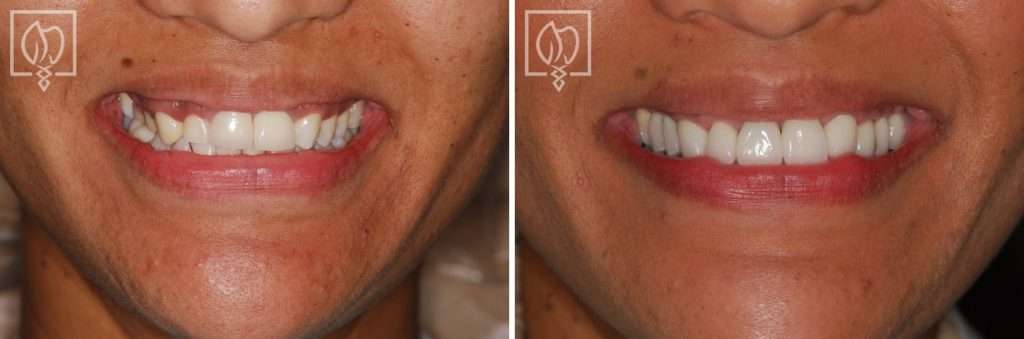
Multi-Faceted Treatment for Patient Unhappy With Her Artificial-Looking Crowns, Teeth and Gums
Many patients come to Elite Prosthetic Dentistry unhappy with the appearance of their smile. However, this particular patient presented with multiple interconnected problems that together created a smile she found deeply unsatisfying.

Salvaging Ms. N’s Severely Broken-Down Upper and Lower Teeth from Gum and Bone Disease
Many people in the U.S. suffer from extensive periodontal disease characterized by significant bone loss and shrinkage of the gum tissue. This condition can begin at a very young age and worsen quickly due to hereditary factors and lack of early diagnosis by their dentist.
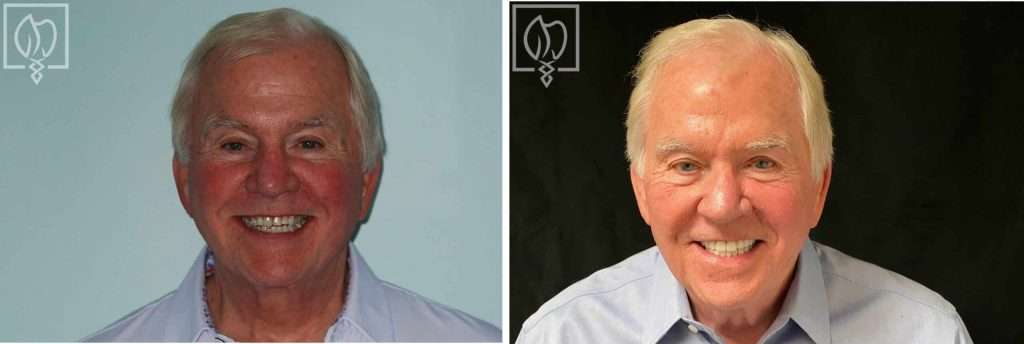
A Smile Transformation in Just Four Months: A Patient’s Dental Crown Restoration for a TV Series
A patient with dental crowns that were in poor shape was going to appear on a streaming video series on a major TV network that was scheduled to begin filming soon. Our patient, John, an author about to embark on a book tour, was anxious as his teeth were not up to his standards to appear on television.
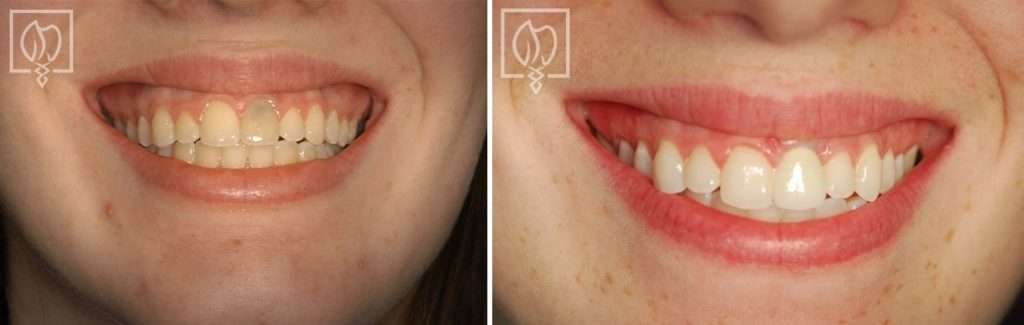
Replacing a Discolored Front Tooth with a Precision Placed Implant
Some of the most challenging restorations occur when fabricating an anterior crown to fit on an implant. Not only does one have the difficulty of matching the single front tooth to the other ones in the high visibility zone, but the dentist must also ensure the position of the underlying implant is precise through accurate preplanning and placement.
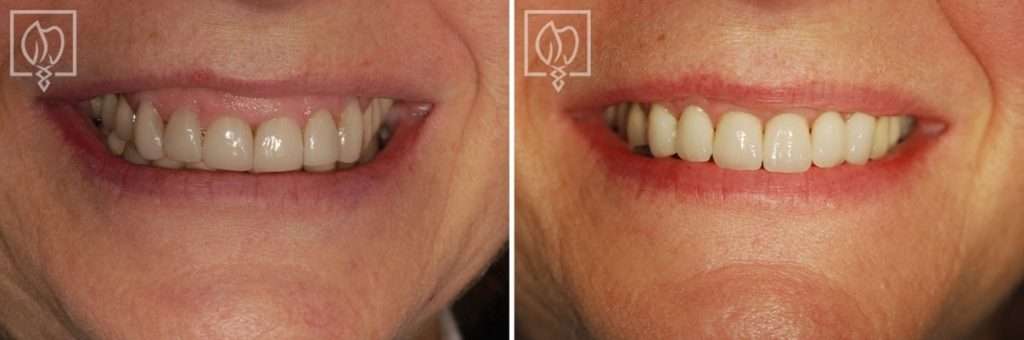
Patient Was Dissatisfied With Her 'Gummy' Smile
Excessive gingival tissue, commonly referred to as a "gummy smile," can significantly impact the appearance of a person's smile and their self-confidence. When someone smiles and a large amount of gum tissue is visible above the teeth, it can create the perception that the teeth are too small or short, even when they are actually normal size.
Our Services in McLean
Beyond loose-dental-crown, McLean patients rely on Dr. Gerald Marlin for a full range of advanced dental care.
More services available in McLean:
loose-dental-crown Near McLean
Dr. Gerald Marlin also provides loose-dental-crown services for patients in these neighboring communities.
Getting Here from McLean
Elite Prosthetic Dentistry is conveniently located near McLean, VA.
McLean residents can reach our practice in about 15 minutes via Route 123 or Chain Bridge Road. We accommodate McLean's affluent professional community with flexible scheduling and comprehensive restorative solutions.
Address:
4400 Jenifer Street NW, Suite 220
Washington, DC 20015
Phone: (202) 244-2101
Schedule ConsultationSchedule Your Consultation from McLean
McLean residents trust Dr. Gerald Marlin for precision dental care. With 3,900+ implants placed and 40+ years of experience, your smile is in expert hands.