

Crown & Bridge Problems in Potomac, MD
Potomac residents with failing crowns and bridges receive expert evaluation and specialized care from Dr. Marlin, a specialty-trained prosthodontist just 12 minutes away via River Road.
Potomac’s grand estates, established families, and scenic rivers combine to create one of the region’s most exclusive communities. Potomac residents typically value quality in all aspects of their lives and expect their dental care to meet the highest standards. When restorations fail or develop problems, Potomac patients want comprehensive evaluation and expert treatment from someone who understands complex restorative dentistry thoroughly.
Being just 12 minutes away via River Road, Dr. Marlin’s practice is conveniently located for Potomac residents seeking specialty evaluation and expert treatment of crown and bridge problems. Rather than traveling across the city, a brief drive provides access to prosthodontic expertise trained to diagnose and resolve the most complex restorative issues.
The Perpetually Loose Crown Problem
Some Potomac residents deal with a crown that becomes loose, gets recemented, and becomes loose again in a few months or a year. This frustrating cycle indicates that the underlying problem isn’t being addressed: the crown margin itself is compromised.
A crown margin that isn’t sealed properly won’t hold cement long-term. Bacteria and saliva infiltrate the microscopic gap between crown and tooth. Cement gradually breaks down. The crown becomes loose again. The patient returns for recementation, the cycle repeats.
Recementation is a temporary fix treating the symptom, not the problem. Replacement with a properly positioned crown is the permanent solution. The new crown is designed with careful attention to margin positioning, ensuring the edge of the crown seals tightly against the tooth surface. This tight seal prevents cement failure.
For Potomac patients experiencing this frustrating cycle, moving to definitive replacement often resolves the problem permanently, eliminating months or years of repeated appointments and temporary fixes.
Understanding Marginal Adaptation
The crown margin is the edge where the crown meets your tooth. When a crown is initially placed, this margin fits snugly against the tooth preparation. Over time, cement beneath the margin gradually breaks down due to bacterial acids, saliva, and mechanical stress. As cement deteriorates, the crown develops microscopic gaps.
These gaps are too small to feel or notice clinically, but they’re large enough to allow bacteria and saliva to seep underneath. Infection develops. The cement bond continues weakening. Eventually the crown becomes obviously loose.
A prosthodontist evaluates whether the problem is simple cement failure (which recementation might temporarily fix) or whether the crown margin itself is positioned poorly. If the margin isn’t sealed properly, recementation provides only temporary relief.
The Cost of Recurring Treatment
Potomac residents sometimes rationalize delaying crown replacement by calculating the cost difference between recementation and replacement. But if recementation is needed every 6-12 months, those costs accumulate quickly. After 3-4 recementations, the patient has paid nearly as much as a replacement would have cost, yet still doesn’t have a permanent solution.
Over ten years, repeated recementation can cost more than replacement would have cost once. Understanding the true long-term cost of recurring temporary fixes helps Potomac patients make better long-term financial decisions.
Evaluating Bridge Viability and Timeline
Potomac residents with bridges sometimes ask how much longer their bridge will last. This is a legitimate question deserving professional evaluation. A bridge that’s been trouble-free for many years may continue serving reliably for many more years. Or it may be approaching the end of its serviceable life.
Comprehensive evaluation of abutment tooth health, bone support levels, and bridge structure provides a realistic assessment. The prosthodontist assesses whether bone is remaining stable around the abutment teeth or whether it’s gradually resorbing. He evaluates whether the abutment teeth are developing decay or periodontal disease. He assesses the bridge structure itself for any signs of deterioration.
Some bridges function well for many more years. Others show early warning signs suggesting replacement should be planned within the next 2-5 years, before the situation deteriorates further.
Dr. Marlin helps Potomac patients understand their bridge’s current status, realistic timeline for replacement, and options for bridge replacement versus implant replacement when the time comes.
Understanding Loose Crown Margins and Decay Risk
When a crown becomes loose or when margins begin to fail, decay risk increases dramatically. The gap between crown and tooth provides an environment where decay thrives. Bacteria colonize the interface. Plaque accumulates in the gap. The tooth structure beneath the crown gradually demineralizes and cavitation begins.
This decay can progress silently for years before becoming symptomatic. By the time a patient notices pain or the crown finally fails, significant decay may have occurred beneath the crown surface. Treatment becomes more complex, often requiring root canal therapy or even extraction.
For Potomac residents noticing loosening crowns, professional evaluation and treatment should be prompt. Early diagnosis prevents extensive decay development.
Getting Here from Potomac
From Potomac, take River Road heading south toward Washington D.C. The drive is approximately 12 minutes depending on traffic. River Road offers a scenic route through established Potomac neighborhoods and historic areas, making the drive pleasant. Parking is readily available at the practice.
The Cost-benefit of Proactive Replacement
For Potomac patients evaluating whether to replace a problematic crown proactively or wait until it fails, understanding the cost-benefit helps decision-making. Proactive replacement during controlled circumstances is often less expensive than emergency treatment when the situation becomes acute.
When decay beneath a crown is detected early and small, treatment is simpler. The crown is removed, the decay is treated, and a new crown is fabricated. When decay progresses extensively and reaches the tooth’s pulp, root canal therapy becomes necessary. Root canal adds significant cost and complexity to the situation.
Similarly, bone loss around bridge abutments is easier to address and more predictable when treatment is planned than when discovered during emergency situations where the bridge has failed and requires urgent removal.
Proactive treatment often saves money and prevents disruption to Potomac patients’ busy lives.
Bridge Replacement vs. Implant Replacement
When Potomac residents need to replace a bridge, evaluating both bridge replacement and implant replacement options provides complete understanding. These solutions work differently and have different long-term implications.
A bridge uses adjacent teeth as support, relying on those teeth to bear the forces of chewing. Implant replacement installs a titanium post directly into the jaw bone, eliminating the need to crown adjacent teeth. Implants preserve the supporting teeth but require bone availability and a surgical procedure.
A bridge is less expensive initially but creates ongoing demands on the abutment teeth. An implant costs more initially but eventually provides better long-term outcomes by preserving the abutment teeth. Dr. Marlin presents both options with their advantages and disadvantages, helping Potomac patients make decisions aligned with their long-term thinking and budget priorities.
Scenario: The Crown That’s Fine Until It Isn’t
Some Potomac residents experience the scenario where a crown that felt completely fine suddenly causes pain or becomes loose overnight. This can seem shocking, but usually problems have been developing silently for months or years.
Decay at the margin develops gradually. Cement fails slowly over years. The pulp gradually becomes inflamed from bacterial infiltration. These processes are silent. The crown feels fine throughout. Then suddenly, when the problem becomes advanced enough, symptoms appear.
What seems like sudden failure usually represents problems that were developing for months or years before becoming symptomatic. Understanding this helps Potomac patients accept that regular professional monitoring is important even for crowns that seem fine.
Identifying Multiple Crown Failures
Some Potomac residents experience multiple crowns failing within a few years of each other. This pattern suggests an underlying issue worth investigating. Is the patient’s bite creating excessive forces in certain areas? Is aggressive decay susceptibility affecting multiple crowns? Is grinding or clenching accelerating wear on multiple restorations?
Identifying the root cause prevents continued failures in other crowns.
Dental Laboratory Collaboration
For Potomac residents requiring crown or bridge replacement, the in-house dental laboratory allows Dr. Marlin to oversee fabrication personally. This close collaboration ensures the restoration meets Dr. Marlin’s exacting standards for fit, function, and esthetics that Potomac residents expect.
Rather than sending specifications to an outside lab and hoping the result meets expectations, Dr. Marlin works directly with the lab technician. Shade matching, contour, and marginal fit are all carefully overseen.
Clinical Details: Decay Under Crowns
Decay developing beneath crowns is one of the most common reasons crowns ultimately fail. This decay develops when marginal adaptation breaks down. As the gap widens, bacteria and saliva access the tooth. Plaque accumulates in the crevice. Bacterial acid demineralizes tooth structure.
The decay typically starts at the margin and extends along the edge of the crown, sometimes extending significantly beneath the crown surface. By the time it’s detected, it may have undermined substantial tooth structure.
Digital radiography reveals decay development. Experienced prosthodontists also notice subtle visual signs: slight discoloration at the margin, a barely visible margin gap, or changes in tooth color suggesting something is wrong beneath.
Preventive Strategies for Potomac Residents
Dr. Marlin works with Potomac residents to develop strategies maximizing crown and bridge longevity. Meticulous oral hygiene focused specifically on cleaning around crown margins prevents plaque accumulation. Careful flossing removes plaque in spaces where a toothbrush can’t reach.
Avoiding hard foods, chewing on ice, or opening packages with teeth protects crowns from fracture and trauma. A protective night guard prevents damage from grinding or clenching. Regular professional monitoring catches early problems before they become advanced.
Potomac residents committed to these strategies often maintain their restorations well into their 70s and beyond.
Advanced Materials for Long-term Success
When Potomac residents require crown replacement, material selection reflects the high standards they expect. Different materials offer different characteristics.
Zirconia crowns offer superior durability and fracture resistance. These crowns rarely break and are highly resistant to wear. They’re slightly more opaque than other materials, so they work best for back teeth.
Lithium disilicate crowns provide excellent balance of esthetics and strength. They’re more translucent and natural-looking than zirconia while maintaining excellent durability. They work well for both front and back teeth.
Premium all-ceramic crowns offer maximum esthetics and are the most translucent, most closely resembling natural tooth color and light transmission. They’re slightly less fracture-resistant than zirconia, making them better for patients with gentle bites or for visible front teeth where appearance is the priority.
Material selection based on tooth location, patient’s bite force, and esthetic priorities ensures the restoration will serve optimally for many years.
Consultation and Strategic Planning
Dr. Marlin’s consultation with Potomac residents includes thorough examination, digital imaging, detailed explanation of findings, and strategic discussion of treatment planning. Rather than rushing through an appointment, Dr. Marlin takes time to understand each patient’s situation thoroughly.
Potomac patients appreciate this investment of time in careful evaluation. They leave the consultation understanding exactly what’s wrong with their crown or bridge, why problems occurred, what options exist for treatment, and what outcomes to expect.
Related Resources
Learn more about crown and bridge problems at our Crown and Bridge Problems page. To understand Dr. Marlin’s specialty training and approach, visit Meet Dr. Gerald Marlin. Explore our dental crowns in Potomac and prosthodontist services in Potomac for expert care nearby.
Potomac residents with crown and bridge concerns deserve evaluation by a specialist who understands complex restorative situations thoroughly and provides expert guidance reflecting their high standards. Dr. Marlin provides that expertise just 12 minutes from Potomac.
(202) 244-2101
(202) 244-2101
Frequently Asked Questions
My crown has been loose intermittently for a long time. Why hasn't my dentist just permanently fixed it?
A crown that's intermittently loose indicates cement breakdown. Recementation can stabilize it temporarily, but if the problem is recurrent, the issue is usually the crown margin itself. A margin that isn't sealed properly won't maintain cement long-term. Replacement with a properly positioned new crown is the permanent solution.
How do you measure if a bridge is still viable?
Bridge viability depends on abutment tooth health, bone support levels, the condition of the bridge structure, and absence of decay around margins. Periodic evaluation with digital imaging assesses these factors. Some bridges function well for many more years. Others show early warning signs suggesting replacement should be planned.
Is it better to replace a crown immediately when problems start or to delay to save money?
Delaying crown replacement usually costs more in the long run. Early decay accelerates, bone loss progresses, and problems compound. Emergency treatment when the situation becomes acute is often more expensive than planned replacement would have been. Proactive treatment saves money and disruption.
Can a bridge be replaced with implants without major surgery?
Implant placement involves surgical installation of titanium posts into bone. For Potomac patients with adequate bone, this is a straightforward outpatient procedure. For patients with bone loss, bone grafting may be necessary first. Your general dentist or a specialist can evaluate whether implant replacement is feasible.
What should I do if my crown feels good but my dentist says it needs replacement?
A crown can feel good while having underlying problems that your dentist detects through visual assessment and imaging. Early decay at the margin, bone loss around the tooth, or marginal deterioration may be invisible to the patient but obvious on examination. Trust your dentist's expertise while also getting a second opinion if uncertain.
Related Patient Success Stories
Explore similar patient success stories demonstrating our expertise in advanced prosthetic dentistry.

Temporary Crowns Restore Patient's Smile in Just One Day with an Immediate Smile Makeover
A patient from Potomac, Maryland, came to Elite Prosthetic Dentistry with the chief complaint of pain from a failing dental implant and its significant impact on her appearance.
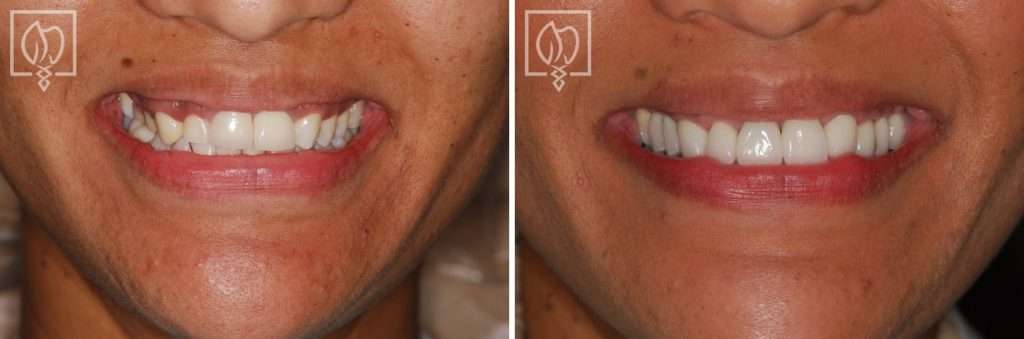
Multi-Faceted Treatment for Patient Unhappy With Her Artificial-Looking Crowns, Teeth and Gums
Many patients come to Elite Prosthetic Dentistry unhappy with the appearance of their smile. However, this particular patient presented with multiple interconnected problems that together created a smile she found deeply unsatisfying.

Salvaging Ms. N’s Severely Broken-Down Upper and Lower Teeth from Gum and Bone Disease
Many people in the U.S. suffer from extensive periodontal disease characterized by significant bone loss and shrinkage of the gum tissue. This condition can begin at a very young age and worsen quickly due to hereditary factors and lack of early diagnosis by their dentist.
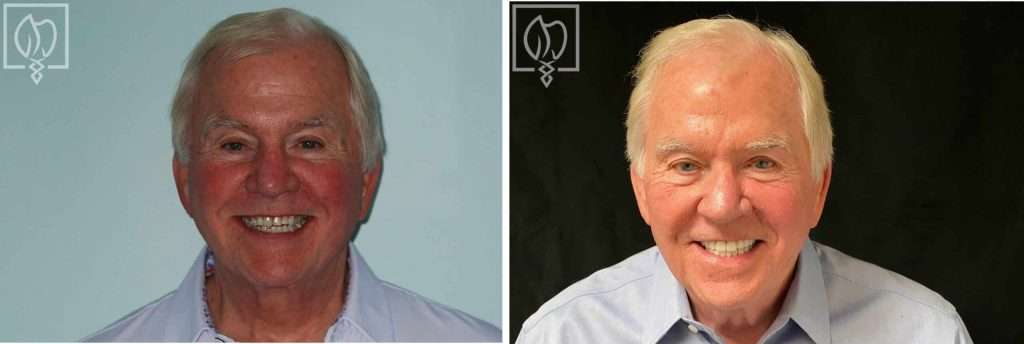
A Smile Transformation in Just Four Months: A Patient’s Dental Crown Restoration for a TV Series
A patient with dental crowns that were in poor shape was going to appear on a streaming video series on a major TV network that was scheduled to begin filming soon. Our patient, John, an author about to embark on a book tour, was anxious as his teeth were not up to his standards to appear on television.
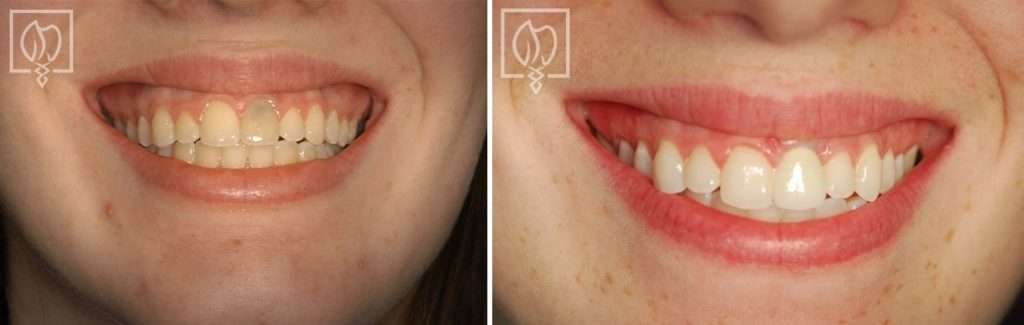
Replacing a Discolored Front Tooth with a Precision Placed Implant
Some of the most challenging restorations occur when fabricating an anterior crown to fit on an implant. Not only does one have the difficulty of matching the single front tooth to the other ones in the high visibility zone, but the dentist must also ensure the position of the underlying implant is precise through accurate preplanning and placement.
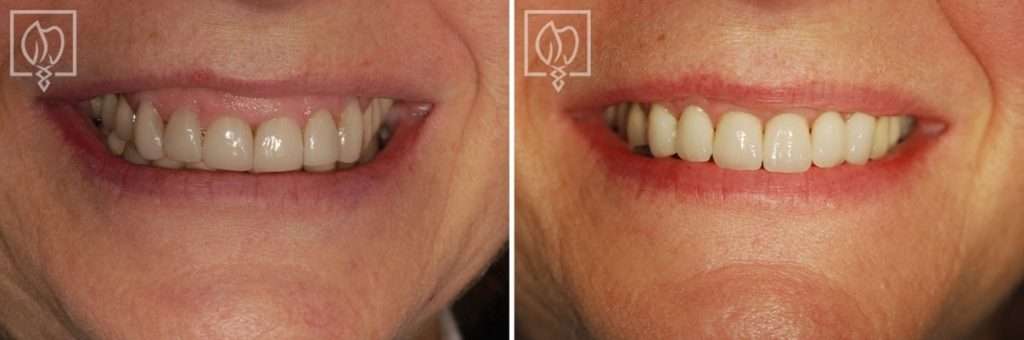
Patient Was Dissatisfied With Her 'Gummy' Smile
Excessive gingival tissue, commonly referred to as a "gummy smile," can significantly impact the appearance of a person's smile and their self-confidence. When someone smiles and a large amount of gum tissue is visible above the teeth, it can create the perception that the teeth are too small or short, even when they are actually normal size.
Our Services in Potomac
Beyond crown-problems, Potomac patients rely on Dr. Gerald Marlin for a full range of advanced dental care.
More services available in Potomac:
crown-problems Near Potomac
Dr. Gerald Marlin also provides crown-problems services for patients in these neighboring communities.
Getting Here from Potomac
Elite Prosthetic Dentistry is conveniently located near Potomac, MD.
Potomac residents reach our office in 12 minutes via River Road
Address:
4400 Jenifer Street NW, Suite 220
Washington, DC 20015
Phone: (202) 244-2101
Schedule ConsultationSchedule Your Consultation from Potomac
Potomac residents trust Dr. Gerald Marlin for precision dental care. With 3,900+ implants placed and 40+ years of experience, your smile is in expert hands.