

Crown & Bridge Problems in Kensington, MD
Kensington residents with failing crowns and problematic bridges receive specialized care and comprehensive evaluation from Dr. Marlin, a specialty-trained prosthodontist just 12 minutes away via Connecticut Avenue.
Kensington’s tree-lined streets, strong community spirit, and family-oriented neighborhoods attract professionals and families seeking accessibility to DC while maintaining suburban character. Kensington residents often maintain stable dental relationships but sometimes face crown or bridge complications that warrant specialist evaluation. When dental problems become complex or unclear, Kensington residents benefit from accessing specialists trained to diagnose and resolve situations beyond routine treatment.
Just 12 minutes away via Connecticut Avenue, Dr. Marlin’s practice provides convenient access to prosthodontic expertise for Kensington patients dealing with complex restorative problems. Rather than traveling across the city or remaining uncertain about dental concerns, nearby specialist consultation provides the clarity and expertise Kensington residents deserve.
Multi-abutment Bridge Problems: When Support Systems Fail
Kensington residents sometimes have bridges with both abutment teeth showing signs of weakness or compromise. A bridge is only as strong as its weakest support. If one abutment tooth is weak while the other is strong, uneven forces develop. The weak abutment bears too much stress. It deteriorates faster. Eventually the bridge becomes unstable.
This creates a dilemma: addressing one abutment tooth while the other remains weak may not stabilize the bridge long-term. Simply strengthening one abutment while ignoring the other is a temporary solution.
A prosthodontist evaluates both abutment teeth comprehensively. Digital imaging reveals bone levels around each abutment. Clinical examination assesses decay risk, periodontal health, and structural integrity. If both abutment teeth are compromised, a comprehensive approach is necessary.
The treatment approach might be simultaneous treatment of both abutment teeth and bridge replacement, ensuring both supports are optimized. Alternatively, if compromise is extensive, consideration of implant replacement eliminating dependence on abutment teeth becomes appropriate. Dr. Marlin discusses all available options.
Differential Support and Bite Imbalance
When bridge abutment teeth differ in support quality or bone density, forces may distribute unevenly. One abutment bears more load than the other, causing that tooth to experience excessive stress. Over time, this can accelerate problems in the more-loaded abutment.
Evaluation identifies this imbalance. Sometimes design features of the new bridge can distribute forces more evenly. Other times, treating the weaker abutment tooth strengthens it enough to balance the load.
Pulpal Involvement in Crown Problems
Kensington patients sometimes develop pain under a crown years after it was placed. If the pulp inside the tooth becomes infected or inflamed, the situation requires root canal therapy, not simply crown replacement or adjustment.
Diagnosis of pulpal involvement requires specific testing: vitality testing, radiographic findings, and pain characteristics. A prosthodontist can identify pulpal problems and coordinate with an endodontist for root canal therapy if needed.
Getting Here from Kensington
From Kensington, take Connecticut Avenue NW south toward Washington D.C. The drive is approximately 12 minutes depending on traffic. Kensington residents appreciate the straightforward drive on a main thoroughfare.
Scenario: The Bridge Failing Between Abutments
A specific scenario Kensington patients sometimes face is decay developing between the bridge and one of the abutment teeth. This decay is difficult to clean during normal hygiene and accelerates once it starts. The bridge must be removed to treat the decay and replace the abutment crown.
Early detection during routine professional evaluations allows treatment before the decay becomes extensive.
Bite Adjustment After Bridge Removal and Replacement
Kensington patients having bridges replaced should expect their bite to feel different initially. The new bridge may contact opposing teeth at a slightly different angle. Bite adjustment is often needed to perfect the contact.
This is normal and expected. Several weeks of adjustment are typical as your mouth adapts to the new restoration.
Multi-unit Restorative Planning
For Kensington patients with multiple crowns and bridges, planning comprehensive treatment is more efficient than addressing each restoration independently. Dr. Marlin assesses the entire situation and recommends sequencing that achieves better overall results.
Material Durability for Bridge Abutments
Bridge abutment crowns need to be particularly durable since they carry the extra load of supporting the bridge’s pontic (false tooth). Material selection becomes important. Zirconia offers superior strength and fracture resistance compared to older materials.
For Kensington patients choosing materials for bridge abutments, durability should be a primary consideration.
Periodontal Health and Bridge Viability
Kensington patients with bridges must maintain excellent periodontal health around the abutment teeth. Gum disease can compromise the support that bridge abutments depend on. Poor periodontal health can eventually make a bridge nonviable.
Dr. Marlin assesses periodontal health as part of comprehensive bridge evaluation and discusses maintenance strategies.
Consultation and Treatment Coordination
Dr. Marlin’s consultation with Kensington patients includes detailed examination of the problematic crowns and bridges, assessment of adjacent tooth and periodontal health, and digital imaging to visualize underlying problems.
Clear communication about findings and options guides Kensington patients toward confident treatment decisions.
Understanding Infection Under Crowns
When a Kensington patient develops pain under a crown years after placement, pulpal infection may be the cause. The pulp is the living nerve tissue inside the tooth. If bacteria penetrate beneath the crown margin through marginal leakage, bacterial infection can reach the pulp.
The pulp becomes inflamed and eventually dies. Root canal therapy is necessary to remove the infected pulp tissue. Without treatment, the infection can spread to the bone, creating an abscess.
Digital radiographs, vitality testing (using an electric stimulus to test nerve response), and clinical examination help determine if pulpal infection is present.
Strategic Treatment Sequencing
For Kensington patients with multiple crown or bridge problems, treatment sequencing is important. Addressing problems in logical order prevents complications and manages costs.
Usually, problems creating pain or acute compromise are addressed first. Then systematic evaluation determines which other restorations truly need replacement and which can be maintained. Dr. Marlin helps Kensington patients develop a prioritized treatment sequence.
Bridge Replacement Timing
Some Kensington patients ask whether to replace a bridge now when problems are starting to appear or wait until the bridge fails completely. Proactive replacement during controlled circumstances is typically preferable to emergency replacement when the bridge finally fails.
Early replacement prevents problems in abutment teeth from becoming more extensive. It prevents the situation where decay has spread too far or bone loss has become too severe.
Preventive Strategies for Bridge Longevity
For Kensington patients with bridges, meticulous cleaning around the pontic and excellent overall oral hygiene are essential. A water flosser or bridge threader cleans effectively under the pontic where manual floss cannot reach.
Regular professional monitoring identifies early problems before they become advanced. Digital imaging every 2-3 years helps detect decay or bone loss developing around abutment teeth.
Material Selection and Bridge Design
When Kensington patients require bridge replacement, material selection for abutment crowns should emphasize durability since abutment crowns bear extra stress supporting the pontic.
Zirconia abutment crowns offer exceptional strength and fracture resistance. Lithium disilicate also provides good durability. Older porcelain-over-metal becomes more prone to chipping.
Bridge design also matters. Some designs distribute forces more evenly. A prosthodontist optimizes the design for the specific patient’s abutment teeth strength and anatomy.
Alternative Solutions to Bridge Replacement
When a bridge requires replacement, Kensington patients should understand that dental implants are an alternative worth considering. An implant replaces the missing tooth directly without requiring abutment teeth. This eliminates the ongoing dependence on those teeth and often preserves the long-term health of the abutment teeth.
Dr. Marlin discusses both bridge replacement and implant replacement, presenting the advantages and disadvantages of each approach.
Clinical Examination and Detailed Assessment
When evaluating bridge or crown problems, a prosthodontist performs specific clinical tests. Probing assesses margin gaps and integrity. Percussion testing (tapping on the tooth) can reveal pulpal problems. Mobility testing detects movement in abutment teeth.
These clinical findings combined with digital imaging reveal problems not obvious on superficial examination.
Related Resources
Learn more about crown and bridge problems at our Crown and Bridge Problems page. To understand Dr. Marlin’s specialty training, visit Meet Dr. Gerald Marlin. Explore our dental crowns in Kensington services for expert restorative care nearby.
Understanding Decay Progression Beneath Crowns
One of the most serious crown complications is decay developing beneath the crown margin. This process begins when marginal adaptation fails and gaps develop between the crown and tooth. Bacteria and saliva seep into the gap. Plaque accumulates in the interface.
Bacterial acids demineralize tooth structure. Initially the decay is small. Over months or years the cavity enlarges. It extends laterally along the crown margin. It extends apically (downward) along the root.
By the time decay becomes obvious through pain or visual inspection, it may have extended extensively. Treatment becomes complex. Root canal therapy may be necessary if decay reaches the pulp.
Digital radiographs reveal early decay development. A properly positioned radiograph shows decay as a radiolucent (dark) area beneath the crown margin.
For Kensington residents, periodic radiographs every 2-3 years help catch decay before it becomes advanced. Early intervention is far simpler than advanced decay treatment.
Material Science and Longevity
Understanding crown materials helps Kensington residents make informed material selections. Different materials have different advantages.
Porcelain-over-metal (PFM) crowns were the standard for decades. They’re durable and economical. However, porcelain can chip. Metal can corrode. The metal shows if porcelain chips away.
All-ceramic crowns are beautiful and eliminate metal. They’re more prone to fracture than zirconia.
Zirconia crowns are extremely strong and fracture-resistant. They’re less translucent than all-ceramic, so they work better for back teeth.
Lithium disilicate combines good esthetics with good strength, making it an excellent all-purpose choice.
For Kensington residents, material selection should consider both tooth location (front vs. back) and individual factors (bite force, esthetic priority).
Bridge Failures and Prevention
Bridges fail through several mechanisms that Kensington residents should understand.
Decay at abutment margins is the most common failure cause. Bone loss around abutment teeth weakens support. The pontic (false tooth) section fractures. Abutment crowns develop problems.
Prevention requires excellent oral hygiene focused on abutment margins. A water flosser cleans under the pontic effectively. Regular professional monitoring catches early problems.
For Kensington residents, understanding bridge failure mechanisms helps motivate preventive care.
Kensington residents experiencing crown or bridge problems deserve evaluation by a specialist trained to diagnose complex situations and plan treatment strategically. Dr. Marlin provides that expertise just 12 minutes from your community.
(202) 244-2101
Frequently Asked Questions
My bridge has one support tooth that seems weaker than the other. Can I reinforce just that tooth?
If one bridge abutment tooth is weaker or compromised, simply reinforcing it may not solve the underlying problem. The weak abutment tooth requires specific evaluation and treatment addressing the source of weakness. Sometimes that means additional decay treatment, periodontal therapy, or replacing the abutment crown.
Can I keep a crown if the tooth underneath gets infected?
If the pulp inside the tooth (the living nerve tissue) becomes infected, root canal therapy is necessary. The tooth cannot be saved by simply replacing or tightening the crown. After root canal therapy, the tooth can usually be crowned again and will function normally.
What happens to my bite when a bridge is removed?
When a bridge spanning a missing tooth is removed, you lose the false tooth's contact with opposing teeth. Your bite pattern changes and feels different, sometimes noticeably so. This adjustment period is normal and usually settles within days to a week as your mouth adapts.
Is it better to have crowns replaced one at a time or as a group?
This depends on the specific situation. Replacing related crowns together sometimes produces better overall bite and esthetic results. But replacing all crowns at once involves significant time and cost. Dr. Marlin helps you prioritize based on which crowns truly need attention first.
Why would a crown tooth start hurting years after the crown is placed?
Pain developing years after crown placement usually indicates a problem has developed: pulpal inflammation from marginal leakage, inflammation from bite trauma, or decay developing beneath the crown margin. Each situation requires specific diagnosis to determine the cause and appropriate treatment.
Related Patient Success Stories
Explore similar patient success stories demonstrating our expertise in advanced prosthetic dentistry.

Temporary Crowns Restore Patient's Smile in Just One Day with an Immediate Smile Makeover
A patient from Potomac, Maryland, came to Elite Prosthetic Dentistry with the chief complaint of pain from a failing dental implant and its significant impact on her appearance.
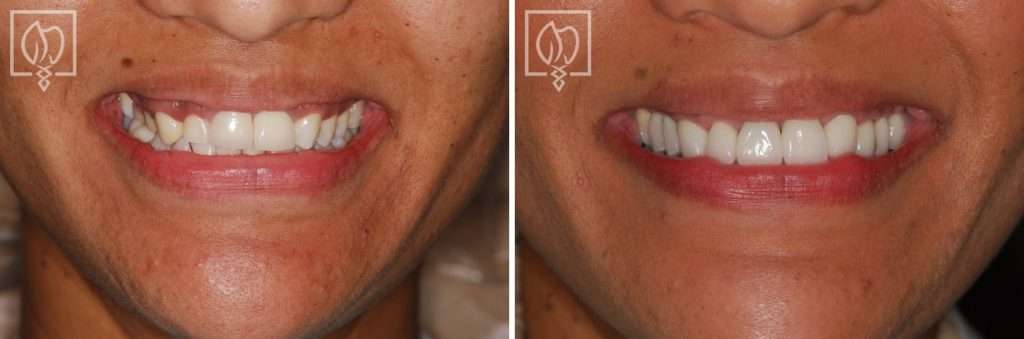
Multi-Faceted Treatment for Patient Unhappy With Her Artificial-Looking Crowns, Teeth and Gums
Many patients come to Elite Prosthetic Dentistry unhappy with the appearance of their smile. However, this particular patient presented with multiple interconnected problems that together created a smile she found deeply unsatisfying.
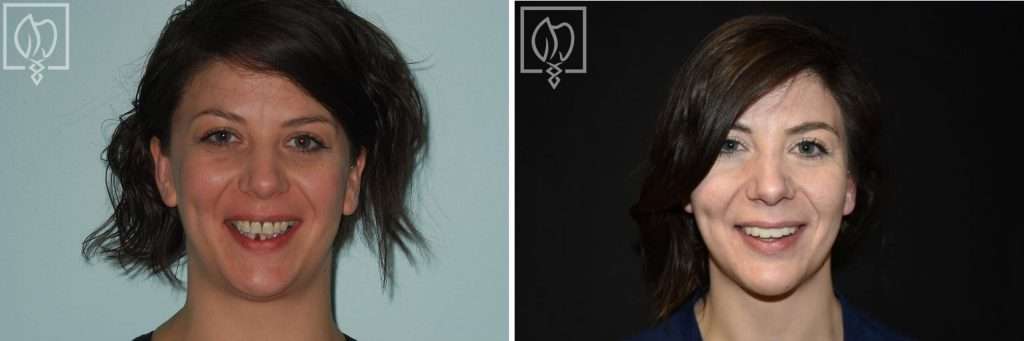
Salvaging Ms. N’s Severely Broken-Down Upper and Lower Teeth from Gum and Bone Disease
Many people in the U.S. suffer from extensive periodontal disease characterized by significant bone loss and shrinkage of the gum tissue. This condition can begin at a very young age and worsen quickly due to hereditary factors and lack of early diagnosis by their dentist.
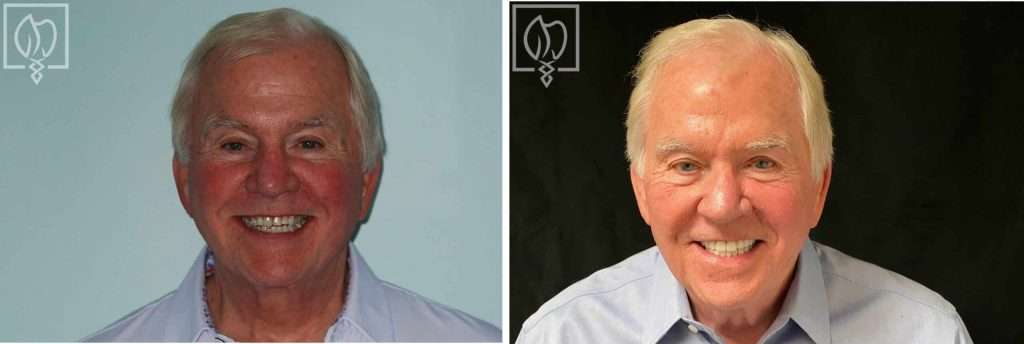
A Smile Transformation in Just Four Months: A Patient’s Dental Crown Restoration for a TV Series
A patient with dental crowns that were in poor shape was going to appear on a streaming video series on a major TV network that was scheduled to begin filming soon. Our patient, John, an author about to embark on a book tour, was anxious as his teeth were not up to his standards to appear on television.
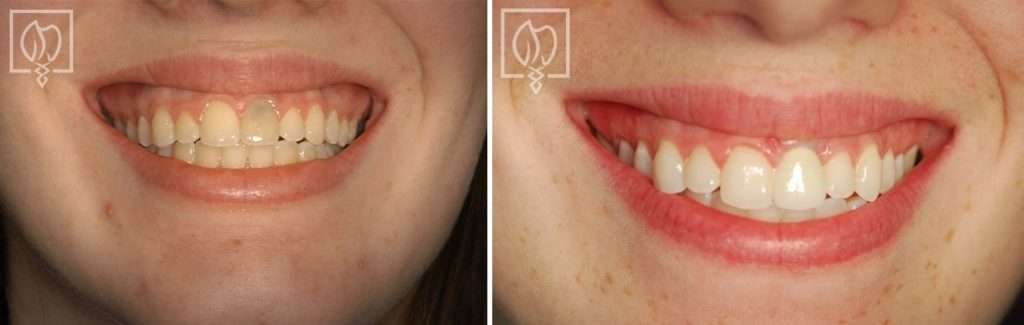
Replacing a Discolored Front Tooth with a Precision Placed Implant
Some of the most challenging restorations occur when fabricating an anterior crown to fit on an implant. Not only does one have the difficulty of matching the single front tooth to the other ones in the high visibility zone, but the dentist must also ensure the position of the underlying implant is precise through accurate preplanning and placement.
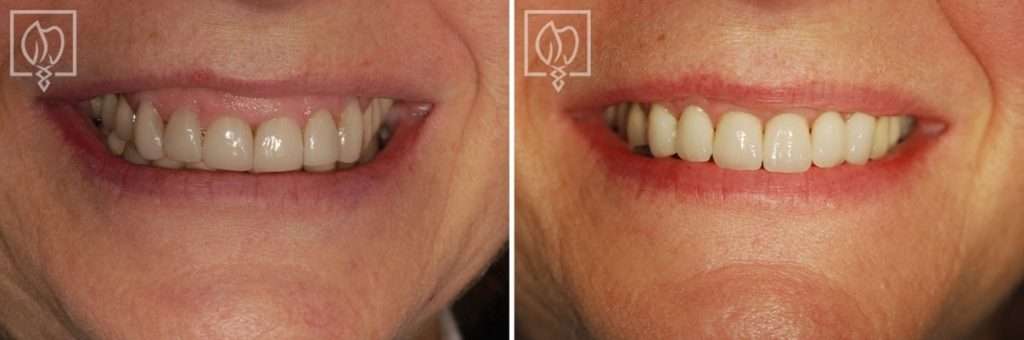
Patient Was Dissatisfied With Her 'Gummy' Smile
Excessive gingival tissue, commonly referred to as a "gummy smile," can significantly impact the appearance of a person's smile and their self-confidence. When someone smiles and a large amount of gum tissue is visible above the teeth, it can create the perception that the teeth are too small or short, even when they are actually normal size.
Our Services in Kensington
Beyond crown-problems, Kensington patients rely on Dr. Gerald Marlin for a full range of advanced dental care.
More services available in Kensington:
crown-problems Near Kensington
Dr. Gerald Marlin also provides crown-problems services for patients in these neighboring communities.
Getting Here from Kensington
Elite Prosthetic Dentistry is conveniently located near Kensington, MD.
Kensington residents reach our office in 12 minutes via Connecticut Avenue NW
Address:
4400 Jenifer Street NW, Suite 220
Washington, DC 20015
Phone: (202) 244-2101
Schedule ConsultationSchedule Your Consultation from Kensington
Kensington residents trust Dr. Gerald Marlin for precision dental care. With 3,900+ implants placed and 40+ years of experience, your smile is in expert hands.