

Crown & Bridge Problems in Cabin John, MD
Cabin John residents seeking expert evaluation of failing crowns and problematic bridges find specialized care and thorough diagnosis from Dr. Marlin, a specialty-trained prosthodontist just 10 minutes away via MacArthur Boulevard.
Cabin John’s leafy neighborhood character, quiet community feel, and proximity to the C&O Canal make it an appealing home base for families and professionals who value a slower pace than busier areas of the metro region. Yet Cabin John residents still deal with the same dental challenges as their urban counterparts, and when a crown or bridge develops problems, they need access to expert evaluation without spending an hour in traffic.
Dr. Gerald Marlin’s practice is just 10 minutes away via MacArthur Boulevard, making a specialist consultation a reasonable afternoon appointment for Cabin John residents. This accessibility is particularly valuable when you’re experiencing crown or bridge issues that your general dentist has been unable to diagnose clearly.
Sensitivity Under Crowns: When It’s More Than Irritation
Cabin John patients sometimes report sensitivity developing under a crown that’s been in place for many years without problems. The tooth is sensitive to cold, sometimes to chewing. This is a warning sign that should never be ignored.
In the early years after a crown is placed, sensitivity typically indicates that the pulp is irritated by the preparation and needs time to settle. If sensitivity develops years later, it usually means something has changed. Marginal adaptation may have deteriorated. Cement may be washing out, allowing bacteria to leak into the space between the crown and the tooth. Early decay might be developing at the margin.
A prosthodontist evaluates what’s causing the sensitivity through examination and imaging. Sometimes the fix is straightforward: recement the crown or adjust the margin. Other times, more intervention is needed. But waiting to address sensitivity risks allowing decay to spread under the crown, which can ultimately require the crown to be removed and replaced.
The Pulp Inflammation Scenario
Inside every tooth is living tissue called the pulp. When a crown is first placed, the pulp often reacts to the preparation and the thermal changes caused by the crown. This inflammation typically settles within weeks to months. But if sensitivity persists or returns years later, it suggests the pulp is again being irritated.
Causes include marginal leakage from failed cement, recurrent decay at the crown margin, or trauma to the tooth from an occlusal problem. Identifying the cause is essential. If it’s marginal leakage from cement loss, recementation may help. If it’s decay, the crown likely needs removal and replacement. If it’s bite trauma, adjustment may help, but sometimes crown replacement is necessary to achieve a proper bite.
Bridge Support and Bone Resorption
Cabin John residents with bridges sometimes experience subtle changes that only a specialist notices. A bridge that has been in place for a decade may slowly lose support as bone resorbs beneath the abutment teeth. The loss is gradual enough that patients don’t notice until the bridge becomes unstable or one of the abutment teeth fails.
This is where specialized evaluation adds value. A prosthodontist assesses bone levels around bridge abutments, looking for early signs of deterioration. If bone loss is significant, it may be time to remove the bridge and consider dental implants, which provide better long-term preservation of jawbone. If bone loss is mild, the bridge may continue functioning well for several more years, but monitoring becomes important.
Aesthetic Complications of Aging Restorations
Cabin John residents who’ve maintained their crowns well functionally sometimes face aesthetic concerns. Gold or metal-backed crowns become more noticeable as they age. All-ceramic crowns can become discolored where the glaze has worn. Dark margins appear as gums recede. The smile that looked good five or ten years ago no longer matches contemporary aesthetic standards or the patient’s expectations.
For Cabin John patients in their 50s, 60s, or beyond, this often prompts the question: is it worth replacing crowns that still function well simply for aesthetics? Dr. Marlin helps you weigh the costs and benefits. If a crown is in a highly visible area and the patient cares about appearance, replacement with a modern all-ceramic restoration might make sense. If the crown is posterior and less visible, you might choose to keep it until it actually needs replacement for functional reasons.
Getting Here from Cabin John
From Cabin John, take MacArthur Boulevard heading east toward Washington D.C. The drive is straightforward and takes approximately 10 minutes depending on traffic. The office is accessible and has parking available, making this a convenient appointment for Cabin John residents.
The Problem Crown That Was “Fine” at the Last Checkup
A frustrating scenario for Cabin John patients is discovering crown problems between dental visits. A crown that appeared fine at the last checkup suddenly causes pain, starts feeling loose, or shows signs of decay around the margin. This can happen because:
Early decay is invisible on the crown surface. Marginal problems develop gradually. Pulpal inflammation escalates suddenly as the problem worsens. Internal cement failure occurs without external signs until the crown becomes loose.
This is why some patients benefit from seeing a prosthodontist even between general dental visits, particularly if they have multiple crowns or bridges. A specialist can often detect incipient problems that haven’t yet become obvious.
Chipped Crowns and Material Selection
Cabin John residents who’ve experienced chipped crowns often worry about whether replacement is necessary or whether a filling will work. The answer depends on where the chip is and how large it is.
A small chip on a non-functional surface might be observed or repaired with composite. But a large chip, a chip on a biting surface, or a chip at the margin usually requires replacement. More importantly, if the original crown was made with a material prone to chipping (like porcelain over metal), the replacement might use a more durable material like zirconia or lithium disilicate to prevent recurrent chipping.
Material selection during replacement planning prevents repeated problems. A prosthodontist considers your bite forces, your habits, and the location of the tooth to recommend materials that will last longer.
Addressing Grinding and Clenching
Some Cabin John residents grind their teeth at night or clench during stressful work. This habit accelerates crown wear and can cause fractures. Existing crowns may chip or crack. If you’re having crowns replaced, discussing grinding and clenching with Dr. Marlin allows him to recommend materials and designs that withstand higher forces.
A night guard is often recommended to protect restorations and natural teeth. The combination of a protective guard and properly selected crown materials significantly improves longevity.
What to Expect During Your Crown Evaluation
Dr. Marlin will examine the crown under magnification, assess the margin, check for signs of decay or leakage, and evaluate how the crown relates to your bite. He’ll take digital images to see what’s happening beneath the visible surface. If the problem is sensitivity, he’ll test the tooth’s response to determine whether the pulp is involved.
Based on findings, you’ll understand exactly what’s happening and what your options are. If the crown can be salvaged, you’ll know how. If replacement is necessary, you’ll understand why the current crown is problematic and how the new restoration will be designed to avoid repeating those problems.
Long-Term Crown Maintenance Strategy
For Cabin John patients with several crowns, thinking long-term about maintenance and eventual replacement is wise. Rather than addressing each problem in isolation, Dr. Marlin helps you develop a strategy: which crowns should be replaced now, which can be maintained for several more years, how to prevent problems in others, and what the long-term sequence of care might look like.
This strategic approach often proves more economical and less disruptive than repeatedly dealing with crown crises as they arise.
Related Resources
Learn more about crown problems and treatment options at our Crown and Bridge Problems page. For details about Dr. Marlin’s training and approach, visit Meet Dr. Gerald Marlin. Explore our dental crowns in Cabin John services for more information about comprehensive crown care.
Cabin John residents experiencing crown or bridge problems deserve evaluation by someone with the training to diagnose complex issues accurately. Dr. Marlin provides that expertise just 10 minutes from your home.
(202) 244-2101
Frequently Asked Questions
My crown is sensitive to cold even though I've had it for years. What's happening?
Sensitivity developing years after crown placement often indicates marginal leakage or early decay at the margin. Bacteria infiltrate beneath the restoration, irritating the pulp. This requires examination to determine whether the sensitivity is restorable through margin adjustment or whether the crown needs replacement.
Can a crown cause my other teeth to start hurting?
Yes. A crown that alters your bite can cause adjacent teeth and their supporting bone to experience abnormal stress. This can cause achiness in neighboring teeth, pain while chewing, or sensitivity. Correcting the bite through crown adjustment or replacement usually resolves the referred pain.
What's the difference between a crown that's loose and one that might be loose?
A truly loose crown moves perceptibly when probed. A crown that's not moving but might be compromised internally requires imaging to detect marginal gaps or internal voids where cement has failed. Both situations benefit from professional evaluation to determine the extent of the problem.
Is it possible to fix a chipped crown, or does it need replacement?
Small chips in the porcelain or ceramic of a crown can sometimes be repaired with composite material, though this is temporary. Larger chips or chips in critical areas usually require replacement because the repair may fail and because the defect compromises the seal. Material selection for the new crown influences longevity.
How do I prevent crown problems from developing in my other teeth?
Maintain excellent oral hygiene, particularly around crown margins. Avoid hard foods and activities that place extreme stress on restorations. Address grinding or clenching through a night guard if necessary. See your dentist regularly for evaluation. Some people maintain crowns well for 20 years; others need replacement sooner depending on materials and habits.
Related Patient Success Stories
Explore similar patient success stories demonstrating our expertise in advanced prosthetic dentistry.

Temporary Crowns Restore Patient's Smile in Just One Day with an Immediate Smile Makeover
A patient from Potomac, Maryland, came to Elite Prosthetic Dentistry with the chief complaint of pain from a failing dental implant and its significant impact on her appearance.
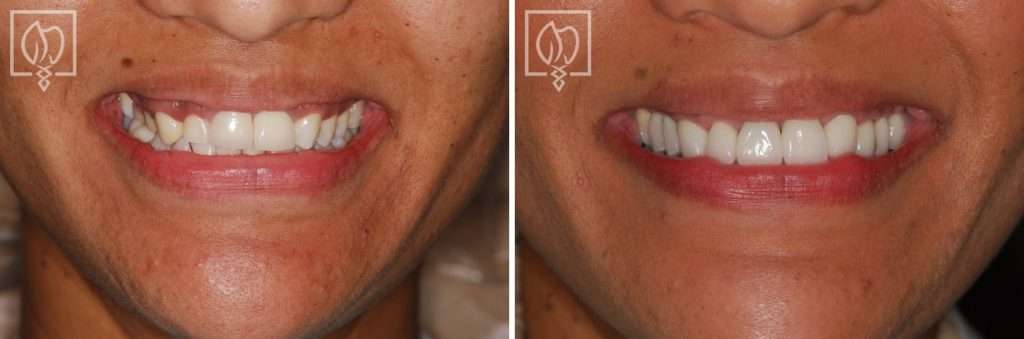
Multi-Faceted Treatment for Patient Unhappy With Her Artificial-Looking Crowns, Teeth and Gums
Many patients come to Elite Prosthetic Dentistry unhappy with the appearance of their smile. However, this particular patient presented with multiple interconnected problems that together created a smile she found deeply unsatisfying.

Salvaging Ms. N’s Severely Broken-Down Upper and Lower Teeth from Gum and Bone Disease
Many people in the U.S. suffer from extensive periodontal disease characterized by significant bone loss and shrinkage of the gum tissue. This condition can begin at a very young age and worsen quickly due to hereditary factors and lack of early diagnosis by their dentist.
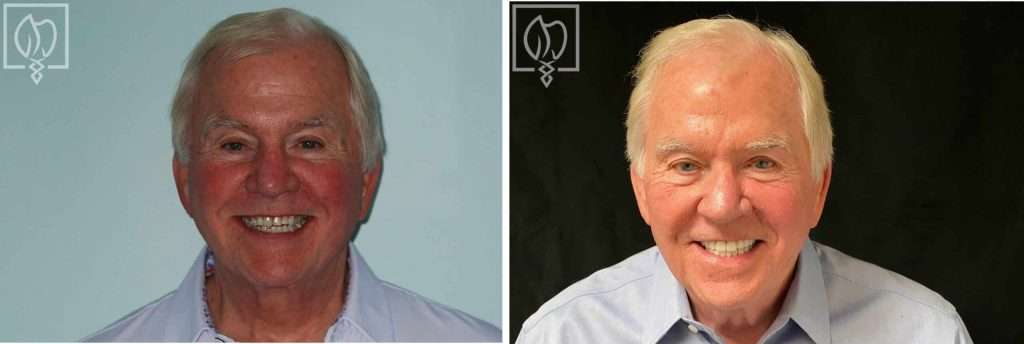
A Smile Transformation in Just Four Months: A Patient’s Dental Crown Restoration for a TV Series
A patient with dental crowns that were in poor shape was going to appear on a streaming video series on a major TV network that was scheduled to begin filming soon. Our patient, John, an author about to embark on a book tour, was anxious as his teeth were not up to his standards to appear on television.
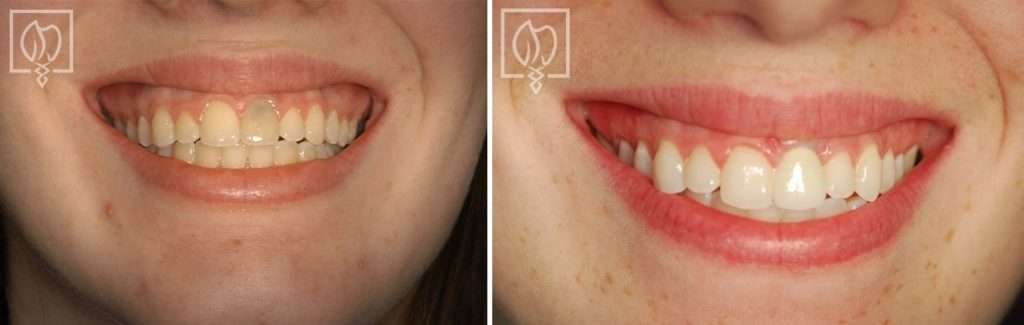
Replacing a Discolored Front Tooth with a Precision Placed Implant
Some of the most challenging restorations occur when fabricating an anterior crown to fit on an implant. Not only does one have the difficulty of matching the single front tooth to the other ones in the high visibility zone, but the dentist must also ensure the position of the underlying implant is precise through accurate preplanning and placement.
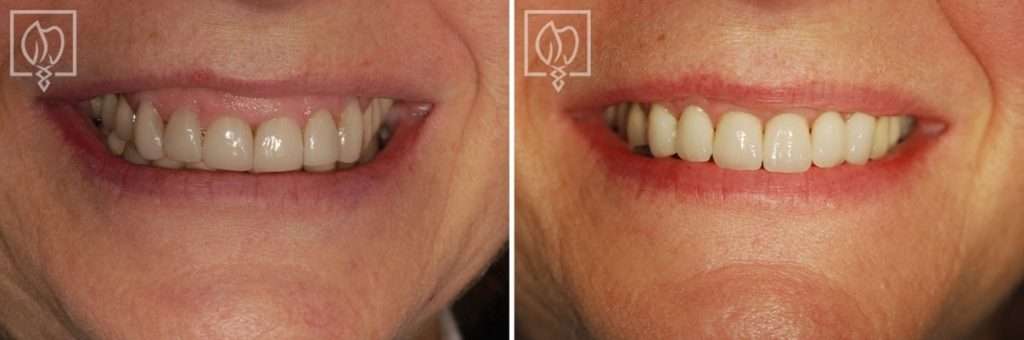
Patient Was Dissatisfied With Her 'Gummy' Smile
Excessive gingival tissue, commonly referred to as a "gummy smile," can significantly impact the appearance of a person's smile and their self-confidence. When someone smiles and a large amount of gum tissue is visible above the teeth, it can create the perception that the teeth are too small or short, even when they are actually normal size.
Our Services in Cabin John
Beyond crown-problems, Cabin John patients rely on Dr. Gerald Marlin for a full range of advanced dental care.
More services available in Cabin John:
crown-problems Near Cabin John
Dr. Gerald Marlin also provides crown-problems services for patients in these neighboring communities.
Getting Here from Cabin John
Elite Prosthetic Dentistry is conveniently located near Cabin John, MD.
Cabin John residents reach our office in 10 minutes via MacArthur Boulevard
Address:
4400 Jenifer Street NW, Suite 220
Washington, DC 20015
Phone: (202) 244-2101
Schedule ConsultationSchedule Your Consultation from Cabin John
Cabin John residents trust Dr. Gerald Marlin for precision dental care. With 3,900+ implants placed and 40+ years of experience, your smile is in expert hands.