
Veneer Fell Off in Potomac, MD
When should you rebond your fallen veneer versus replace it? Potomac patients learn the clinical decision framework that determines your best outcome.
Rebonding Versus Replacement: The Decision Framework for Your Fallen Veneer
Your veneer fell off. Now you face a decision: rebond the original veneer or have it replaced?
The answer depends on specific clinical factors. Some veneers can and should be rebonded. Others have damage that makes replacement necessary or preferable. This guide walks through the decision framework, the advantages and disadvantages of each approach, and how we help you choose.
Assessing Your Veneer for Rebonding Candidacy
The first step is examining your fallen veneer closely. We look for specific damage patterns that determine whether rebonding is viable.
A veneer that can be rebonded should have:
No cracks or fractures. The ceramic should be intact. Cracks may not be visible initially but become apparent under magnification or examination from certain angles. Our in-house lab experience means we can assess these details with precision.
No crazing. Crazing is a network of fine surface cracks, usually from water absorption by the resin bonding layer. If the veneer shows crazing, it has absorbed water and rebonding is less reliable.
No opacity changes. A veneer should be translucent and somewhat glossy. If it’s become opaque or dull, water absorption has compromised the internal structure.
No ceramic chipping at the edges. If the ceramic at the margins is chipped or fractured, the restoration is compromised structurally.
Clean internal surface. The back surface should be relatively clean, without thick resin buildup or debris.
If your veneer has any of these damage patterns, replacement is preferable to rebonding.
Assessing Your Tooth Preparation for Rebonding Candidacy
The second step is examining your tooth preparation. We look for damage that affects whether rebonding is viable.
A preparation that can support rebonding should have:
No enamel loss. Enamel provides the best bonding surface. If bonding removed significant enamel from the preparation surface, you’ve lost bonding surface area.
No secondary decay. If decay is present at the margin or on the preparation, we must remove it. This changes the preparation geometry.
No structural chips or fractures. If your tooth broke or chipped when the veneer debonded, structural integrity is compromised.
No extreme wear or erosion. Normal function creates some wear. Extreme acid erosion or wear changes the preparation geometry.
Adequate enamel at the margin. The margin should be in enamel or minimally in dentin. If the margin is on dentin, rebonding is less reliable than replacement, which allows us to extend the margin back into enamel.
If your preparation shows any of these damage patterns, replacement may be the better choice.
The Rebonding Process: What Happens and What It Accomplishes
If both your veneer and tooth preparation are intact, rebonding is straightforward.
We begin with rubber dam isolation to keep the area completely dry and prevent saliva contamination.
We examine the back of the veneer under magnification. If old resin remains, we gently remove it. The goal is to clean the back surface without damaging the ceramic.
We then etch the ceramic back surface with hydrofluoric acid, creating the microscopic pits that allow resin to lock in mechanically.
We apply primer and bonding resin to the ceramic surface.
We prepare your tooth surface. We etch enamel for 30 seconds using modern selective-etch technique.
We apply bonding agents to your tooth.
We flow composite resin between the veneer and tooth, creating a new resin layer bonding them together.
We position the veneer precisely using a bite guide and incisal edge guide.
We cure the resin thoroughly with a high-intensity light.
We check your bite, adjust if necessary, and polish margins.
The entire rebonding process takes 20-40 minutes.
The result is a veneer that’s as bonded as it was originally, but with modern adhesive technique that’s superior to whatever was used originally.
The Replacement Process: Lab Fabrication and Timeline
If replacement is necessary, here’s the timeline and process:
First appointment: We take impressions of your tooth and surrounding teeth. We create a temporary veneer or protection while the lab works.
Lab work: Our partner laboratory receives your case. The lab technician fabricates your custom veneer, typically within 10-14 days.
Second appointment: We bond your new veneer using the same excellent technique we’d use for rebonding.
Total time: 2-3 weeks from first appointment to final bonding.
The advantage of replacement is that we can improve the original design. If the original veneer had limitations, the replacement can address them. If the preparation has minor damage we can correct, replacement allows that correction. If we’ve identified that the original material or bonding technique was suboptimal, replacement uses better material and technique.
Comparing Rebonding and Replacement: Trade-Offs
Let’s compare these approaches directly.
Rebonding Advantages:
- One appointment, quick solution
- Preserves your original veneer design and characteristics
- Less cost than replacement
- If the original veneer was well-designed, you get that design back
- Minimal additional tooth structure removal
Rebonding Disadvantages:
- Only viable if veneer and tooth are intact
- Doesn’t address if original design had limitations
- Doesn’t upgrade material if original was composite or lower-quality ceramic
- If original bonding was poor, rebonding may have the same limitation
- Doesn’t allow correction of preparation design issues
Replacement Advantages:
- Allows improvement of original design
- Allows material upgrade (composite to porcelain, or better porcelain)
- Allows preparation refinement if original had limitations
- New veneer can be optimized for your specific bite
- Modern lab creates a restoration with current standards
- Opportunity to address any design flaws the original had
Replacement Disadvantages:
- Takes 2-3 weeks instead of one appointment
- More expensive than rebonding
- Requires slight additional tooth preparation for new impression and proper seating
- If you’re in a time-critical situation, this timeline may not work
Clinical Scenarios and What Makes Sense
Let’s walk through specific situations:
Scenario 1: Your veneer fell off yesterday, it’s completely intact, your tooth preparation looks good. Rebonding makes sense. We can rebond today or tomorrow. You have your restoration back immediately. If the original design was good, rebonding is the most practical option.
Scenario 2: Your veneer fell off, it has visible crazing, and some old resin is still bonded to your tooth. Replacement is better. The crazing indicates water damage. Rebonding the damaged veneer will likely fail again. New veneer is preferable. We clean your tooth preparation, take impressions, and have a new veneer fabricated.
Scenario 3: Your veneer fell off, it’s intact, but your tooth preparation shows secondary decay at the margin. Replacement is necessary. We must remove the decay, which changes the preparation geometry. Rebonding the original veneer won’t fit properly after decay removal. New veneer accommodates the refined preparation.
Scenario 4: Your veneer fell off, both veneer and tooth look fine, but you had composite veneer and it failed due to material limitations. This depends on your preference. Rebonding the composite is possible but it will likely fail again because composite has inherent limitations. Replacement with porcelain solves the problem long-term. The choice is between short-term solution (rebonding) or long-term solution (replacement).
Scenario 5: Your veneer fell off due to bruxism, the veneer is intact, but you realize you need occlusal protection. Rebonding is possible, but we recommend replacement. The original design didn’t account for your grinding. New veneer can be designed to distribute grinding forces better. Additionally, you’ll get a nightguard to protect the new restoration.
How We Help You Decide
When you come to our Potomac office with your debonded veneer, we examine thoroughly and present both options with clear information about trade-offs.
We explain what we found in our examination. We explain whether rebonding is even viable given what we see.
If both options are viable, we discuss the advantages and disadvantages of each.
We discuss timeline (rebonding is faster, replacement takes weeks).
We discuss cost, though we handle that conversation delicately (both are valuable choices).
We discuss your specific situation (do you need the veneer back immediately for a work event? Do you have time for lab work? Is the original design something you loved?).
We answer your questions and listen to your preferences.
Then you decide. It’s your mouth and your choice. We support whichever path you choose and execute it excellently.
Quality Assurance: Ensuring Success Regardless of Your Choice
Whether you choose rebonding or replacement, we ensure excellent quality.
For rebonding, we use modern adhesive protocol. We control every variable: moisture, etch time, resin type, curing intensity, marginal polish. We use a two-clinician approach when complex. We verify the bond strength by testing the restoration afterward to confirm it’s solid.
For replacement, we work with our premium laboratory partner. We provide detailed specifications for material, design, and margin characteristics. We communicate about your specific case to ensure the lab understands your situation. When the veneer arrives, we verify it matches our specifications before bonding. We bond using the same excellent protocol we’d use for rebonding.
Regardless of path, you’re getting excellent care.
Prevention: Protecting Your Future Restoration
Once your veneer is either rebonded or replaced, preventing future failure requires attention to what caused the original failure.
If the failure was due to grinding or clenching, commit to a nightguard. Wear it every night.
If the failure was due to marginal contamination or poor bonding technique, trust that our improved technique prevents recurrence.
If the failure was due to material selection, understand that your replacement (if you chose that path) uses better material.
If the failure was due to preparation design, understand that our design approach distributes forces better.
In all cases, maintain excellent oral hygiene. Brush twice daily, floss daily. See your hygienist every six months. These habits protect your restoration margins.
Your Potomac Path Forward
When you contact our Potomac office with your fallen veneer, we perform the examination and present the decision framework clearly.
If rebonding is viable and makes sense for your situation, we schedule you for rebonding within 24-48 hours when possible.
If replacement makes more sense, we take impressions, arrange temporary protection, and coordinate with our lab.
Either way, you’re back to full function and confidence in your smile within weeks.
Exploring Restoration Decision-Making
If you want to learn more about veneers in Potomac specifically, our veneers in Potomac page explains design approach. Our veneer problems in Potomac page covers other failure modes beyond debonding.
For cosmetic dentistry context, our cosmetic dentistry in Potomac page explores smile design options. Our prosthodontist in Potomac page outlines Dr. Marlin’s specialized expertise with complex cases. For comprehensive approaches, our ultimate smile makeover page discusses integrated planning.
We also have resources on broader topics. Our failing veneers page addresses systemic veneer problems and when replacement is the clear choice. Our chipped or cracked veneers page covers damage assessment. Our in-house lab page explains our laboratory partnership for optimal fabrication. Our botched cosmetic dentistry page covers cases where prior treatment needs correction. Our emergency dental restorations page describes rapid response for fallen veneers. Our custom crowns and bridges page discusses alternatives to veneers. Our CAD/CAM restorations page covers modern fabrication approaches.
If you want a second opinion on whether rebonding or replacement makes sense for your specific veneer, our second opinion dentistry page explains that process. When you’re ready to move forward with your decision, request an appointment to begin the process.
Your smile deserves a restoration that’s perfect for your specific situation, whether that’s rebonded or replaced.
Frequently Asked Questions
How do you decide whether to rebond my fallen veneer or tell me I need a replacement?
We examine the veneer for structural integrity: cracks, fractures, crazing, or opacity changes that indicate water absorption. We examine your tooth preparation for enamel loss, decay, or chipping. If both the veneer and tooth are intact, rebonding is usually possible. If either shows damage, replacement is better.
If the veneer can be rebonded, is that always the better choice than replacement?
Rebonding preserves your original veneer and costs less. But if rebonding would compromise appearance, if the original veneer has limitations, or if replacement allows us to improve the design, replacement may be preferable long-term. We present both options and their trade-offs.
What's the difference between rebonding in your office versus going back to the original dentist for rebonding?
The difference is in technique and understanding of why it failed. We perform comprehensive occlusal analysis and diagnose the failure cause. We use modern bonding protocols. The original dentist may not investigate why the failure occurred. Going back to the same dentist who created the original problem may just repeat it.
Is a rebonded veneer as strong as an original bond, or will it fail again?
A properly rebonded veneer using modern technique can be as strong or stronger than the original bond. The quality of rebonding depends on superior moisture control, modern adhesive systems, and optimal tooth preparation conditions. We ensure rebonding is done optimally so you have confidence it will last.
If I choose replacement over rebonding, how long does the process take?
Replacement requires taking impressions, waiting for lab fabrication (typically 10-14 days), then bonding the new veneer. So replacement takes 2-3 weeks total. Rebonding takes 15-30 minutes in one appointment. If you're in a time-critical situation, rebonding may be preferable even if replacement is long-term better.
Related Patient Success Stories
Explore similar patient success stories demonstrating our expertise in advanced prosthetic dentistry.

Temporary Crowns Restore Patient's Smile in Just One Day with an Immediate Smile Makeover
A patient from Potomac, Maryland, came to Elite Prosthetic Dentistry with the chief complaint of pain from a failing dental implant and its significant impact on her appearance.
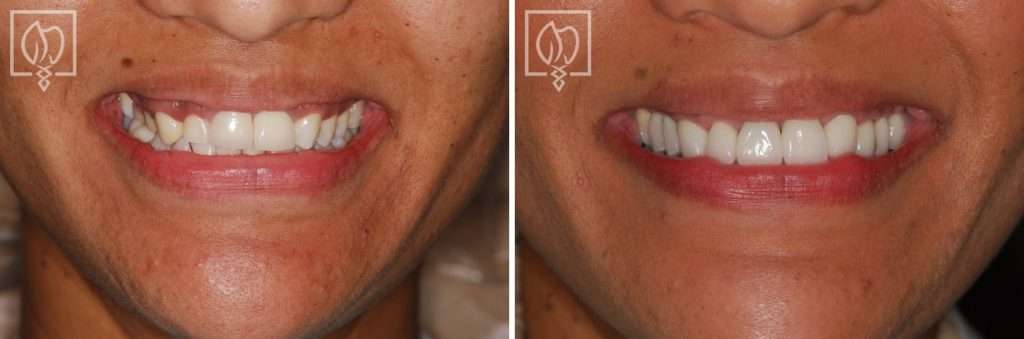
Multi-Faceted Treatment for Patient Unhappy With Her Artificial-Looking Crowns, Teeth and Gums
Many patients come to Elite Prosthetic Dentistry unhappy with the appearance of their smile. However, this particular patient presented with multiple interconnected problems that together created a smile she found deeply unsatisfying.

Treating Kevin’s Collapsed Bite with a Complete Smile Makeover with New Dentures
Dentures are sometimes not created to the ideal aesthetic and functional scheme. When improperly fabricated, dentures can make an individual appear almost a generation older than their actual age. They can have a poor fit that feels loose and unstable when eating or speaking, and they can actually accelerate bone loss over time.

Salvaging Ms. N’s Severely Broken-Down Upper and Lower Teeth from Gum and Bone Disease
Many people in the U.S. suffer from extensive periodontal disease characterized by significant bone loss and shrinkage of the gum tissue. This condition can begin at a very young age and worsen quickly due to hereditary factors and lack of early diagnosis by their dentist.
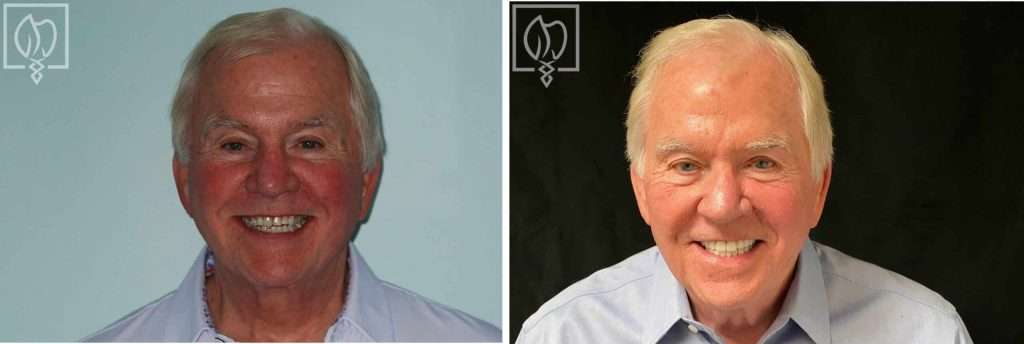
A Smile Transformation in Just Four Months: A Patient’s Dental Crown Restoration for a TV Series
A patient with dental crowns that were in poor shape was going to appear on a streaming video series on a major TV network that was scheduled to begin filming soon. Our patient, John, an author about to embark on a book tour, was anxious as his teeth were not up to his standards to appear on television.
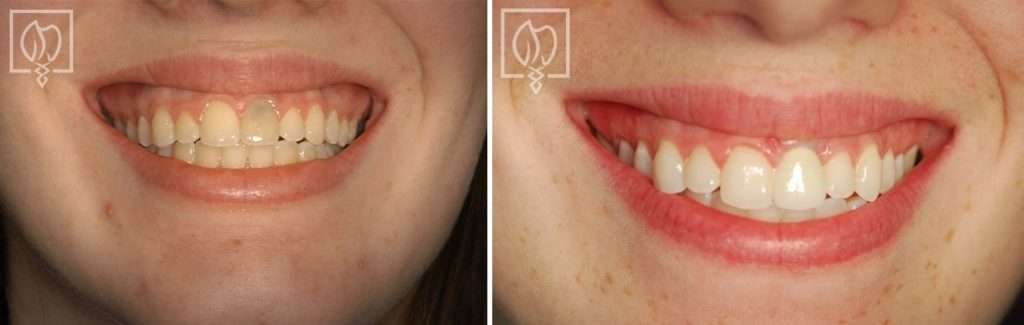
Replacing a Discolored Front Tooth with a Precision Placed Implant
Some of the most challenging restorations occur when fabricating an anterior crown to fit on an implant. Not only does one have the difficulty of matching the single front tooth to the other ones in the high visibility zone, but the dentist must also ensure the position of the underlying implant is precise through accurate preplanning and placement.
Our Services in Potomac
Beyond veneer-fell-off, Potomac patients rely on Dr. Gerald Marlin for a full range of advanced dental care.
More services available in Potomac:
veneer-fell-off Near Potomac
Dr. Gerald Marlin also provides veneer-fell-off services for patients in these neighboring communities.
Getting Here from Potomac
Elite Prosthetic Dentistry is conveniently located near Potomac, MD.
From Potomac, take River Road or Tuckerman Lane toward the District. Our practice is conveniently located with ample parking.
Address:
4400 Jenifer Street NW, Suite 220
Washington, DC 20015
Phone: (202) 244-2101
Schedule ConsultationSchedule Your Consultation from Potomac
Potomac residents trust Dr. Gerald Marlin for precision dental care. With 3,900+ implants placed and 40+ years of experience, your smile is in expert hands.