

Should You Choose Veneers? A Decision Guide for Tenleytown Patients
Comparing veneers, composite bonding, and crowns for Tenleytown patients. Decision criteria to determine the right cosmetic solution for your teeth.
You’ve noticed your smile doesn’t match your level of professionalism, or your teeth show wear that bothers you. Maybe you’re considering cosmetic improvement. At your consultation, you’ll hear three options: veneers, composite bonding, or crowns. How do you know which is right?
Each approach solves aesthetic problems differently. The choice depends on your specific teeth, your bite, how long you want results to last, and your budget. Understanding the decision criteria helps you make an informed choice rather than simply accepting what feels familiar.
The Core Decision: What Problem Are You Solving?
Start here. What specifically bothers you about your teeth? Discoloration? Spacing? Wear or chips? Misalignment?
If your concern is appearance only and your teeth are structurally sound, veneers or bonding likely work. If your tooth is cracked, has a large cavity, or needs structural support, a crown might be necessary regardless of appearance.
This distinction matters. Don’t let a dentist recommend a crown for a tooth that only needs appearance improvement. Don’t accept bonding for teeth that need long-term durability. Match the treatment to the actual problem.
Veneer Decision: Is Your Situation Right?
Veneers are thin porcelain shells bonded to your front tooth surfaces. They require removing approximately 0.5 millimeters of enamel (roughly the thickness of a fingernail) to create space for the veneer thickness and proper positioning.
Ask yourself: Do I need this treatment to last 10-15 years or longer? Are my front teeth healthy with no root canal history? Do I maintain good oral hygiene? Is my bite healthy, without heavy grinding or aggressive chewing habits?
If you answered yes to these questions, veneers deserve serious consideration. The longevity, stain resistance, and low-maintenance nature of veneers justify the enamel removal.
What specific concerns do veneers address?
Color that whitening won’t fix (from aging, medication, or internal staining). Spacing that’s minor to moderate. Shape that’s irregular or worn. Chips or cracks affecting appearance. Mild misalignment appearance.
Veneers don’t fix severe misalignment (orthodontics does that better), and they don’t replace missing tooth structure from a cavity (that needs filling or crown first).
Bonding Decision: When It Fits Better
Composite bonding places tooth-colored plastic directly on your teeth and hardens it with a light. It requires minimal or no tooth removal, which sounds appealing. But here’s the trade-off.
Bonding lasts 5-7 years typically, sometimes longer with excellent habits. It stains more easily than porcelain. It chips more easily. It requires more maintenance and polishing to maintain appearance.
Bonding works excellently for:
One tooth with minor cosmetic concern. A young patient wanting to avoid permanent tooth removal until needed. Someone with a tight budget initially willing to upgrade later. A tooth too small or in an awkward position for a veneer.
Bonding doesn’t work well for multiple teeth, patients with staining habits (coffee, wine, tea drinkers), or those wanting lasting results. Tenleytown professionals in appearance-sensitive roles usually choose veneers over bonding for better longevity and maintenance.
Crown Decision: When Structural Repair Is Necessary
Crowns cover the entire tooth and restore both appearance and structural integrity. Crowns require removing significantly more tooth structure (approximately 1.5 millimeters all around) compared to veneers.
Crowns are appropriate when:
Your tooth has a large filling or root canal history. Your tooth is cracked or structurally compromised. Your tooth has severe decay requiring more restoration than bonding. You need both appearance improvement and structural repair.
If your tooth is healthy structurally and only needs appearance improvement, a crown is over-treating the problem. The tooth removal is unnecessary and permanent.
Bite Assessment: A Critical Factor Often Overlooked
Your bite (how your upper and lower teeth contact) significantly impacts which treatment succeeds long-term.
Do you grind your teeth? If yes, veneers and bonding are more vulnerable to fracture than crowns. A night guard becomes essential.
Is your bite heavy or aggressive? Veneers and bonding wear faster under heavy biting forces. Crowns are more durable.
Do your upper and lower front teeth contact heavily? This can fracture veneers. Dr. Marlin assesses your bite and may adjust veneers or recommend bite guard protection.
Your dentist should evaluate your bite before recommending treatment. If they don’t mention bite as a factor, ask them about it. It matters.
The Enamel Removal Question: Why It Matters
Removing healthy enamel is permanent. Your enamel doesn’t grow back. Once removed, that option is gone forever. This permanence deserves respect.
Veneers remove approximately 0.5 millimeters. This amount is conservative and appropriate for veneer thickness. The tooth remains healthy and viable. If a veneer ever fails (rare), the tooth functions normally without treatment.
Crowns remove approximately 1.5 millimeters all around the tooth. This is substantial. If a crown fails, the tooth often needs another crown because so much structure is gone. Replacing crowns becomes a lifetime cycle.
If you’re choosing between veneers and crowns for appearance only, veneers preserve more of your tooth long-term.
Material Durability: What You’re Paying For
Porcelain veneers last 10-15 years or longer. This longevity reflects porcelain’s durability and the strong adhesive bond used for placement.
Composite bonding lasts 5-7 years typically. It’s more vulnerable to chipping and staining.
If you want results lasting through your 40s and 50s without replacement, veneers are worth the investment over bonding.
Aesthetic Expectations: Natural Versus Obvious
This matters more than many patients realize. Good cosmetic dentistry should be undetectable. Your friends and family notice you have a beautiful smile, not that you’ve had cosmetic dentistry.
Poor cosmetic dentistry creates uniformly white, unnaturally perfect teeth that scream “cosmetic work” to anyone looking.
Dr. Marlin designs veneers replicating natural tooth characteristics: subtle color variation, natural translucency, slight surface texture. The goal is teeth that appear naturally beautiful, not artificially enhanced.
Ask your dentist about their aesthetic philosophy. How do they handle translucency? Do they match veneer color to your surrounding teeth? Do they consider how your smile relates to your face shape and lip contour?
These questions reveal whether someone prioritizes natural-appearing results.
Multiple Teeth Versus Single Tooth
If you want one tooth improved while others are discolored or worn, addressing only one tooth often looks mismatched. The treated tooth stands out.
Tenleytown patients with multiple aesthetic concerns usually benefit from addressing them together. A comprehensive veneer plan coordinating color, shape, and positioning across several teeth produces superior results compared to random single tooth treatments.
Cost and Timeline Considerations
Veneers cost more than bonding but last longer. The per-year cost becomes comparable when you factor in durability and maintenance.
Veneers take 2-3 weeks from consultation to finished restoration. Bonding often takes one appointment. If you need immediate results, bonding offers that advantage.
Making Your Decision
Schedule a consultation with Dr. Marlin at 4400 Jenifer Street NW, Suite 220 (just 5-10 minutes from Tenleytown via Wisconsin Avenue NW). He’ll examine your teeth, assess your bite, discuss your aesthetic goals, and recommend which approach matches your situation.
Don’t assume one treatment is always “better.” The right choice depends on your specific teeth, your life circumstances, and your priorities. A thorough consultation determines what’s right for you.
Schedule Your Consultation or call (202) 244-2101 to discuss your smile goals and determine whether veneers, bonding, or another approach best serves you.
For related care, see our cosmetic dentistry page.
Frequently Asked Questions
When are veneers better than bonding?
Veneers last longer, resist staining better, and are easier to maintain than bonded composite. Bonding works best for one or two teeth with minor concerns; veneers work better for multiple teeth or those exposed to staining (coffee, tea, wine). Your specific situation determines which approach fits you best.
Why wouldn't crowns solve the same problem?
Crowns cover the entire tooth and require removing more tooth structure than veneers. If your tooth is healthy and its main issue is appearance rather than structural damage, veneers preserve more of your tooth. Crowns are appropriate when structural repair is necessary alongside appearance.
What if I want just one veneer for one tooth?
Single veneers are possible but present challenges. The veneer may not match adjacent natural teeth perfectly in color and translucency, particularly as natural teeth age. If neighbors are discolored or worn, addressing them together often produces superior results. Dr. Marlin discusses whether addressing one or multiple teeth best serves your smile.
How do I know if I'm a candidate for veneers?
You're a candidate if your front teeth are healthy (no root canals or large restorations), your bite is healthy, and your aesthetic concerns are primarily appearance-related. If you grind heavily or have an aggressive bite, veneers may not be durable long-term. A consultation determines whether veneers fit your needs.
Can bonding be removed and replaced with veneers later?
Yes. If you initially chose bonding but want longer-lasting results later, bonding can be removed and veneers can be placed. There's no permanent commitment to bonding. Some patients start with bonding and upgrade to veneers years later when budget allows.
Related Patient Success Stories
Explore similar patient success stories demonstrating our expertise in advanced prosthetic dentistry.

Temporary Crowns Restore Patient's Smile in Just One Day with an Immediate Smile Makeover
A patient from Potomac, Maryland, came to Elite Prosthetic Dentistry with the chief complaint of pain from a failing dental implant and its significant impact on her appearance.
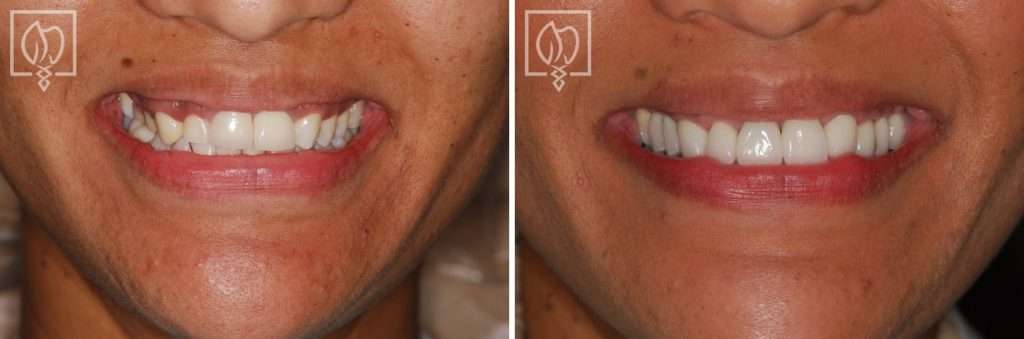
Multi-Faceted Treatment for Patient Unhappy With Her Artificial-Looking Crowns, Teeth and Gums
Many patients come to Elite Prosthetic Dentistry unhappy with the appearance of their smile. However, this particular patient presented with multiple interconnected problems that together created a smile she found deeply unsatisfying.

Treating Kevin's Collapsed Bite with a Complete Smile Makeover with New Dentures
Dentures are sometimes not created to the ideal aesthetic and functional scheme. When improperly fabricated, dentures can make an individual appear almost a generation older than their actual age. They can have a poor fit that feels loose and unstable when eating or speaking, and they can actually accelerate bone loss over time.

Salvaging Ms. N’s Severely Broken-Down Upper and Lower Teeth from Gum and Bone Disease
Many people in the U.S. suffer from extensive periodontal disease characterized by significant bone loss and shrinkage of the gum tissue. This condition can begin at a very young age and worsen quickly due to hereditary factors and lack of early diagnosis by their dentist.
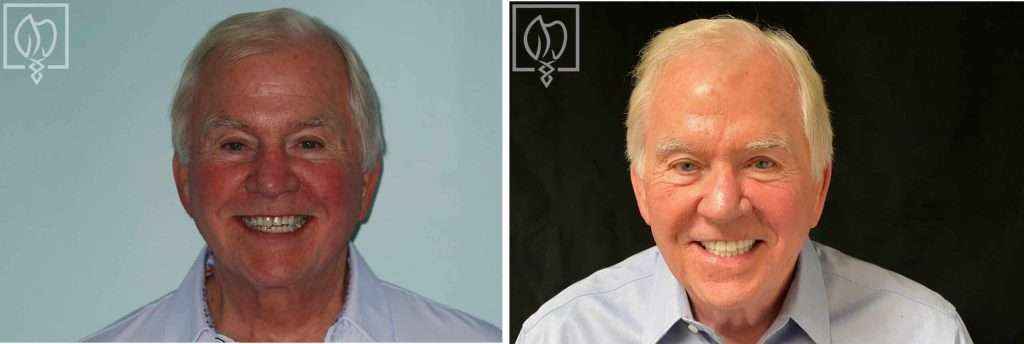
A Smile Transformation in Just Four Months: A Patient’s Dental Crown Restoration for a TV Series
A patient with dental crowns that were in poor shape was going to appear on a streaming video series on a major TV network that was scheduled to begin filming soon. Our patient, John, an author about to embark on a book tour, was anxious as his teeth were not up to his standards to appear on television.
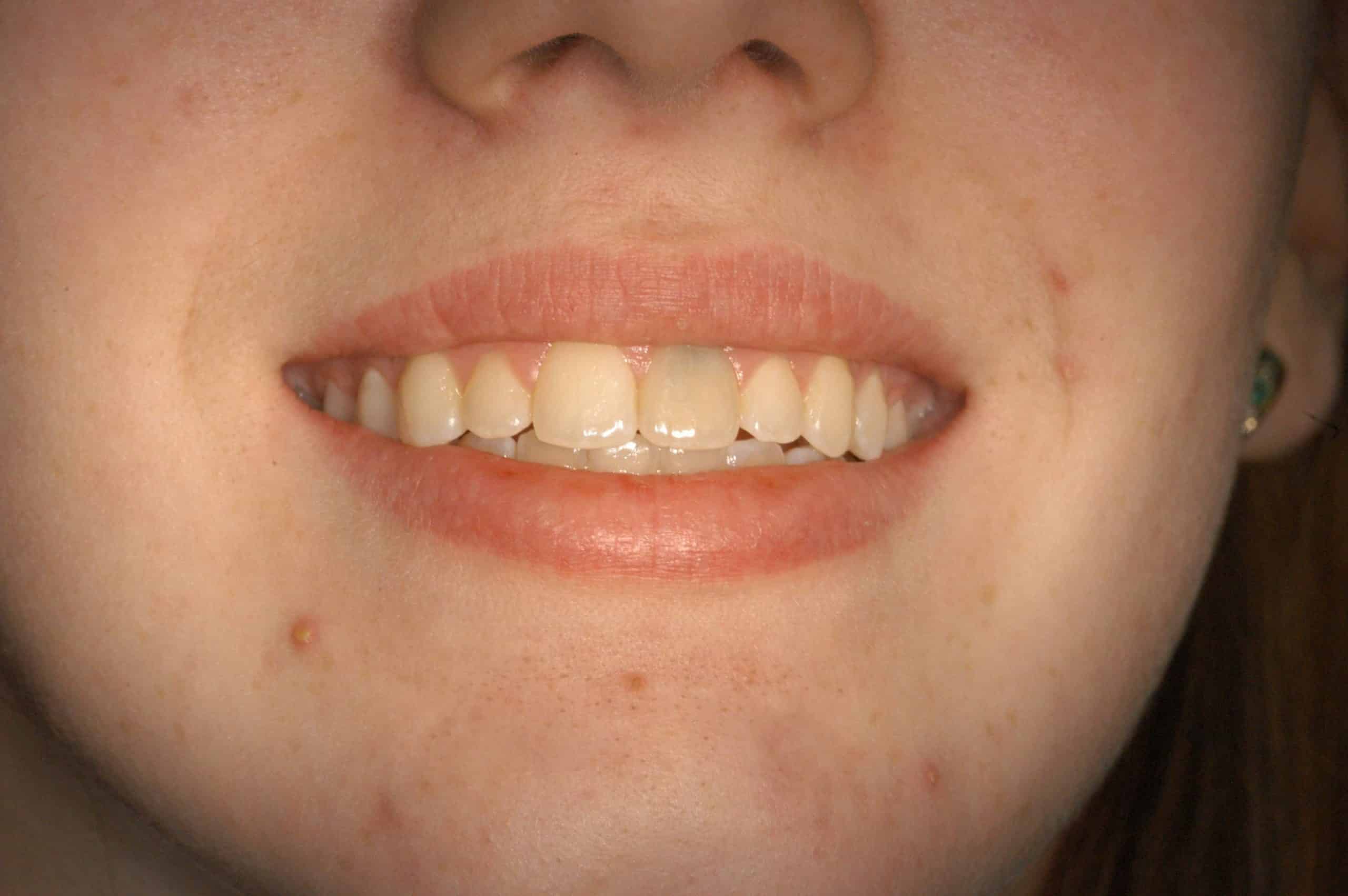
Replacing a Discolored Front Tooth with a Precision Placed Implant
Some of the most challenging restorations occur when fabricating an anterior crown to fit on an implant. Not only does one have the difficulty of matching the single front tooth to the other ones in the high visibility zone, but the dentist must also ensure the position of the underlying implant is precise through accurate preplanning and placement.
Our Services in Tenleytown
Beyond Porcelain Veneers, Tenleytown patients rely on Dr. Marlin for a full range of advanced dental care.
More services available in Tenleytown:
Porcelain Veneers Near Tenleytown
Dr. Marlin also provides porcelain veneers services for patients in these neighboring communities.
Getting Here from Tenleytown
Elite Prosthetic Dentistry is conveniently located near Tenleytown, DC.
Drive north on Wisconsin Avenue NW from Tenleytown toward Friendship Heights. The Tenleytown Metro station also provides direct transit access.
Address:
4400 Jenifer Street NW, Suite 220
Washington, DC 20015
Phone: (202) 244-2101
Request a ConsultationRequest a Specialist Consultation from Tenleytown
Tenleytown residents come to Dr. Marlin for specialist prosthodontic care. With 3,900+ implants placed and restored over 40+ years, evaluation, planning, and execution are handled with the depth complex cases require.