
Veneer Questions Answered: Materials, Longevity, and Care in Kalorama
Frequently asked questions about porcelain veneers in Kalorama, DC. Materials, longevity, preparation, and care. Dr. Gerald Marlin, prosthodontist.
Kalorama patients often have excellent questions about veneer materials, longevity, and daily care. This FAQ addresses the questions we hear most frequently, helping you make an informed decision about whether veneers are right for you and what to expect from veneer ownership over time.
Veneer Materials: Understanding Your Options
What materials are available for porcelain veneers?
Your veneer material choice influences appearance, strength, and longevity. The three primary categories are feldspathic porcelain, pressed ceramic, and lithium disilicate.
Feldspathic porcelain is the classic veneer material and remains the gold standard for esthetic results. It provides superior translucency and allows light to pass through the veneer in ways that mimic natural tooth structure. Feldspathic veneers can look extraordinarily natural and lifelike. However, they are slightly less strong than pressed ceramic or lithium disilicate.
Pressed ceramic veneers offer high strength while maintaining excellent esthetics. They are more durable than feldspathic porcelain and ideal for patients with heavy bite forces or grinding habits. Pressed ceramic veneers look natural and last an exceptionally long time.
Lithium disilicate veneers combine strength with superior esthetic properties. This material offers the longevity benefits of ceramic with the esthetic advantages of layered porcelain. Lithium disilicate has become increasingly popular for cases requiring durability and natural appearance.
Dr. Marlin selects material based on your specific tooth, your bite characteristics, and your esthetic goals. He discusses the advantages and disadvantages of each option with you during your consultation.
Can veneers be made different thicknesses?
Veneers are typically fabricated in the range of 0.5 to 1 millimeter thickness. Thinner veneers require less tooth preparation but offer less space for shade correction. Thicker veneers allow greater control of shade and form but require more tooth removal.
Dr. Marlin recommends thickness based on your specific tooth structure and esthetic goals. In some cases, minimal-prep veneers with almost no tooth preparation are possible. In other cases, additional thickness is necessary for optimal results.
Longevity and Durability Questions
How long should I realistically expect veneers to last?
High-quality porcelain veneers typically last 15 to 20 years with proper care. Some exceptional veneers last 20 to 30 years. Longevity depends on several factors: the quality of the tooth preparation, the precision of laboratory fabrication, the bonding material and technique used, your oral hygiene, your bite characteristics, and whether you grind your teeth.
Dr. Marlin’s veneers have exceptional longevity because his skill in preparation, his communication with the laboratory, and his selection of premium bonding materials ensure durability. His experience allows him to anticipate potential complications and design veneers to avoid them.
What causes veneers to fail or need replacement?
Veneer failure is uncommon but can occur. The most common causes are trauma (hitting your teeth against something hard), severe grinding without a night guard, poor oral hygiene leading to decay at the veneer margin, or simply the passage of time and wear.
Veneers can also fracture if your bite forces are excessive and no bite protection is used. This is why Dr. Marlin evaluates your bite carefully during planning and may recommend a night guard if grinding is present.
Can I get new veneers if my old ones need replacement?
Absolutely. When a veneer reaches the end of its lifespan, Dr. Marlin removes it and evaluates the underlying tooth. In most cases, the tooth is in excellent condition and requires minimal to no additional preparation for replacement. He fabricates a new veneer and bonds it in place.
This process can be repeated multiple times throughout your life. Some patients have had multiple sets of veneers over several decades. The key is maintaining excellent oral hygiene and using bite protection if you grind your teeth.
Preparation and Sensitivity Questions
How much tooth structure must be removed during veneer preparation?
Veneer preparation typically involves removing 0.5 to 1 millimeter of tooth enamel from the front surface of your tooth. This is a very conservative amount compared to crown preparation, which removes structure from all sides of the tooth.
In some cases with minimal esthetic changes desired and naturally small teeth, nearly zero tooth removal is possible. In other cases where significant shade correction or shape change is desired, up to 1 millimeter of removal may be necessary. Dr. Marlin uses the most conservative approach possible while ensuring veneers bond securely and look natural.
Will tooth sensitivity be a problem after veneer placement?
Tooth sensitivity after veneer placement is uncommon. Since veneer preparation is minimal and the veneer is bonded immediately after preparation, the exposed dentin is covered quickly. The bonding creates a seal that protects the tooth from sensitivity.
Some patients experience temporary mild sensitivity immediately after placement, which usually resolves within days to weeks. Persistent sensitivity is rare and can usually be managed with desensitizing toothpaste or topical treatments.
Daily Care and Maintenance
What should I avoid to protect my veneers?
Avoid biting hard objects, using your teeth to open packages, or chewing ice. These behaviors can fracture veneers. Avoid sticky foods that might pull on veneers. Be cautious with extremely hard foods like nuts or hard candy.
Avoid excessive acidic food or beverage consumption, which can demineralize enamel at the veneer margins over time. Rinse your mouth with water after consuming acidic beverages and wait 30 minutes before brushing.
If you grind your teeth, wear a night guard to protect your veneers from fracture due to grinding forces.
Can I whiten my veneers if they become stained?
Porcelain veneers do not respond to whitening treatments. However, porcelain is extremely stain-resistant and typically maintains its color indefinitely with proper care. If your veneers do become stained, they can be polished by Dr. Marlin, or in rare cases, replaced.
How often should I see Dr. Marlin after veneer placement?
Schedule regular dental visits every six months for professional cleaning and veneer evaluation. These visits allow Dr. Marlin to monitor your veneers, ensure they remain bonded securely, and maintain optimal oral health. Regular monitoring catches any developing issues early before they become problems.
Shade Matching and Esthetic Coordination
How difficult is shade matching when placing multiple veneers?
Shade matching multiple veneers is more complex than matching a single veneer to a natural tooth. When multiple veneers are adjacent, they must all appear to belong to the same dentition with consistent shade and translucency throughout the smile.
Dr. Marlin works closely with the laboratory to ensure perfect coordination. He uses specialized shade-matching techniques and takes detailed color photographs under standardized lighting. He communicates exactly how each veneer should relate to adjacent veneers and adjacent natural teeth.
Will my natural teeth look different in color compared to my new veneers?
When veneers are placed on front teeth and natural teeth remain in the smile zone, they must blend visually. Dr. Marlin designs veneers that match existing natural teeth in shade when those teeth remain. If you want brighter veneers and natural teeth present, you may need to whiten natural teeth before veneer placement to ensure color harmony.
Can shade be changed if I later decide I want a different color?
If you decide you want your smile brighter or darker after veneers are placed, individual veneers can be replaced with new ones in a different shade. The tooth structure is already shaped appropriately, so preparation for replacement is minimal. However, this involves expense and time, so selecting the ideal shade during the initial design process is important.
Material Selection Based on Your Bite
How do you choose which material is best for my situation?
Dr. Marlin evaluates your bite force, whether you grind your teeth, and your esthetic goals to recommend material. Patients with light bite forces and no grinding can choose primarily for esthetics. Patients with heavy bite forces or grinding habits need stronger materials that prioritize durability.
He discusses trade-offs. More translucent materials look more natural but are slightly weaker. Stronger materials sacrifice some translucency but last longer for heavy chewers. He helps you understand which trade-off aligns with your priorities and bite characteristics.
For Kalorama residents ready to understand veneers fully before committing to treatment, schedule your consultation with Dr. Marlin. We answer all your questions and ensure you feel confident about your decision.
Elite Prosthetic Dentistry 4400 Jenifer Street NW, Suite 220 Washington, DC 20015 (202) 244-2101 Request a Consultation
For related care, see our pages on cosmetic dentistry and Veneers in Spring Valley.
Frequently Asked Questions
What material is used for premium porcelain veneers?
Premium porcelain veneers are fabricated from medical-grade feldspathic porcelain, layered to create natural translucency and depth. Different porcelain types offer different characteristics. Feldspathic porcelain provides superior esthetics and natural light reflection. Pressed ceramic offers high strength and esthetic properties. Lithium disilicate combines strength with excellent esthetics. Dr. Marlin selects materials based on your specific situation, bite forces, and esthetic goals.
How long do quality porcelain veneers actually last?
With proper care, high-quality porcelain veneers typically last 15 to 20 years or longer. Some veneers placed by skilled prosthodontists last 20 to 30 years. Longevity depends on the quality of the original preparation, the precision of fabrication, the bonding material used, and your oral care and dietary habits. Dr. Marlin's veneers have exceptional longevity because decades of experience guide every step of design and placement.
What happens when a veneer eventually needs replacement?
When a veneer reaches the end of its lifespan and needs replacement, Dr. Marlin carefully removes it and evaluates the underlying tooth. In most cases, minimal preparation is needed for replacement because the tooth structure is already shaped appropriately. A new veneer is then fabricated and bonded. This process can be repeated multiple times over a patient's lifetime.
How much daily care do veneers require?
Veneers require no special care beyond normal dental hygiene. Brush twice daily with a soft toothbrush and non-abrasive toothpaste. Floss daily to maintain gum health. Avoid biting hard objects, using teeth to open packages, or chewing ice. Avoid foods and beverages that stain easily if you have concerns about color stability. Most importantly, maintain regular dental visits for professional cleanings and monitoring.
Can veneers be repaired if they chip or crack?
Small chips on veneers can sometimes be repaired with bonded composite material. However, significant cracks or fractures usually require veneer replacement. This is why careful selection of materials based on your bite is important during the planning phase. Dr. Marlin assesses your bite and recommends material selection that will provide optimal durability for your specific situation.
Related Patient Success Stories
Explore similar patient success stories demonstrating our expertise in advanced prosthetic dentistry.
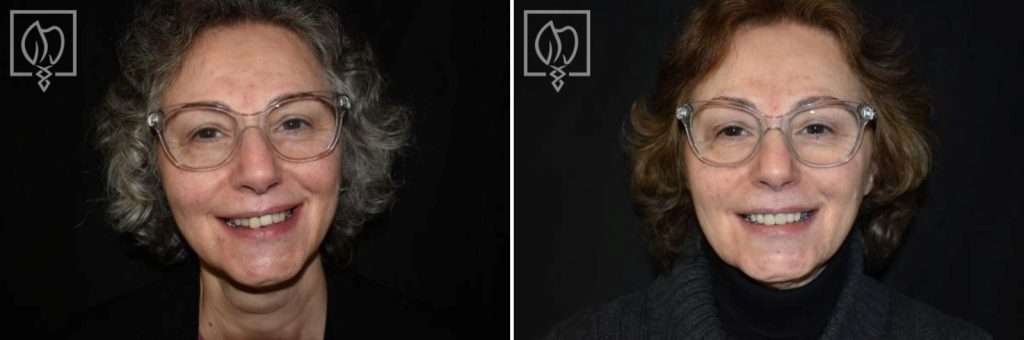
Temporary Crowns Restore Patient's Smile in Just One Day with an Immediate Smile Makeover
A patient from Potomac, Maryland, came to Elite Prosthetic Dentistry with the chief complaint of pain from a failing dental implant and its significant impact on her appearance.
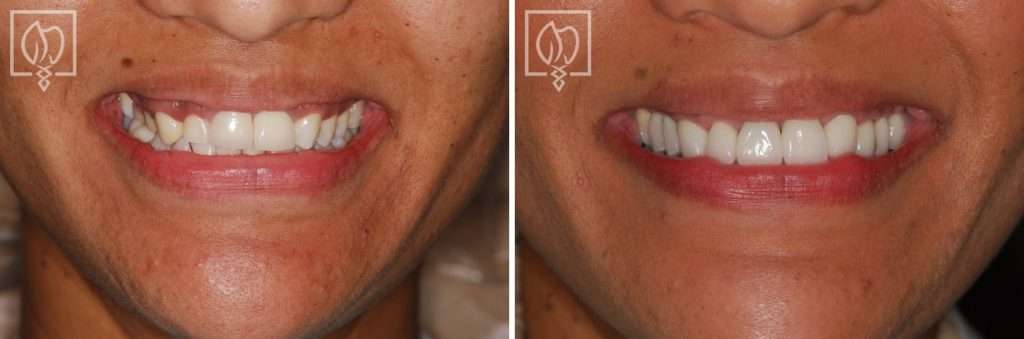
Multi-Faceted Treatment for Patient Unhappy With Her Artificial-Looking Crowns, Teeth and Gums
Many patients come to Elite Prosthetic Dentistry unhappy with the appearance of their smile. However, this particular patient presented with multiple interconnected problems that together created a smile she found deeply unsatisfying.

Treating Kevin's Collapsed Bite with a Complete Smile Makeover with New Dentures
Dentures are sometimes not created to the ideal aesthetic and functional scheme. When improperly fabricated, dentures can make an individual appear almost a generation older than their actual age. They can have a poor fit that feels loose and unstable when eating or speaking, and they can actually accelerate bone loss over time.
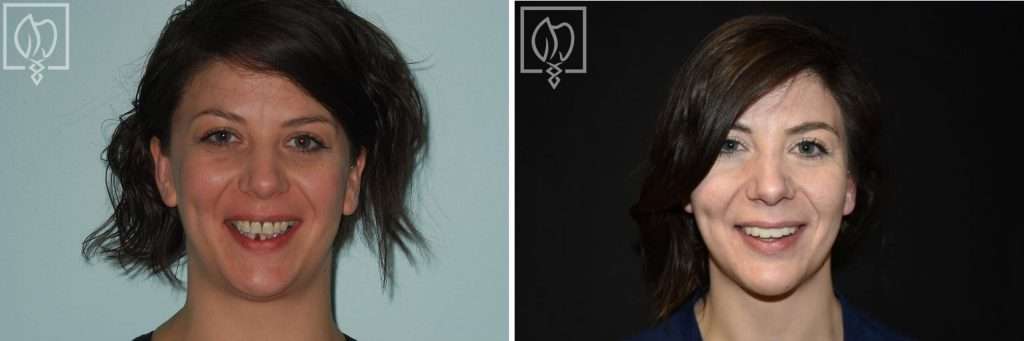
Salvaging Ms. N’s Severely Broken-Down Upper and Lower Teeth from Gum and Bone Disease
Many people in the U.S. suffer from extensive periodontal disease characterized by significant bone loss and shrinkage of the gum tissue. This condition can begin at a very young age and worsen quickly due to hereditary factors and lack of early diagnosis by their dentist.
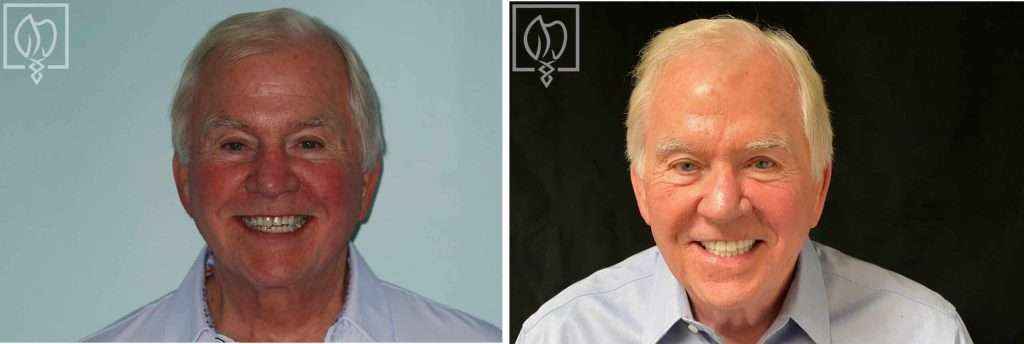
A Smile Transformation in Just Four Months: A Patient’s Dental Crown Restoration for a TV Series
A patient with dental crowns that were in poor shape was going to appear on a streaming video series on a major TV network that was scheduled to begin filming soon. Our patient, John, an author about to embark on a book tour, was anxious as his teeth were not up to his standards to appear on television.
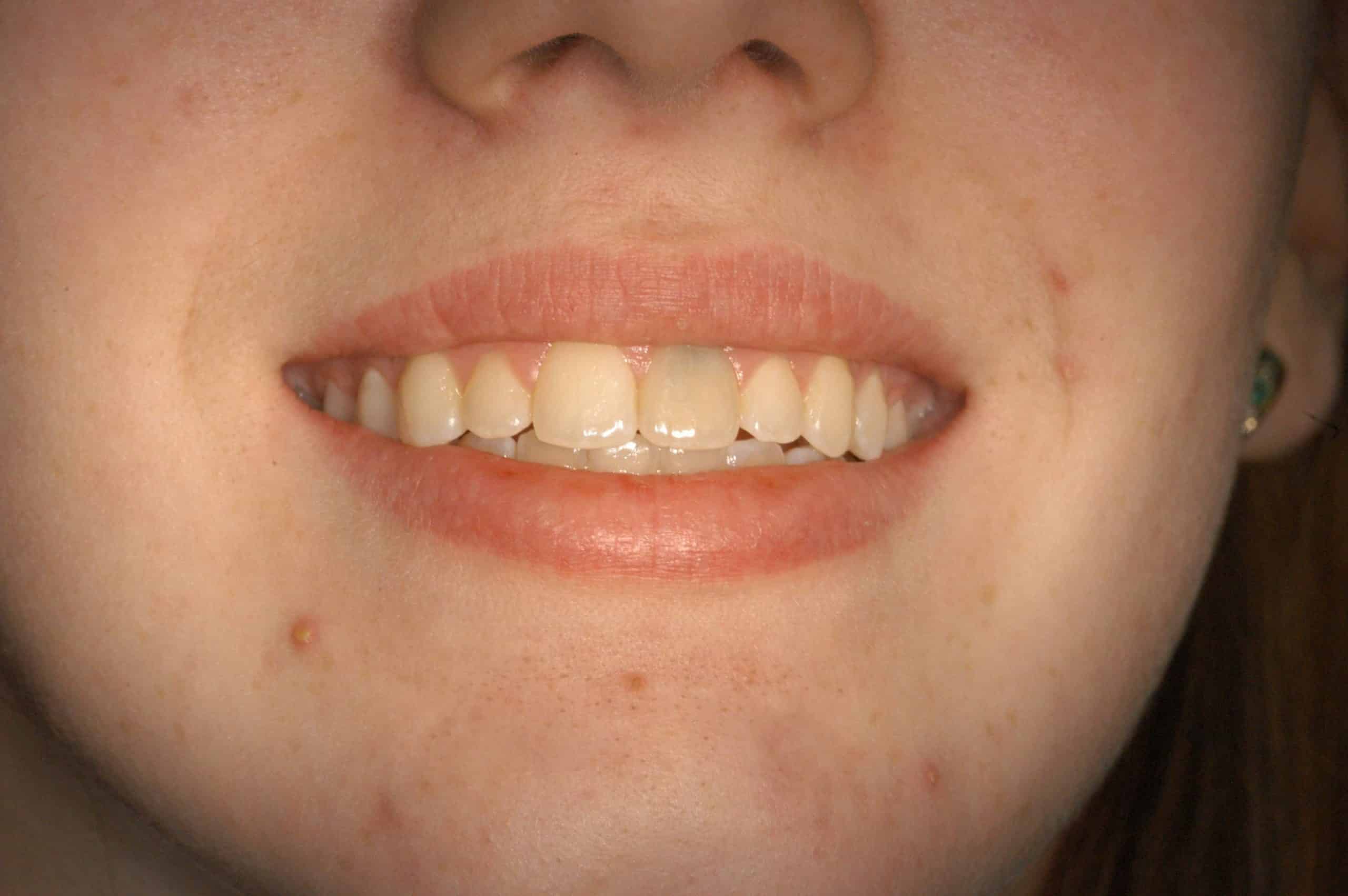
Replacing a Discolored Front Tooth with a Precision Placed Implant
Some of the most challenging restorations occur when fabricating an anterior crown to fit on an implant. Not only does one have the difficulty of matching the single front tooth to the other ones in the high visibility zone, but the dentist must also ensure the position of the underlying implant is precise through accurate preplanning and placement.
Our Services in Kalorama
Beyond Porcelain Veneers, Kalorama patients rely on Dr. Marlin for a full range of advanced dental care.
More services available in Kalorama:
Porcelain Veneers Near Kalorama
Dr. Marlin also provides porcelain veneers services for patients in these neighboring communities.
Getting Here from Kalorama
Elite Prosthetic Dentistry is conveniently located near Kalorama, DC.
From Kalorama, drive northwest on Massachusetts Avenue NW through Embassy Row to our Friendship Heights office at 4400 Jenifer Street NW, Suite 220.
Address:
4400 Jenifer Street NW, Suite 220
Washington, DC 20015
Phone: (202) 244-2101
Request a ConsultationRequest a Specialist Consultation from Kalorama
Kalorama residents come to Dr. Marlin for specialist prosthodontic care. With 3,900+ implants placed and restored over 40+ years, evaluation, planning, and execution are handled with the depth complex cases require.