
Loose Dental Crown in Palisades, DC
Loose crown in Palisades? Learn how a prosthodontist's diagnostic approach differs from general dentistry for comprehensive crown assessment and treatment.
Loose Crown Diagnosis in Palisades: Why Prosthodontic Expertise Matters
When you have a loose crown, the evaluation you receive often determines whether your treatment succeeds long-term or whether you’ll face ongoing problems. Not all evaluations are equal. A general dentist’s assessment and a prosthodontist’s assessment of the same loose crown can lead to different conclusions.
If you’ve already seen your general dentist about a loose crown and are wondering whether a specialist’s perspective is worthwhile, or if you’re considering where to go for initial evaluation, understanding the differences in how general dentists and prosthodontists approach loose crowns can help you make the right choice.
What a General Dentist Evaluates in a Loose Crown
Your general dentist can perform a competent evaluation of a loose crown. They’ll examine it visually, looking for obvious damage or wear. They’ll take X-rays to look for decay under the crown. They’ll check your bite and ask about your symptoms.
For a straightforward case, where the crown is in good condition, the underlying tooth is healthy, there’s no decay, and the loosening is clearly due to cement failure, a general dentist’s evaluation is sufficient. They can confidently recommend re-cementation and carry out the procedure successfully.
General dentists see a wide range of dental problems and must be competent with all of them. They can identify basic issues like decay, missing restorations, or obvious cracks. They understand the general principles of crown placement and cement failure. For emergency situations, emergency dental restorations services often bridge the gap until comprehensive prosthodontic care can be provided.
However, a general dentist’s practice typically doesn’t specialize in complex restoration cases, and their diagnostic approach reflects this reality. They’re efficient, focused on getting to a treatment decision fairly quickly. For simple cases, this is perfectly appropriate.
What a Prosthodontist Evaluates: The Deeper Dive
A prosthodontist’s evaluation of the same loose crown is more extensive and nuanced. We ask more questions, examine more thoroughly, and consider factors that a general dentist might overlook.
We examine the crown’s exact margins, not just whether they’re visible but whether they’re tight or have gaps. We look at how the crown contacts adjacent teeth and whether food is getting trapped between them. We assess the crown’s adaptation to the underlying tooth using specialized techniques.
We examine the underlying tooth not just for obvious decay but for subtle signs of marginal decay, slight discoloration that might indicate decay development, or areas where cement failure might be allowing bacterial infiltration. We evaluate the tooth’s overall integrity and whether it can support the crown moving forward.
We assess your bite comprehensively. Beyond just checking whether your teeth meet properly, we evaluate your occlusal contacts, looking at where the crown makes contact and whether those contacts are balanced. We assess your bite force and jaw mechanics. We look for signs of parafunctional habits like grinding or clenching.
We evaluate your oral hygiene around the crown and your ability to maintain the restoration long-term. We ask about your history with dental work, your habits, any crown problems you’ve had before, and factors that might predict future success or failure.
We consider the crown’s history. How long has it been in your mouth? Has it loosened before? Was it placed by us or another dentist? Has it been re-cemented previously? A crown that’s loosened multiple times suggests an underlying issue beyond simple cement failure.
We also evaluate the crown from a materials perspective. What material is it made of? How old is the technology behind it? If it’s an older crown, does it embody design principles we’d recommend today? Modern custom crafted crowns incorporate the latest materials and design principles.
All of this information informs a more sophisticated treatment recommendation.
The Diagnostic Value of Careful Examination and Documentation
When a prosthodontist spends extra time examining your loose crown, we’re gathering information that drives the correct treatment decision. This isn’t indulgent thoroughness; it’s the foundation of good clinical judgment.
If a crown has poor marginal fit that we detect on careful examination, we know that re-cementation is unlikely to succeed long-term. The poor fit means the cement seal will fail again. Rather than recommend a procedure that will likely need repeating, we recommend replacement, which truly solves the problem.
If careful probing reveals marginal decay that a cursory examination might have missed, we catch the problem before it becomes extensive. Decay detected early can be treated during crown replacement rather than requiring root canal treatment later. In severe cases, repairing failing implants or implant placement might become necessary.
If we detect signs of grinding or clenching that contributed to the crown loosening, we can recommend a nightguard and occlusal optimization, preventing future problems not just with this crown but with other restorations and your remaining teeth.
If we discover that your bite has shifted since the crown was placed, meaning the crown no longer contacts properly, we can design a replacement crown that integrates better with your current bite. For comprehensive cases, full mouth reconstruction might be warranted. Our CAD/CAM crown technology ensures perfect integration with your current bite.
All of these insights come from careful, comprehensive evaluation. They lead to treatment decisions that work, not just band-aids that need repeating.
How Prosthodontists Use Specialized Diagnostic Techniques
A prosthodontist has access to and expertise with specialized diagnostic tools that go beyond routine general dental examination.
We use detailed periapical X-rays to evaluate the crown’s relationship to the tooth, the cement interface, and the bone level around the tooth. We take bite-wing X-rays to assess the crown’s contact with adjacent teeth and look for early decay development.
We use an explorer and probe with specific techniques to detect marginal gaps and early decay. A general dentist does this too, but our extensive training with crown diagnostics makes us more sensitive to subtle findings.
We might take occlusal records to document your bite in detail. These records create a visual representation of where your teeth contact, how hard you’re biting, and how your jaw is closing. This information guides decisions about crown replacement design.
For complex cases, we might recommend advanced imaging like cone beam CT scans to evaluate bone structure or implant placement, though this is less common for loose crowns specifically.
We might create study models of your teeth to visualize your bite in three dimensions and plan restorations more accurately.
We have extensive experience with the principles of crown design, cement chemistry, bite mechanics, and restoration longevity. This specialized knowledge informs our interpretation of the data we gather during examination.
The Difference in Treatment Recommendations
These diagnostic differences often lead to different treatment recommendations for the same patient.
A general dentist examining a loose crown might recommend re-cementation because it’s a straightforward, cost-effective solution if the crown appears intact and there’s no obvious decay.
A prosthodontist examining the same crown might notice subtle marginal gaps, might detect early decay with specialized probing, might assess that your bite has shifted, and might recommend replacement instead. Or we might agree that re-cementation is appropriate but would do it with more careful attention to detail, knowing specific cement materials and techniques that give better longevity.
Neither practitioner is wrong, but the prosthodontist’s more detailed evaluation often reveals information that leads to a better long-term outcome.
When a General Dentist’s Evaluation is Sufficient
We want to be fair to general dentists here. For many loose crown cases, a general dentist’s evaluation and treatment is perfectly appropriate.
If you have a loose crown on a tooth you had crowned several years ago, the crown appears intact, there’s no obvious decay, and you have no complicating factors, your general dentist can likely handle it effectively.
If you simply want to get the crown re-cemented without extensive evaluation, a general dentist can do this reasonably and cost-effectively.
If you trust your general dentist and they’ve handled your dental care well in the past, there’s no reason you must see a specialist for a simple loose crown.
However, if any of these factors apply, a prosthodontist’s evaluation is valuable: this is the second or third time the crown has loosened; the crown is quite old or shows signs of wear; you have multiple loose or problematic crowns; decay is suspected; your bite has changed; or you simply want expert analysis before committing to treatment.
Red Flags That Suggest Specialist Evaluation is Needed
Certain situations warrant prosthodontic evaluation even if your general dentist has already seen you.
If a general dentist is uncertain about whether re-cementation or replacement is right, a specialist can help clarify the decision.
If decay is suspected but not confirmed, we have expertise in detection and assessment.
If the loose crown is part of a larger pattern of failing restorations, we can evaluate your entire mouth and understand what’s happening systemically.
If you’ve had the crown re-cemented before and it’s loosening again, a specialist’s perspective helps prevent the cycle.
If you want the most thoroughly evaluated treatment plan, you want someone with advanced training and experience in complex crown cases.
How a Prosthodontic Second Opinion Works
Many Palisades patients come to us for a second opinion after seeing their general dentist. This is perfectly reasonable and something we encourage.
You bring any records and X-rays from your previous visit. We examine the crown ourselves, take our own X-rays if needed, and perform our own evaluation. We don’t simply defer to the previous opinion but generate our own assessment.
We then discuss our findings with you. If our recommendation aligns with the general dentist’s recommendation, great. You have confirmation and can move forward confidently. If our recommendation differs, we explain our reasoning clearly so you understand why we see things differently.
You can then decide which recommendation to follow. If you choose to proceed with the general dentist’s recommendation, that’s entirely your choice. If you’d prefer the prosthodontist’s approach, you can move forward with us.
This second opinion doesn’t create unnecessary treatment; it provides clarity when you have a complex case or when you want expert confirmation before committing to treatment.
The Long-Term Value of Expert Evaluation
The extra cost of a prosthodontic evaluation for a loose crown is often recouped quickly through better treatment decisions. If expert evaluation prevents a failed re-cementation that would need repeating, you save money. If it identifies decay early when treatment is simpler, you save money and headache.
More importantly, expert evaluation leads to treatment that works. You’re not just temporarily patching the problem; you’re addressing the underlying cause and setting yourself up for years of trouble-free function.
What to Expect During a Prosthodontic Evaluation
When you come in for evaluation of a loose crown, expect a thorough prosthodontic examination process. We’ll ask you questions about the crown’s history, how it’s been functioning, whether it’s loosened before, and any symptoms you’re experiencing.
We’ll examine the crown carefully, checking margins, fit, wear patterns, and overall integrity. We’ll probe the margins and underlying tooth carefully, looking for decay or other problems. We’ll take X-rays and examine them for bone loss, decay, or other findings.
We’ll assess your bite and jaw mechanics. We might watch you chew or ask you to make certain movements so we can observe your jaw function.
We’ll discuss our findings with you, explain our assessment of what’s causing the problem, and recommend treatment options. We’ll discuss the pros and cons of re-cementation versus replacement. We’ll answer all your questions.
The entire process might take 30 to 60 minutes, longer than a typical general dentist evaluation. But it produces comprehensive information that informs the correct treatment decision.
Moving Forward with Confidence
Whether your loose crown was originally placed by us or another dentist, whether you’re seeing us for initial evaluation or second opinion, we’re here to provide expert assessment and appropriate treatment.
We understand that you’ve invested in your smile and that you want restorations that work reliably. A loose crown is inconvenient at best and a problem at worst. Our goal is to evaluate it thoroughly, explain what’s happening, and recommend the approach that gives you the best long-term outcome. With concierge dentistry services, we provide ongoing support throughout your care. For anxious patients, sedation dentistry ensures your comfort during examination and treatment.
If you’re in the Palisades area and have a loose crown, we’d welcome the opportunity to evaluate it. Call our office to schedule an appointment, and we’ll perform the thorough evaluation your situation deserves. If cost is a factor, dental financing options help make care accessible.
For more about crown problems, visit our crown problems page. To learn more about our prosthodontic approach, read our prosthodontist page. For second opinion services, check our second opinion dentistry page. For information about custom restorations, visit our custom crafted crowns page. To explore advanced options, check our advanced restorative dentistry page. Palisades patients interested in cosmetic improvements can visit our cosmetic dentistry and veneers pages. For implant options, explore our dental implants page. If you need emergency care, our emergency dental services are available.
Expert evaluation today prevents problems tomorrow. Contact us for comprehensive assessment of your loose crown.
Frequently Asked Questions
What makes a prosthodontist's evaluation of a loose crown different from a general dentist's?
A prosthodontist has advanced training in complex crown and restoration cases. We evaluate not just the crown itself but the entire restoration system, including tooth preparation, cement properties, bite integration, and long-term wear patterns. We use specialized diagnostic tools and techniques that general dentists might not have access to. We also have more experience with complex cases where simple re-cementation isn't the right answer.
Why does a prosthodontist spend more time evaluating a loose crown?
A thorough evaluation of a loose crown requires careful examination of multiple factors: the crown's fit and margins, the underlying tooth, your bite and jaw mechanics, your habits and habits risk factors, the crown's history, and the likelihood of success with different treatment options. Rushing this evaluation means missing important information that should inform your treatment plan. The extra time upfront prevents problems later.
Can my general dentist evaluate my loose crown, or should I see a specialist?
General dentists can certainly evaluate a loose crown, and for simple cases of cement failure on a crown in good condition, they're perfectly capable of re-cementing. However, if the evaluation reveals complexity, if you have multiple loose crowns, if decay is involved, or if the crown might need replacement, a prosthodontist brings specialized expertise that improves your outcome.
What special diagnostic tools does a prosthodontist use for loose crowns?
We use periapical and bite-wing X-rays to evaluate the crown, tooth, and bone. We use a probe to check for marginal gaps and detect decay. We evaluate your bite using occlusal indicators and might take bite records to assess your occlusion comprehensively. We examine your bite force and jaw mechanics. Some cases require study models or advanced imaging. We also have extensive experience recognizing subtle signs of crown problems that less specialized dentists might miss.
If I already saw my general dentist about my loose crown, should I get a second opinion from a prosthodontist?
If your general dentist recommended simple re-cementation for a crown in good condition with no underlying decay, you might be fine proceeding with their treatment. However, if they weren't sure about the best option, if they found complications, or if the crown is likely to need replacement, a prosthodontic second opinion is valuable. Many Palisades patients benefit from a specialist's perspective, especially for complex restorations.
Related Patient Success Stories
Explore similar patient success stories demonstrating our expertise in advanced prosthetic dentistry.
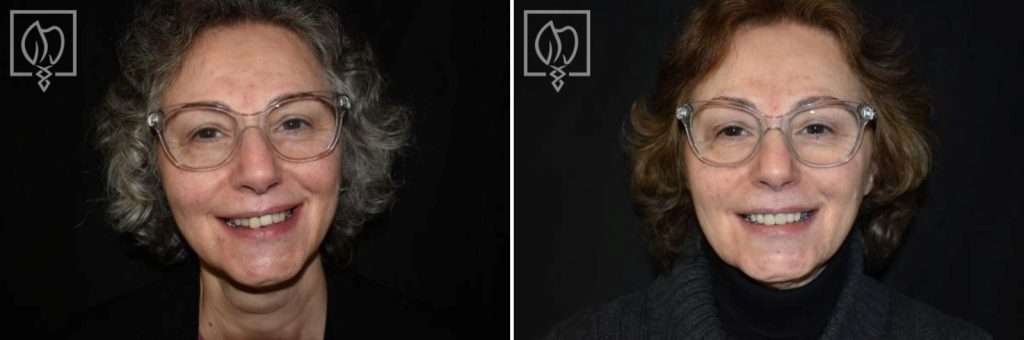
Temporary Crowns Restore Patient's Smile in Just One Day with an Immediate Smile Makeover
A patient from Potomac, Maryland, came to Elite Prosthetic Dentistry with the chief complaint of pain from a failing dental implant and its significant impact on her appearance.
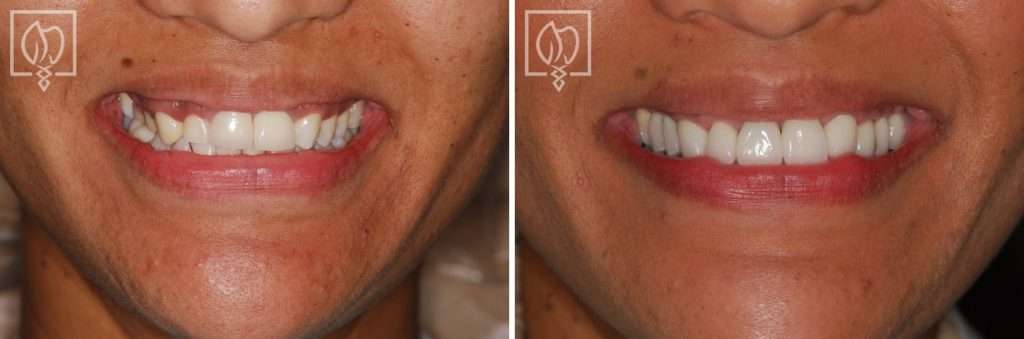
Multi-Faceted Treatment for Patient Unhappy With Her Artificial-Looking Crowns, Teeth and Gums
Many patients come to Elite Prosthetic Dentistry unhappy with the appearance of their smile. However, this particular patient presented with multiple interconnected problems that together created a smile she found deeply unsatisfying.
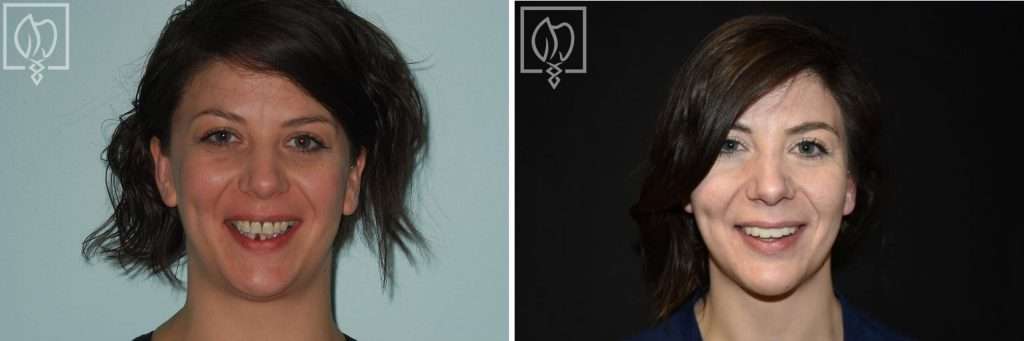
Salvaging Ms. N’s Severely Broken-Down Upper and Lower Teeth from Gum and Bone Disease
Many people in the U.S. suffer from extensive periodontal disease characterized by significant bone loss and shrinkage of the gum tissue. This condition can begin at a very young age and worsen quickly due to hereditary factors and lack of early diagnosis by their dentist.
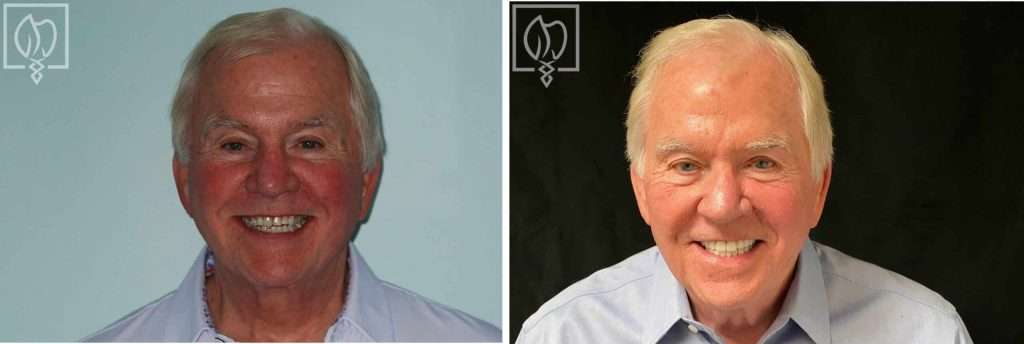
A Smile Transformation in Just Four Months: A Patient’s Dental Crown Restoration for a TV Series
A patient with dental crowns that were in poor shape was going to appear on a streaming video series on a major TV network that was scheduled to begin filming soon. Our patient, John, an author about to embark on a book tour, was anxious as his teeth were not up to his standards to appear on television.
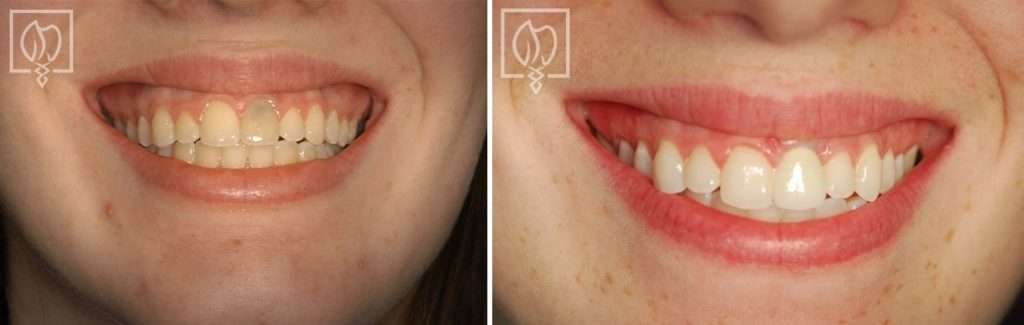
Replacing a Discolored Front Tooth with a Precision Placed Implant
Some of the most challenging restorations occur when fabricating an anterior crown to fit on an implant. Not only does one have the difficulty of matching the single front tooth to the other ones in the high visibility zone, but the dentist must also ensure the position of the underlying implant is precise through accurate preplanning and placement.
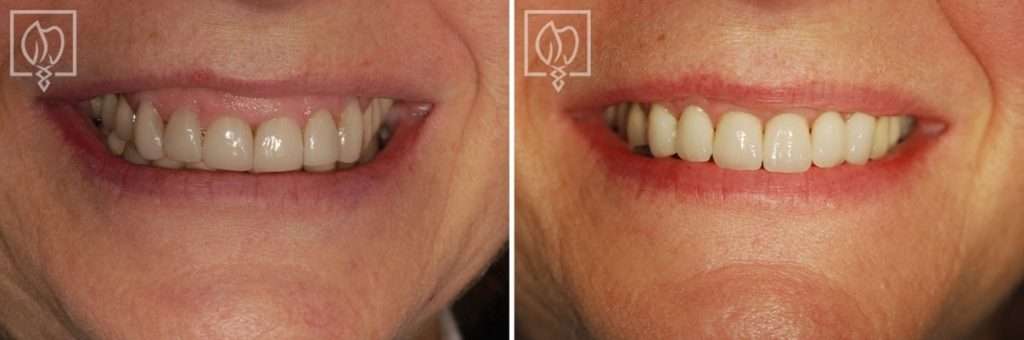
Patient Was Dissatisfied With Her 'Gummy' Smile
Excessive gingival tissue, commonly referred to as a "gummy smile," can significantly impact the appearance of a person's smile and their self-confidence. When someone smiles and a large amount of gum tissue is visible above the teeth, it can create the perception that the teeth are too small or short, even when they are actually normal size.
Our Services in Palisades
Beyond loose-dental-crown, Palisades patients rely on Dr. Gerald Marlin for a full range of advanced dental care.
More services available in Palisades:
loose-dental-crown Near Palisades
Dr. Gerald Marlin also provides loose-dental-crown services for patients in these neighboring communities.
Getting Here from Palisades
Elite Prosthetic Dentistry is conveniently located near Palisades, DC.
Palisades residents are just five minutes from our practice, making expert prosthodontic evaluation convenient for DC's affluent neighborhoods. Easy access via local roads.
Address:
4400 Jenifer Street NW, Suite 220
Washington, DC 20015
Phone: (202) 244-2101
Schedule ConsultationSchedule Your Consultation from Palisades
Palisades residents trust Dr. Gerald Marlin for precision dental care. With 3,900+ implants placed and 40+ years of experience, your smile is in expert hands.