
The Patient's Guide to Implant, Cosmetic and Restorative Dentistry
In recent years, we have had patients come to us for help with crowns that were placed outside our office. The complaint is often that the crown “doesn’t feel right” or that their smile just “doesn’t look right.” In short, patients know when something is off. In addition to the discomfort that a poorly restored crown produces, it is often subject to decay.
While it is easy for consumers to shop based on the best price, it is not always easy to adequately judge the value of a service when it comes to restorative dental care. Because there are so many different types (crown, implant, veneer), methods (milling, casting, pressing), and qualities of laboratory-produced restorations, patients should be equipped with the information needed to make wise, thoughtful, and affordable choices when it comes to their dental care.
As an example, while the average crown lasts just 5 to 10 years, the vast majority of the crowns received by our patients still look, feel, and function perfectly 30 years later. There are many factors for this difference in longevity besides having the services of our in-house laboratory, which will be described in this article.
A crown that lasted for 30 years represents a 300% return on investment, since it has allowed our patients to avoid the additional expenses and chair time associated with crowns which would have required replacement two times over a 30-year span. The last thing a patient would want is to have restorative work done over and over again.
In an effort to empower you with the tools needed to better assess your investment in a healthy, great-looking smile, we have put together this Patient’s Guide to Implant, Cosmetic, and Restorative Dentistry.
What Goes Into Quality Care?
There are three basic aspects to quality care: 1) The level of expertise of the practitioner, including specialty, training, and years of practice; 2) The attention to detail given when performing impressions, intraoral scans, and fittings (including X-rays to verify a precise final fit); and 3) The quality of the laboratory that is fabricating the crown or other restoration. In fact, the most important part of a restoration is the part that the patient never sees and, therefore, cannot evaluate: the precision of the fit.
Selecting a Practitioner: How to Interview and Evaluate
Prosthetic dentistry is a phrase that can be used to describe any type of dental restoration, from a single filling to a full-mouth reconstruction. It is important to understand the distinction between a “prosthodontist,” who is a specialist in restorative dentistry, and “prosthetic dentistry services,” which are sometimes provided by a general dentist who may not necessarily be a specialist.
While there are many great general dentists who provide quality restorative work, it is difficult to discern simply by looking at a website whether a general dentist has taken advanced coursework in prosthetic dentistry. The only way to be sure is to look for the term “prosthodontist,” a title that requires advanced, specialized training.
As you assess prospective restorative therapists, keep the following questions in mind:
- How does he or she intend to address your specific problem?
- What is the process for evaluating your complete dentition? Clear digital X-rays offer a greater, in-depth analysis, and a set of models (if your case is not routine) should be taken.
- Have you been offered alternative treatment plans?
- Does he or she have examples of completed cases such as yours?
- What is his or her educational background (including formal training vs. short courses)?
The Importance of a High-Quality Dental Laboratory
Most crowns and other restorations are fabricated in a lab by dental technicians. Most often, commercial laboratories are used. While convenient and generally reliable, these outside labs tend to vary in the level of quality and care that they offer during the fabrication process. In addition, it is difficult for the restorative dentist to effectively communicate a patient’s aesthetic needs to an off-site laboratory.
To ensure the most precise fit and natural aesthetics, the best course is to encourage close collaboration between the restorative dentist and the technician. An in-house laboratory is the ideal situation as it allows the two professionals to work together on details such as internal coloring and translucency, adjusting as needed while the patient is in the chair. This provides the prosthodontist with tighter control over the precision of the fit, aesthetics, and the overall function of the restoration.
Tailoring Care to Meet Your Financial Goals
Cost should not be a barrier to excellent dental care. There are a variety of financial options available to patients, allowing them to access the best care possible. Many outside institutions offer special financing plans just for dental restorations. For example, in our office, we offer financing options with a wide variety of arrangements, ranging from no-interest plans for 6 months to fixed-rate payment plans for 24 to 84 months.
Another option is to start with an office that provides strong, custom, and aesthetically pleasing temporary restorations. They can handle your immediate restorative needs, allowing you extra time to arrange for the financial provisions necessary for a higher-quality final crown or other restoration. We have found this to be a very effective way of providing our patients with top-quality, long-lasting restorations.
The Adverse Effect of Insurance Companies on Quality Care
Most patients take comfort in knowing they have insurance. However, since most policies have a maximum reimbursement amount of $1,500 to $2,500 annually, and a variety of limitations, insurance usually does not cover all dental needs.
It is also important to understand that insurance companies have very different goals than their clients and providers. By insisting that participating general dentists receive artificially low compensation for their services based on fees from 15 to 25 years ago, insurance companies are adversely affecting the quality of restorative care. In-network providers have no option but to provide services at dramatically reduced rates. Then, to keep up with the financial demands of running a practice today, the practitioner must compensate by seeing as many patients as possible per hour. This reduces the time they can spend with each patient, potentially affecting their care in a negative way.
Participating dentists must also use lower-priced laboratories, which typically have less expertise, time, and resources available to create high-quality restorations.
Whatever your financial or restorative needs, the practice that you choose should be willing to be your insurance advocate, helping you to press claims and receive payments that you are entitled to.
A Cosmetic Makeover Gone Awry
A patient came to us after having front crowns placed by her dentist just one year ago. She was uncomfortable and was not satisfied with her smile line or overall aesthetics. However, X-rays and an exam showed that she had an even bigger problem: all of the crowns had open margins (the crowns were not seated tightly against the roots). As a result, there was extensive decay. She was also correct about her smile line: the crowns were aesthetically inappropriate for her. They were too square and flat for her lips, all one color, and too dull.
Unfortunately, our patient had to have all of her crowns redone, spending thousands of dollars and many hours in the chair to have the decay and crowns removed, root canal treatment performed, and the underlying teeth rebuilt. However, we were then able to fabricate new crowns and establish a natural, beautiful smile that will last for many years to come. The new crowns have a rounded, more feminine appearance to match her lip line, internally developed color, and extensive translucency to make them appear natural. Her crowns finally have a precise fit, tightly adapted to their roots as they should be.
The Smile Makeover, Cosmetic Dentistry, and the “Cosmetic Dentist”
You have probably seen these terms used on websites and in brochures countless times. To be clear, there is no recognized specialty for “Cosmetic Dentist.” By contrast, prosthodontists are restorative specialists who have had extensive training in the field of cosmetic dentistry. While there are many good general dentists doing cosmetic work, it is important to interview any prospective therapist to find out what special training, and through which sources, he or she has undergone to provide this type of therapy effectively.
Providing cosmetic makeovers is a highly sophisticated area of dentistry and one of the most difficult to perform. Because it requires that a stringent protocol be followed when preparing the teeth, obtaining accurate impressions and intraoral scans, and fitting the crowns, it is a process that is highly dependent on the skill set of both the dentist and the technician.
Restoring Your Front Teeth with Crowns
Restoring the anterior (front) teeth is a delicate process, due to the fact that these teeth are front and center, visible to the world with every word and every smile. Because we are trying to match an artificial prosthetic device to the internal colorations and translucencies of adjacent natural teeth, the restoration of anterior teeth is a true art. The process is even more intense when restoring only one front tooth by itself, which in fact represents what is probably the most difficult restoration of all.
Restoring front teeth with crowns almost invariably requires customization, which can most effectively be done working with an in-house laboratory technician chairside, choosing colors and translucency. Often, the technician may even need to layer the porcelain while the patient is in the chair to internally develop the various shadings to match the adjacent teeth, making the prosthesis appear more natural.
If an in-house laboratory technician is not available, digital images should be taken at various exposures to capture the internal coloration and degree of brightness of adjacent teeth, including the right amount of translucency, to achieve a more natural look. Keep in mind that completely milled crowns are monolithic and, therefore, simply do not offer the level of customization essential to anterior teeth.
Implant Restoration Therapy
Implant surgery is both a surgical and a restorative procedure with the implant’s angulation and position dictating the aesthetics and function of the overlying crown. There is a significant benefit to having the entire process done in one facility.
In addition to choosing a practitioner who can meet both your surgical and restorative needs, keep in mind that every implant should be placed using a surgical guide. Technological improvements in the implant field have been extensive over the last few years. One of the most important advances has been the advent of the dental CT scan, which allows the surgeon or prosthodontist to evaluate the quality, width, and depth of the bone and thus precisely place the implant while avoiding important structures such as the mandibular nerve and the maxillary sinus.
With anterior implants and other select situations where placement angulation and depth is critical, ideal aesthetics and function are best established using the most precise surgical guide: the CT scan-generated surgical guide. The more precise the implant placement, the better the aesthetics and function, and the more favorable the long-term prognosis.
Learn More
This guide is intended to provide prospective patients with an overview of the parameters for high-quality implant, cosmetic, and restorative dentistry, and what you should look for regarding the expertise of your prospective restorative therapist. It offers some of the criteria for helping you achieve the best function, aesthetics, and the type of quality that will last you for years to come.
For an in-depth discussion of each of these topics, please visit our patient education library or contact our office to schedule a consultation with Dr. Marlin.
Related Patient Success Stories
Explore similar patient success stories demonstrating our expertise in advanced prosthetic dentistry.
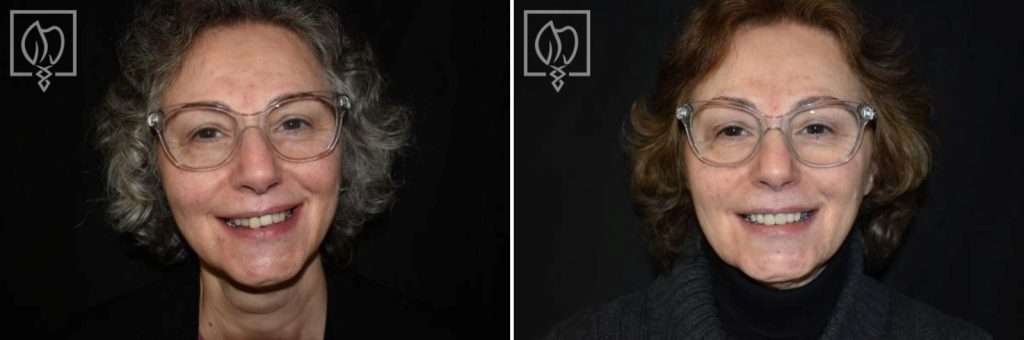
Temporary Crowns Restore Patient's Smile in Just One Day with an Immediate Smile Makeover
A patient from Potomac, Maryland, came to Elite Prosthetic Dentistry with the chief complaint of pain from a failing dental implant and its significant impact on her appearance.
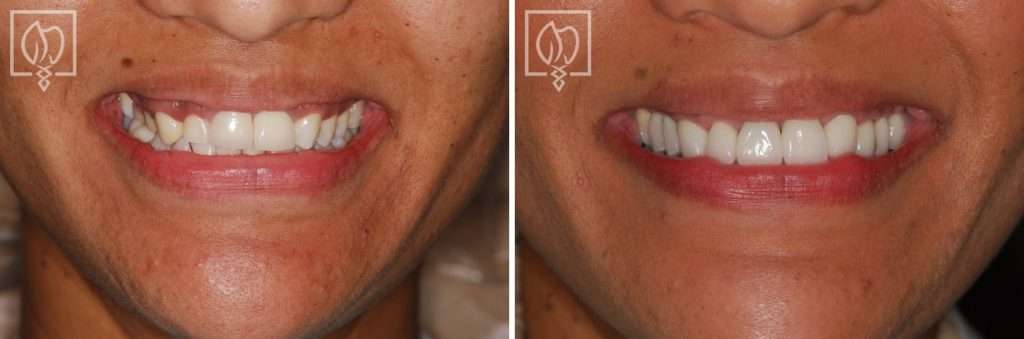
Multi-Faceted Treatment for Patient Unhappy With Her Artificial-Looking Crowns, Teeth and Gums
Many patients come to Elite Prosthetic Dentistry unhappy with the appearance of their smile. However, this particular patient presented with multiple interconnected problems that together created a smile she found deeply unsatisfying.

Treating Kevin’s Collapsed Bite with a Complete Smile Makeover with New Dentures
Dentures are sometimes not created to the ideal aesthetic and functional scheme. When improperly fabricated, dentures can make an individual appear almost a generation older than their actual age. They can have a poor fit that feels loose and unstable when eating or speaking, and they can actually accelerate bone loss over time.
Related Articles
Deepen your knowledge with additional insights on this topic.
The Patient's Guide to Implant, Cosmetic and Restorative Dentistry
Comprehensive guide to implant, cosmetic & restorative dentistry: quality care, selecting a prosthodontist, dental labs, insurance & smile makeovers.
 Choosing a Prosthodontist
 What is a Prosthodontist?
A prosthodontist is a dental specialist with advanced training in crowns, implants, dentures, and complex restorations. Washington, DC specialist.
4 Ways You Can Benefit from Our In-House Dental Lab
4 Ways You Can Benefit from Our In-House Dental Lab. When it comes to finding a new prosthodontist, you’ve got a checklist of criteria.