
Crown & Bridge Problems in Falls Church, VA
Falls Church residents with failing crowns and problematic bridges receive expert second opinions and specialized care from Dr. Marlin, a specialty-trained prosthodontist trained in complex restorative evaluation and treatment.
Falls Church’s small-town character combined with big-city accessibility creates a unique community where residents value quality and personal service. Falls Church families often maintain deep relationships with their healthcare providers. When crown or bridge issues arise, many Falls Church residents initially work with their trusted general dentist, but sometimes benefit from specialty consultation when problems persist or treatment options aren’t clear.
Dr. Marlin’s evaluation helps Falls Church patients understand complex restorative situations and make informed decisions about treatment, whether that means moving forward with their general dentist’s plan or exploring different approaches.
Intermittent Looseness: The Red Flag Nobody Should Ignore
Falls Church patients sometimes report that a crown feels loose occasionally, then seems to tighten up again. This intermittent looseness is always a warning sign. It indicates that cement is breaking down, even if the crown isn’t completely loose all the time.
A crown that’s intermittently loose won’t stabilize on its own. With each cycle of looseness and apparent tightening, more damage occurs. Bacteria and saliva infiltrate the microscopic gaps. The cement bond weakens further. The crown deteriorates toward complete failure.
Ignoring intermittent looseness often results in the crown becoming completely loose at an inconvenient time, requiring emergency care. Addressing it promptly allows controlled treatment rather than crisis management.
The Bridge That Intermittently Shifts
Similarly, a bridge that feels like it shifts when you chew, then seems stable at other times, indicates compromised support. One or both abutment teeth may have weakening periodontal support or developing decay. The bridge must be removed and evaluated to identify the problem.
For Falls Church patients, early intervention prevents the scenario where a bridge fails during dinner or a social event.
Preventing the Domino Effect
Falls Church residents sometimes experience a cascade of dental problems: one crown fails, which shifts bite forces, which causes problems in an adjacent crown, which then fails. Preventing this domino effect requires comprehensive evaluation of your entire restorative system.
When replacing a problem crown, Dr. Marlin assesses whether adjacent restorations will be affected by the change. Designing the replacement crown with consideration for the broader bite system prevents future problems in neighboring teeth.
Getting Here from Falls Church
From Falls Church, take Route 29 North toward Washington D.C. The drive takes approximately 20 minutes depending on traffic. For Falls Church patients dealing with unresolved crown or bridge problems, this drive provides access to specialized expertise.
Material Selection and Durability
Falls Church residents who’ve experienced crown problems in the past sometimes ask what materials would prevent recurrence. While perfect prevention isn’t possible, certain material choices improve durability and resistance to the most common failure modes.
Zirconia is exceptionally fracture-resistant, valuable for patients with heavy bites. Lithium disilicate combines esthetics with good strength. Older porcelain-over-metal crowns are more susceptible to porcelain chipping. For many Falls Church patients, material upgrade alone makes a significant difference in how long the replacement crown functions without problems.
The Long-term Planning Perspective
For Falls Church patients with multiple crowns in their 50s or older, taking a long-term planning perspective can prevent repeated crises. Rather than addressing each problem as it arises, developing a comprehensive plan: which restorations truly need attention now, which should be monitored and replaced proactively before they fail, and how replacement can be sequenced to manage cost while maintaining dental health.
This strategic approach often produces better long-term outcomes and less disruption than piecemeal crisis management.
Consultation Process
Dr. Marlin’s consultation includes thorough examination, digital imaging to visualize problems, and clear explanation of findings and options. For Falls Church patients accustomed to working with trusted healthcare providers, this detailed communication approach resonates. You leave the consultation with clear understanding of your situation and confidence in the recommended treatment plan.
Building a Restorative Team
For Falls Church patients who decide to proceed with treatment recommended by Dr. Marlin, communication between specialists and general dentists is important. Dr. Marlin works collaboratively with your general dentist to coordinate care. Sometimes he completes the treatment. Other times he makes recommendations that your general dentist implements. Clear communication ensures coordinated, seamless care.
Prevention and Maintenance
For Falls Church patients committed to maintaining their restorations, Dr. Marlin discusses specific strategies: particular attention to hygiene around crown margins, foods to avoid, whether a night guard is advisable, and frequency of professional evaluation. Patients who follow these recommendations consistently maintain better restoration health.
Understanding Your Options
When a Falls Church patient has crown or bridge problems, the options usually include:
Recementation or adjustment (least invasive, often temporary solution for problem crowns) Replacement with similar restoration (maintains the approach but avoids the previous problems) Replacement with improved materials or design (longer-term solution, addresses mistakes in the original) Complete systemic approach (if multiple crowns or bridges are problematic)
Dr. Marlin explains these options clearly so Falls Church patients understand what each involves and what each is likely to achieve.
Related Resources
For detailed information about crown and bridge problems, visit our Crown and Bridge Problems page. To learn about Dr. Marlin’s training and approach, see Meet Dr. Gerald Marlin. Explore our prosthodontist services in Falls Church for specialized restorative care.
Falls Church residents experiencing crown or bridge problems deserve expert evaluation and clear communication about their situation and options. Dr. Marlin provides both, accessible within a 20-minute drive from your community.
Bite Force and Material Selection Strategy
For Falls Church residents understanding their bite characteristics helps guide material selection. Heavy bite forces place crowns at risk for fracture and wear.
Zirconia is an excellent choice for heavy biters because it’s exceptionally fracture-resistant. Lithium disilicate offers good balance. All-ceramic is less appropriate for heavy biters.
A prosthodontist assesses bite force during consultation and recommends materials accordingly.
Avoiding Crown-Related Emergencies
For Falls Church residents, addressing crown problems promptly prevents emergency situations. A crown that’s becoming loose should be evaluated and treated before it fails completely.
A crown showing decay at the margin should be replaced before decay extends extensively. Delaying treatment often results in more complex situations requiring root canal therapy or other advanced treatment.
Bridge Abutment Health and Viability
When a Falls Church resident requires bridge evaluation, abutment tooth health determines bridge viability. Both abutment teeth must have adequate bone support and be free from decay.
If one abutment tooth is compromised, bridge viability is limited. Comprehensive evaluation guides realistic expectations about bridge longevity.
Preventive Radiography Protocol
For Falls Church residents with crowns or bridges, a preventive radiography protocol is valuable. Baseline radiographs when crowns are placed establish baseline bone levels. Comparison radiographs 2-3 years later reveal whether bone is stable or resorbing.
Progressive bone loss suggests problems developing with abutment teeth in bridges or supporting tooth in crowned teeth.
Addressing Treatment Uncertainty
For Falls Church residents uncertain about recommended crown treatment, a second opinion from a specialist provides clarity. Sometimes recommended replacement is justified by early problems detected. Other times, a crown can be maintained longer.
Understanding Crown Fractures and Porcelain Chipping
Some Falls Church residents experience crowns that chip or fracture. A piece of porcelain breaks off the crown surface. This may occur from trauma (biting hard food) or spontaneously from a hairline fracture that finally breaks through.
When porcelain chips, the underlying structure becomes exposed. The fracture line may continue developing, threatening the crown’s structural integrity. Repair through bonding composite material to the crown is temporary, usually lasting months rather than years.
For Falls Church patients experiencing fracture, replacement is usually the better long-term solution than attempted repair.
Zirconia and lithium disilicate crowns are substantially more fracture-resistant than all-ceramic, making them preferable for patients with history of crown fractures or for patients who chew hard or grind their teeth.
Understanding Root Canal Treatment and Crowns
When a root canal treated tooth requires a crown (or when a crowned tooth later needs root canal treatment), specific considerations apply.
A root canal treated tooth loses its living pulp. The tooth can no longer signal problems through pain. Decay can progress silently beneath a crown on a root canal treated tooth without causing pain, potentially leading to extensive damage before detection.
After root canal treatment, the tooth is often weakened because the pulp chamber was accessed for treatment. A crown is typically recommended to restore strength and protect the tooth. The crown should be carefully designed to reinforce the root canal treated tooth.
For Falls Church patients with root canal treated teeth requiring crowns, or for patients with crowns over root canal treated teeth, periodic radiographs help ensure problems aren’t developing silently.
Bridge Abutment Assessment and Long-term Viability
When a Falls Church patient requires bridge evaluation, abutment tooth assessment is crucial. The prosthodontist assesses bone levels around each abutment tooth. Receding bone indicates progressive periodontal disease or previous bone loss.
A bridge is only as viable as the supporting teeth. If abutment teeth show significant bone loss, the bridge’s long-term viability is limited. Understanding this helps Falls Church patients project realistic timelines for bridge replacement.
(202) 244-2101
Frequently Asked Questions
My crown has been loose intermittently for months. Will it ever feel stable again?
A crown that's intermittently loose indicates cement breakdown. Once cement is compromised, stability won't return without either recementation or replacement. Recementation works if the margin is well-adapted. If the margin isn't sealed properly, replacement is the better long-term solution.
Should I avoid chewing on the side where my bridge feels loose?
Yes, until the bridge is evaluated and treated. Continuing to chew on a compromised bridge accelerates damage to the abutment teeth and can cause the bridge to fail completely. Minimizing stress on the bridge preserves the situation and allows time for evaluation and planning.
Is there any way to avoid needing crown replacement?
Excellent oral hygiene focused on cleaning around crown margins prevents many problems. Avoiding hard foods and trauma, managing grinding through a night guard, and regular professional evaluation all extend crown longevity. But crown replacement eventually becomes necessary for most people as materials age and changes occur.
What's the advantage of seeing a prosthodontist versus having my general dentist replace my crown?
A prosthodontist has specialty training in restorative planning, materials, and case complexity. For straightforward crown replacement, a skilled general dentist can produce good results. For complex cases, cases with failures, or cases requiring special materials or technique, a prosthodontist's expertise becomes valuable.
How long does the crown replacement process usually take?
Typically 2-3 weeks from the initial preparation to delivery of the final crown, with one appointment for preparation and impression, and another for delivery. Some situations require additional appointments. Temporary crowns are placed during the waiting period to protect the prepared tooth.
Related Patient Success Stories
Explore similar patient success stories demonstrating our expertise in advanced prosthetic dentistry.
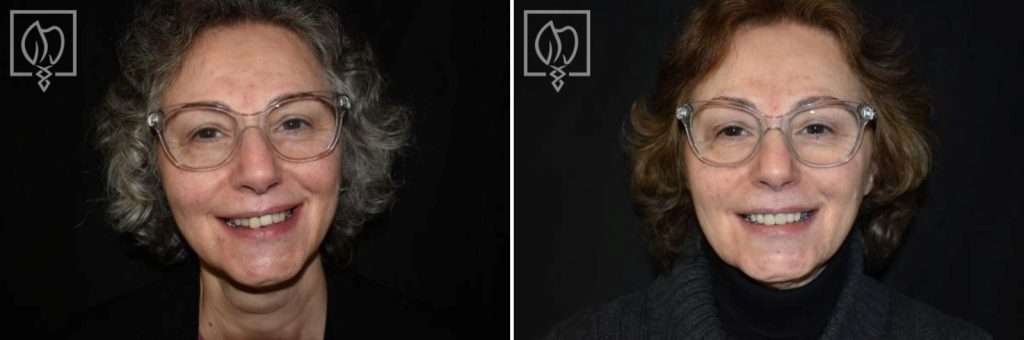
Temporary Crowns Restore Patient's Smile in Just One Day with an Immediate Smile Makeover
A patient from Potomac, Maryland, came to Elite Prosthetic Dentistry with the chief complaint of pain from a failing dental implant and its significant impact on her appearance.
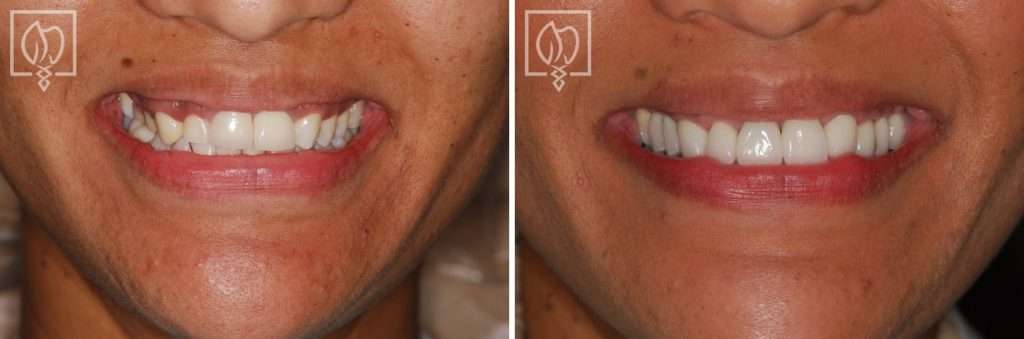
Multi-Faceted Treatment for Patient Unhappy With Her Artificial-Looking Crowns, Teeth and Gums
Many patients come to Elite Prosthetic Dentistry unhappy with the appearance of their smile. However, this particular patient presented with multiple interconnected problems that together created a smile she found deeply unsatisfying.
Salvaging Ms. N’s Severely Broken-Down Upper and Lower Teeth from Gum and Bone Disease
Many people in the U.S. suffer from extensive periodontal disease characterized by significant bone loss and shrinkage of the gum tissue. This condition can begin at a very young age and worsen quickly due to hereditary factors and lack of early diagnosis by their dentist.
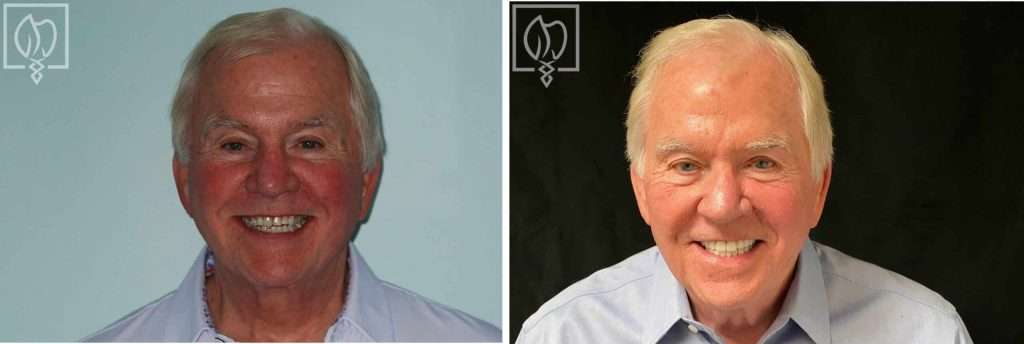
A Smile Transformation in Just Four Months: A Patient’s Dental Crown Restoration for a TV Series
A patient with dental crowns that were in poor shape was going to appear on a streaming video series on a major TV network that was scheduled to begin filming soon. Our patient, John, an author about to embark on a book tour, was anxious as his teeth were not up to his standards to appear on television.
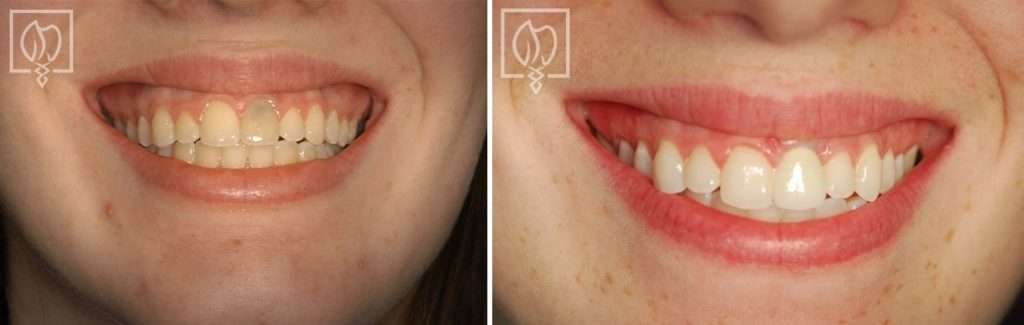
Replacing a Discolored Front Tooth with a Precision Placed Implant
Some of the most challenging restorations occur when fabricating an anterior crown to fit on an implant. Not only does one have the difficulty of matching the single front tooth to the other ones in the high visibility zone, but the dentist must also ensure the position of the underlying implant is precise through accurate preplanning and placement.
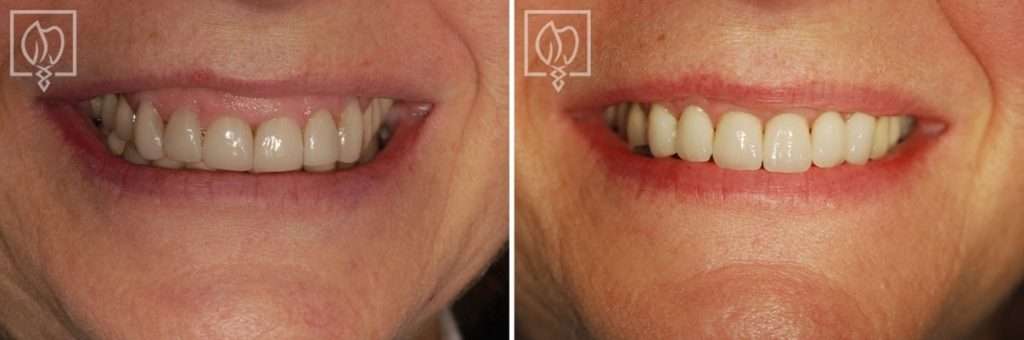
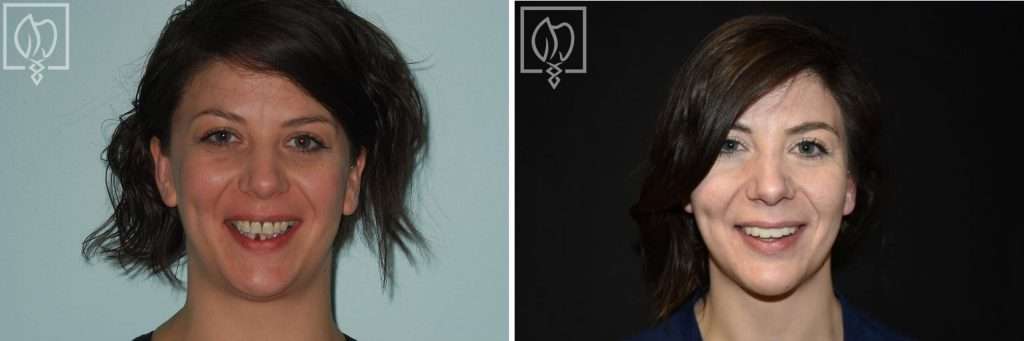
Patient Was Dissatisfied With Her 'Gummy' Smile
Excessive gingival tissue, commonly referred to as a "gummy smile," can significantly impact the appearance of a person's smile and their self-confidence. When someone smiles and a large amount of gum tissue is visible above the teeth, it can create the perception that the teeth are too small or short, even when they are actually normal size.
Our Services in Falls Church
Beyond crown-problems, Falls Church patients rely on Dr. Gerald Marlin for a full range of advanced dental care.
More services available in Falls Church:
crown-problems Near Falls Church
Dr. Gerald Marlin also provides crown-problems services for patients in these neighboring communities.
Getting Here from Falls Church
Elite Prosthetic Dentistry is conveniently located near Falls Church, VA.
Falls Church residents reach our office in 20 minutes via Route 29 North
Address:
4400 Jenifer Street NW, Suite 220
Washington, DC 20015
Phone: (202) 244-2101
Schedule ConsultationSchedule Your Consultation from Falls Church
Falls Church residents trust Dr. Gerald Marlin for precision dental care. With 3,900+ implants placed and 40+ years of experience, your smile is in expert hands.