
Crown & Bridge Problems in Arlington, VA
Arlington residents with failing crowns and problematic bridges find comprehensive second opinions and specialized care from Dr. Gerald Marlin, a specialty-trained prosthodontist with decades of experience evaluating and correcting crown and bridge issues.
Arlington’s professional workforce and established neighborhoods represent some of the most educated and discerning dental patients in the region. Many Arlington residents have held the same restorations for years and take pride in maintaining their dental health. Yet crowns and bridges, despite their durability, don’t last forever. The combination of Arlington’s demanding careers, family commitments, and high standards means that when a crown or bridge develops problems, residents want answers from someone who truly understands restorative complexity.
Dr. Gerald Marlin, a specialty-trained prosthodontist with extensive training in advanced restorative work, evaluates crown and bridge problems for Arlington patients who sense something isn’t right but have received unclear answers from their general dentist. Whether you’re experiencing a crown that feels loose, a bridge that seems to shift, dark margins that worry you aesthetically, or persistent discomfort beneath a restoration that was supposedly successful, a second opinion from a specialist often clarifies what’s happening and what your options really are.
The Hidden Problems That General Dentists May Miss
Many crown and bridge issues don’t announce themselves dramatically. A crown might feel subtly different when you chew, or a bridge abutment might ache intermittently. Some problems are purely aesthetic: a dark line appears at the margin as gums recede, or the crown color no longer matches your adjacent teeth. Others are functional: you notice your bite feels off, or food traps under the bridge in a way it didn’t before.
General dentists are skilled at evaluating teeth for decay and basic fit, but prosthodontists spend years developing the diagnostic eye to spot the early warning signs of crown and bridge failure. A crown that appears “fine” in a quick visual check might actually have marginal gaps invisible to the naked eye, or the supporting tooth might be developing bone loss beneath the gum line.
Cement Washout and Loose Crowns
One of the most common problems Arlington patients report is a crown that feels loose. This often involves cement washout, where the material bonding the crown to the tooth gradually dissolves or breaks down. Saliva, acidic foods, and normal chewing forces all contribute to this process. When cement is compromised, the crown can shift microscopically with each bite, causing discomfort and creating a pathway for bacteria to infiltrate the space between the crown and the tooth.
A loose crown isn’t just annoying. It’s a sign that the restoration is no longer functioning as intended. The tooth underneath becomes vulnerable to decay, and the crown itself may need to be removed and replaced rather than simply recemented.
Dark Margins and Aesthetic Concerns
Arlington residents tend to be appearance-conscious, and dark lines at the crown margin are a frequent concern. These can result from several causes: the metal substructure of an older crown showing through as gums recede, staining of the natural tooth structure visible at the edge, or the margin being placed too far below the gum line where cleaning becomes difficult.
Sometimes the fix is simple cosmetic adjustment or replacement with an all-ceramic crown. Other times, a gum graft or minor gum shaping can improve the situation. A prosthodontist assesses the full picture and recommends the solution that balances aesthetics, function, and longevity.
Bite Problems and Occlusal Trauma
A crown that works perfectly for a few years can gradually cause problems if the bite shifts or if the crown is slightly higher than the opposing natural teeth. Over time, this imbalance causes the supporting tooth and surrounding bone to absorb excessive force. You might experience sensitivity or pain beneath the crown, achiness, or a feeling that your bite is “off.” Some patients describe it as the crown feeling like it’s hitting too hard or too fast when they chew.
Correcting an occlusal problem may involve simple bite adjustment, or in some cases, crown replacement if the original crown geometry is the root cause.
Why Arlington Patients Choose Dr. Marlin for Crown and Bridge Evaluation
Dr. Marlin’s training as a specialty prosthodontist includes detailed coursework in restorative biomechanics, crown and bridge materials, oral rehabilitation, and complex cases involving multiple failed restorations. This background allows him to diagnose problems that may seem mysterious to a general dentist and to communicate clearly about what’s actually happening.
Arlington’s proximity to the office means a quick drive via I-66 East or the scenic George Washington Parkway. Many Arlington patients appreciate the minimal time investment needed to get a definitive second opinion. Rather than spending weeks wondering whether a problem will resolve or escalate, they get answers within days.
The in-house dental laboratory is a significant advantage for Arlington patients needing crown replacement. Rather than sending impressions and specifications to an outside lab, Dr. Marlin’s team fabricates custom-crafted restorations on-site. This accelerates turnaround, allows for seamless communication about color and contour, and ensures the final restoration meets the exacting standards of his specialty practice.
Getting Here from Arlington
From Arlington, take I-66 East toward Washington D.C. Continue as I-66 becomes I-81 or connect to Connecticut Avenue NW heading north into the Chevy Chase area. Alternatively, follow the George Washington Parkway north along the Potomac River toward Rock Creek Park. Both routes take approximately 15 minutes depending on traffic. Parking is available at the practice, and the office is accessible via public transportation if you prefer to use Metro lines connecting Arlington to the area.
Common Crown and Bridge Scenarios in Arlington
Arlington’s demographic includes many professionals who grind their teeth at night or clench during stressful work. This habit accelerates wear on crowns and can cause cracks in porcelain or ceramic restorations. Similarly, residents with heavy bite forces or those who’ve experienced trauma to a tooth may develop complications in crowns that would be fine in a patient with gentler chewing patterns.
A bridge with decay or failure is another scenario Arlington patients face. Unlike a single crown, a bridge can’t simply be treated like a removable option. Fixing a bridge problem usually requires the bridge to be removed, the underlying tooth or teeth to be treated, and a new bridge to be fabricated. Dr. Marlin guides patients through this process, explaining the trade-offs between bridge retention, dental implants, and other solutions.
What to Expect During Your Consultation
Your first visit includes a thorough examination of the problematic crown or bridge and the teeth supporting it. Dr. Marlin will assess marginal adaptation (how well the crown edge fits to the tooth), check for decay beneath the restoration, evaluate the bite, and take digital images to visualize any issues below the surface.
If a crown is loose, careful probing and sometimes digital imaging reveals the extent of cement loss and whether the underlying tooth is healthy or damaged. If a bridge is problematic, he evaluates each abutment tooth for bone loss, decay, or other complications.
Based on findings, you’ll receive a straightforward explanation of what’s happening, whether the restoration can be salvaged through adjustment or recementation, or whether replacement is the better option. You’ll understand the long-term implications of each choice and the costs involved.
The Case for Replacing Rather Than Patching
A common dilemma Arlington patients face is whether to keep having a problematic crown recemented or adjusted versus replacing it with a new restoration. This is a legitimate question, and the answer depends on the specific situation.
If the underlying tooth is healthy, the margin is well-positioned, and the only issue is loose cement, recementation can buy time. However, if the problem is recurrent, if the crown margin is poorly positioned, or if bone loss or decay is developing, replacement usually offers better longevity and fewer future problems. Dr. Marlin presents the cost difference between these options in the context of how long each solution is likely to last.
Related Resources
For more detailed information about crowns and bridges, visit our Crown and Bridge Problems page. To learn about Dr. Marlin’s training and approach, see our Meet Dr. Gerald Marlin page. Explore our dental crowns in Arlington service overview for more information about crown care in your area.
Arlington residents dealing with crown and bridge issues deserve clarity and specialized expertise. Whether your concern is functional, aesthetic, or both, a consultation with a prosthodontist provides the definitive second opinion and comprehensive treatment planning that general dentistry can’t always offer.
(202) 244-2101
Frequently Asked Questions
Why does my crown feel loose even though my dentist says it's fine?
Crown mobility can result from cement washout beneath the restoration, bone loss around the supporting tooth, or inadequate preparation margin. A prosthodontist can identify subtle movement that standard checks miss and determine whether recementation, adjustment, or replacement is needed.
Can a crown cause pain if it's properly fitted?
Yes. Pain under a crown often stems from pulp inflammation, marginal gaps allowing bacterial infiltration, or occlusal trauma from a crown that contacts your opposing teeth too hard. A full evaluation determines the source and appropriate treatment.
What causes the dark line that appears at my crown edge?
Dark margins typically indicate exposed metal substructure, receded gum tissue showing the margin, or staining of the tooth structure beneath the crown. Treatment depends on the cause and may involve crown replacement, graft procedures, or adjustment.
Is it normal for a bridge to shift or rock when I chew?
No. Movement indicates compromised support on one or both abutment teeth, possibly from decay, bone loss, or cement failure. A prosthodontist can assess the structural integrity and recommend reinforcement or replacement.
How do I know if my crown needs replacement or just adjustment?
A detailed examination including digital imaging, marginal assessment, and bite analysis determines whether problems are restorable through adjustment, recementation, or refinishing, or whether replacement is the better long-term solution.
Related Patient Success Stories
Explore similar patient success stories demonstrating our expertise in advanced prosthetic dentistry.

Temporary Crowns Restore Patient's Smile in Just One Day with an Immediate Smile Makeover
A patient from Potomac, Maryland, came to Elite Prosthetic Dentistry with the chief complaint of pain from a failing dental implant and its significant impact on her appearance.
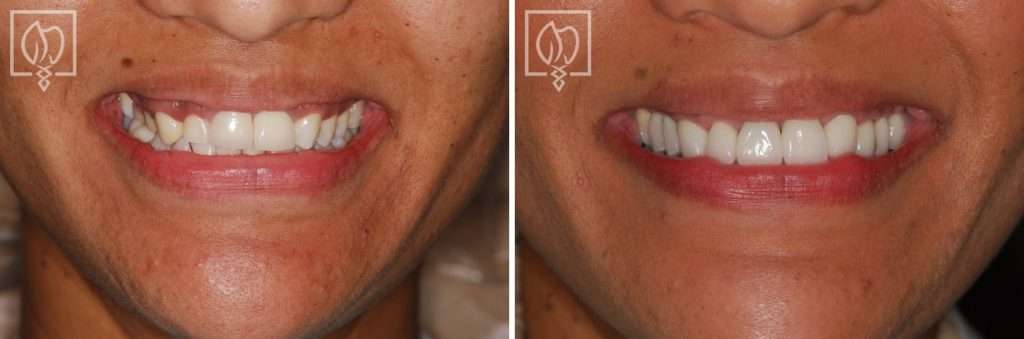
Multi-Faceted Treatment for Patient Unhappy With Her Artificial-Looking Crowns, Teeth and Gums
Many patients come to Elite Prosthetic Dentistry unhappy with the appearance of their smile. However, this particular patient presented with multiple interconnected problems that together created a smile she found deeply unsatisfying.
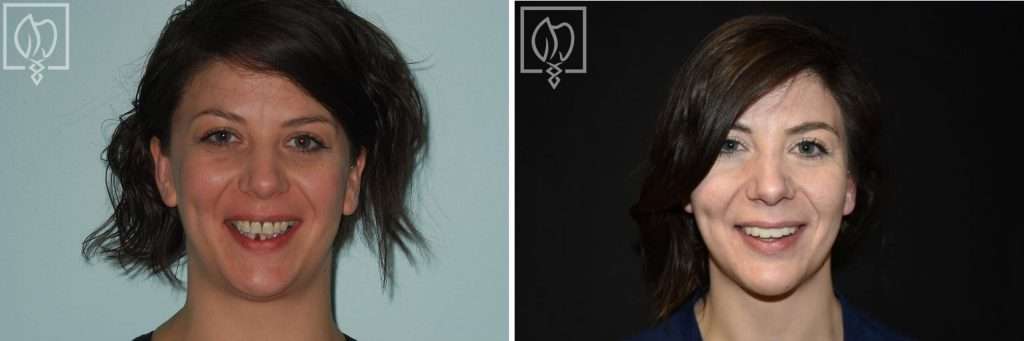
Salvaging Ms. N’s Severely Broken-Down Upper and Lower Teeth from Gum and Bone Disease
Many people in the U.S. suffer from extensive periodontal disease characterized by significant bone loss and shrinkage of the gum tissue. This condition can begin at a very young age and worsen quickly due to hereditary factors and lack of early diagnosis by their dentist.
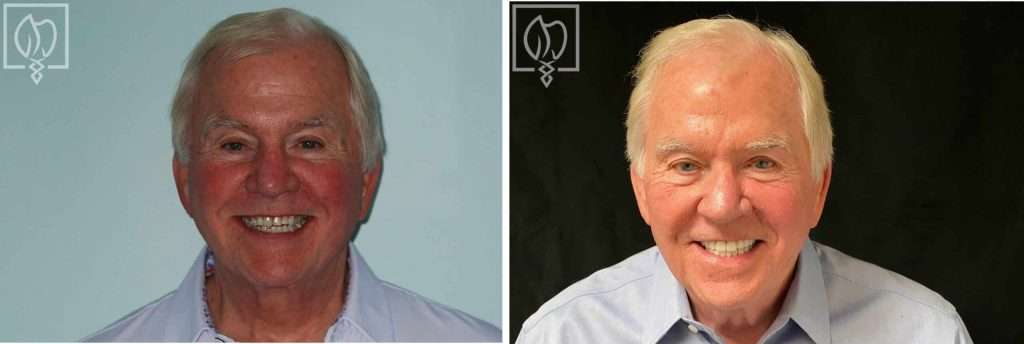
A Smile Transformation in Just Four Months: A Patient’s Dental Crown Restoration for a TV Series
A patient with dental crowns that were in poor shape was going to appear on a streaming video series on a major TV network that was scheduled to begin filming soon. Our patient, John, an author about to embark on a book tour, was anxious as his teeth were not up to his standards to appear on television.
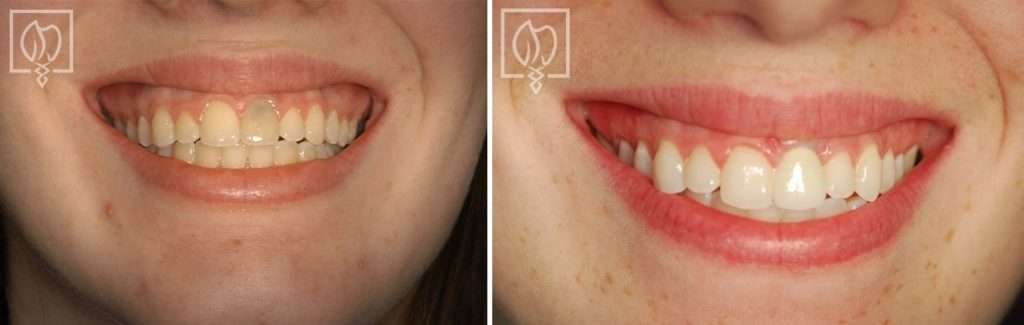
Replacing a Discolored Front Tooth with a Precision Placed Implant
Some of the most challenging restorations occur when fabricating an anterior crown to fit on an implant. Not only does one have the difficulty of matching the single front tooth to the other ones in the high visibility zone, but the dentist must also ensure the position of the underlying implant is precise through accurate preplanning and placement.
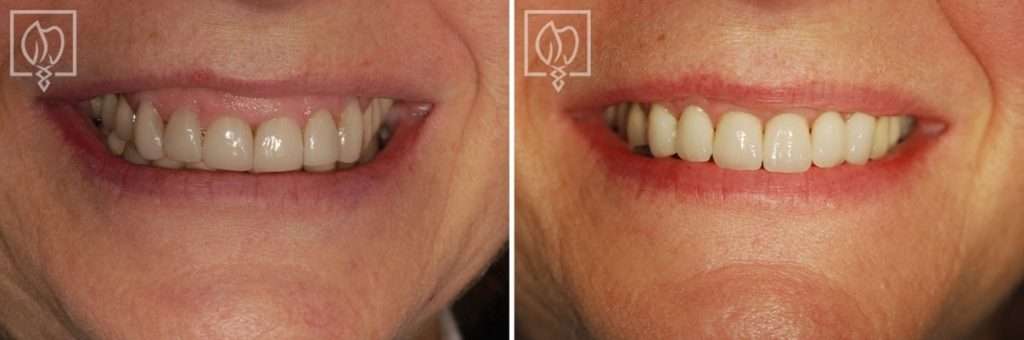
Patient Was Dissatisfied With Her 'Gummy' Smile
Excessive gingival tissue, commonly referred to as a "gummy smile," can significantly impact the appearance of a person's smile and their self-confidence. When someone smiles and a large amount of gum tissue is visible above the teeth, it can create the perception that the teeth are too small or short, even when they are actually normal size.
Our Services in Arlington
Beyond crown-problems, Arlington patients rely on Dr. Gerald Marlin for a full range of advanced dental care.
More services available in Arlington:
crown-problems Near Arlington
Dr. Gerald Marlin also provides crown-problems services for patients in these neighboring communities.
Getting Here from Arlington
Elite Prosthetic Dentistry is conveniently located near Arlington, VA.
Arlington residents reach our office in 15 minutes via I-66 East or George Washington Parkway
Address:
4400 Jenifer Street NW, Suite 220
Washington, DC 20015
Phone: (202) 244-2101
Schedule ConsultationSchedule Your Consultation from Arlington
Arlington residents trust Dr. Gerald Marlin for precision dental care. With 3,900+ implants placed and 40+ years of experience, your smile is in expert hands.