
Veneer Problems in Arlington, VA
Chipped, cracked, or failing veneers in Arlington, VA? Get a specialist second opinion from Dr. Marlin, a prosthodontist with decades of experience fixing veneer problems.
Are your veneers looking worn, chipped, or out of place? Arlington professionals increasingly seek expert second opinions on cosmetic failures that should have been prevented.
Veneers are meant to transform your smile and last for years, but not all veneer work is created equal. If your veneers are chipped, discolored, loosening, or simply looking artificial compared to your natural teeth, the problem is rarely with veneers themselves. It is usually with how they were originally designed, prepared, or placed.
At Elite Prosthetic Dentistry, we specialize in diagnosing what went wrong with your veneers and fixing it the right way.
Schedule Your Consultation (202) 244-2101
Why Veneers Fail: Common Problems We See in Arlington
Arlington’s educated, detail-oriented patients are often the first to notice when their veneers fall short of expectations. We frequently see several recurring problems with veneer cases that were done elsewhere.
Veneers That Chip or Crack Too Easily
Veneer failures often trace back to inadequate tooth preparation. If the original dentist over-prepared the tooth (removing too much healthy structure) or under-prepared it (leaving the veneer too thin to be durable), the veneer becomes fragile. Some veneer materials are inherently weaker than others. Composite veneers, for example, are more prone to chipping than carefully fabricated ceramic veneers.
When a veneer chips, it usually means either the material was substandard or the preparation was flawed from the start.
Veneer Debonding: When Veneers Come Loose
A veneer that starts to lift or feel loose has experienced bond failure. This happens when:
- The tooth was not adequately isolated during preparation, leaving residue that weakens the bond
- The adhesive system used was not appropriate for long-term durability
- The veneer was placed without proper moisture control, trapping bacteria underneath
- The tooth preparation had microscopic cracks that were sealed over rather than addressed
Debonding is frustrating because the veneer itself may be perfectly fine. The failure is in the placement technique.
Color Mismatch and Discoloration
Some Arlington patients come in with veneers that never looked right, and others have veneers that looked good initially but have become discolored over time. Color mismatch usually indicates:
- The veneers were fabricated in a shade that does not complement your natural dentition
- Discoloration has occurred under the veneer, making the entire tooth appear darker
- The ceramicist was not given proper shade communication from the dentist
Discoloration under a veneer signals that bacteria may be present at the margin, a sign of an imperfect seal.
Bulky, Unnatural Appearance
Veneers that look too thick, have exaggerated contours, or do not blend with your natural smile often result from over-preparation or an inadequate initial design. A quality veneer should look like your natural tooth, just perfected. If your veneers look obviously artificial, the design failed.
Gum Recession Around Veneers
Over time, some patients notice the veneer margin becoming visible as gum tissue recedes. This is a common problem we address as part of gum recession and gap resolution. This happens when:
- The original margin placement was aggressive or subgingival (below the gumline)
- The preparation created a ledge that traumatizes the gum
- Years of inflammation at a poorly sealed margin have caused bone and gum loss
Gum recession around veneers is a sign of a chronic problem that originated at placement.
The Prosthodontic Difference in Veneer Design
Dr. Gerald Marlin brings a specialty-trained prosthodontist’s perspective to every veneer case. Unlike cosmetic dentists who place veneers as a standalone procedure, prosthodontic training includes comprehensive understanding of how veneers integrate with the entire dentition, bite, and long-term durability.
Our approach includes:
- Diagnostic evaluation: CBCT imaging and functional analysis to assess tooth position, bone support, and bite relationships
- Strategic preparation: Conservative removal of tooth structure, proper margin placement in the ideal location (supragingival when possible)
- Laboratory communication: Detailed instructions to our in-house ceramicist about shade, contour, translucency, and incisal effects
- Bonding excellence: Meticulous moisture control, appropriate adhesive selection, and verification of complete seating
- Long-term integration: Design that protects underlying tooth structure and allows healthy gum maintenance
Veneers designed by a prosthodontist last longer, look more natural, and are far less likely to require replacement or repair.
Getting Here from Arlington
Elite Prosthetic Dentistry is conveniently located from Arlington. Drive north on I-66 East toward Washington, DC, and take the Friendship Heights exit. From there, you are minutes from our office at Friendship Heights. Alternatively, the scenic George Washington Parkway offers a direct route along the Potomac and connects easily to our location. Free parking is available in our building, and we are one block from the Friendship Heights Metro station if you prefer public transportation.
Elite Prosthetic Dentistry 4400 Jenifer Street NW, Suite 220 Washington, DC 20015 (202) 244-2101
Common Veneer Problems We Repair for Arlington Patients
Over-Prepared Teeth with Sensitivity
When too much tooth structure was removed during the original veneer preparation, the remaining tooth becomes thin and sensitive. The veneer may feel uncomfortable, or you may experience sensitivity to temperature or air. In these cases, we evaluate whether the veneer can be left in place (and the sensitivity managed) or whether it needs replacement with a more conservative restoration.
Veneers That Never Fit Right
Some patients come in with veneers that feel off from day one. The contact points do not feel right, the bite does not feel balanced, or the margins have always felt rough. When veneers are fabricated without adequate attention to interproximal contacts or margin finishing, these problems persist forever unless the veneers are replaced.
Secondary Caries Under the Veneer
Decay that develops at the veneer margin or underneath the restoration is a sign of a poor seal. If the seal has failed, bacteria have been leaking underneath for months or years. In these cases, the veneer must be removed, decay treated, and a new veneer fabricated with superior bonding technique.
Bite Trauma from Veneer Positioning
Veneers that are positioned too far forward or are too bulky can create a bite that does not feel right. You may notice one tooth hitting harder than others, or an overall sense that your bite has been altered. Bite problems from veneer positioning require either adjusting the veneer or replacing it with a design that restores proper occlusion.
Veneer Repair Versus Full Replacement
When you come in for a veneer second opinion, we evaluate whether your problem can be addressed with repair or refinement, or whether replacement is the better path forward.
Repair may be appropriate when:
- Only one veneer is failing and others are in excellent condition
- The failure is marginal (margin roughness, slight debonding) rather than structural
- Your underlying tooth structure is healthy and the preparation was adequate
Replacement is usually better when:
- Multiple veneers are failing or discolored
- The original preparation was flawed
- The color or contour never met your expectations
- You want to ensure long-term durability with the highest quality design and materials
We always preserve as much healthy tooth structure as possible, and we never recommend treatment that is not necessary.
Why Arlington Patients Choose Dr. Marlin for Veneer Problems
- Specialty training in prosthodontics: three additional years of advanced training in complex restorations
- Second opinion expertise: decades of analyzing and correcting work done elsewhere
- In-house laboratory: complete control over fabrication, shade, contour, and quality
- Bite integration: veneers are designed to fit harmoniously with your entire dentition
- Long-term philosophy: Our goal is veneers that remain beautiful and functional for 15 years or more
The Process for Fixing Your Veneer Problems
1. Comprehensive Diagnostic Evaluation
We examine your veneers under magnification, assess the underlying tooth structure, take CBCT imaging to evaluate bone support and tooth position, and photograph your current smile.
2. Problem Assessment
We identify specifically what is causing your problem: is the veneer material failing, is the bond breaking down, is there decay or bone loss, or is the design fundamentally flawed?
3. Treatment Planning
We explain your options clearly: repair if appropriate, or replacement with a design that corrects the original problems.
4. Fabrication and Placement
If replacement is recommended, we remove the existing veneer (carefully preserving tooth structure), prepare the tooth properly, and place a new veneer using superior bonding technique and materials.
5. Long-Term Monitoring
We see you for follow-up to ensure complete seating, proper bite integration, and gum health. We include you in our maintenance program to monitor your veneers over time.
FAQ About Veneer Problems
Can I keep my existing veneer if I just want the color changed?
Not reliably. If the underlying tooth or preparation has discolored, bleaching or staining the veneer alone will not fix the problem. A new veneer allows us to address discoloration of the tooth underneath and fabricate a veneer in the ideal shade with proper characterization and translucency.
What happens to the tooth under the veneer if it cracks or decays?
If the tooth underneath decays or fractures, the veneer must be removed to treat the problem. The veneer itself cannot be repaired in place if the tooth is compromised. This is why preventing decay with a proper seal is so critical. It is also why choosing an experienced dentist for the original placement matters enormously.
How much tooth structure needs to be removed for a new veneer?
Ideally, minimal tooth structure. A conservative preparation removes only the amount needed to make room for the veneer material and to create good margins. If your previous dentist over-prepared the tooth, we work with what remains and may need to add thickness to the veneer to restore proper contour, or we may use a bonded restoration with a core material to rebuild lost structure.
Are there veneers that are less likely to fail?
Yes. Feldspathic ceramic veneers, when properly prepared and placed by an experienced dentist, are more durable than composite veneers. Lithium disilicate (like Emax) is stronger and more esthetic than feldspathic ceramic. The material matters, but the preparation and placement technique matter far more. Excellent preparation plus excellent materials equals excellent durability.
Will your veneers look natural or fake?
Our goal is always veneers that look like natural teeth, just perfected. We customize every veneer with proper translucency at the incisal edge, anatomic contours, and characterization that matches your tooth. When a veneer is done right, people will not see your veneers. They will just see your beautiful smile.
Related Resources
About Dr. Marlin In-House Dental Lab Porcelain Veneers Cosmetic Dentistry in Arlington Second Opinion Dentistry Failing Veneers Request an Appointment Patient Success Stories
Schedule Your Veneer Second Opinion in Arlington
If your veneers are not meeting your expectations, do not wait. The sooner you address the problem, the sooner you can have a smile that looks and feels right.
Call (202) 244-2101 or schedule a consultation online. We proudly serve Arlington, Falls Church, and surrounding Northern Virginia communities.
Schedule Your Consultation (202) 244-2101
Frequently Asked Questions
Why do veneers chip more easily in Arlington's climate?
Temperature fluctuations between heated buildings and outdoor conditions can stress veneer margins, making them more prone to chipping. Additionally, the harder tap water in Northern Virginia can affect the longevity of the adhesive bond if veneers were not placed with optimal technique.
Can you fix just one chipped veneer without replacing all of them?
Sometimes. If only one veneer is damaged and the others are still in excellent condition, we can replace that single veneer. However, if adjacent veneers are also showing signs of aging or discoloration, replacing them as a group often produces better esthetic results and color matching than a single repair.
How long do veneers typically last in Arlington?
Well-made veneers last 10 to 15 years on average. However, veneers fabricated without proper preparation, or placed using weaker bonding techniques, may fail much sooner. The quality of the original work, not the location, is the primary factor.
What is veneer debonding and why does it happen?
Debonding occurs when a veneer separates from the tooth, usually because the original adhesive has failed, the tooth preparation was contaminated during placement, or the bonding material was inadequate. You may notice the veneer becoming loose or slightly lifting at the margin.
Should I be concerned about the color mismatch between my veneers and my original teeth?
Color mismatch is a common complaint and often indicates the veneers were fabricated to a shade that does not match your remaining natural teeth. This is usually a problem with the original case planning. New veneers should blend seamlessly with adjacent teeth.
Related Patient Success Stories
Explore similar patient success stories demonstrating our expertise in advanced prosthetic dentistry.

Temporary Crowns Restore Patient's Smile in Just One Day with an Immediate Smile Makeover
A patient from Potomac, Maryland, came to Elite Prosthetic Dentistry with the chief complaint of pain from a failing dental implant and its significant impact on her appearance.
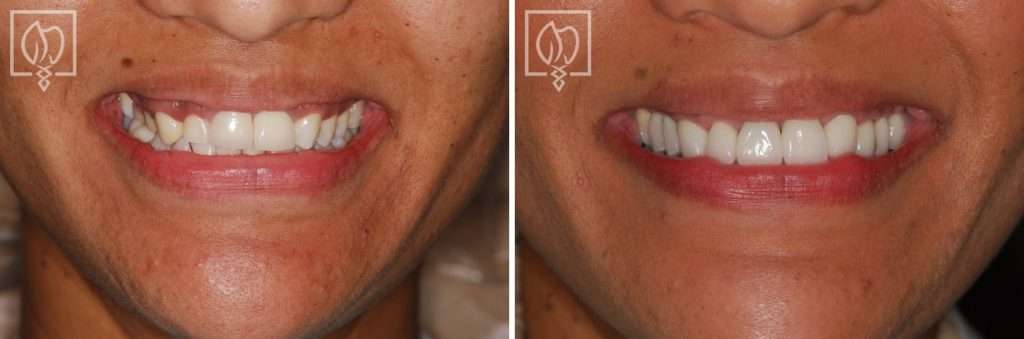
Multi-Faceted Treatment for Patient Unhappy With Her Artificial-Looking Crowns, Teeth and Gums
Many patients come to Elite Prosthetic Dentistry unhappy with the appearance of their smile. However, this particular patient presented with multiple interconnected problems that together created a smile she found deeply unsatisfying.
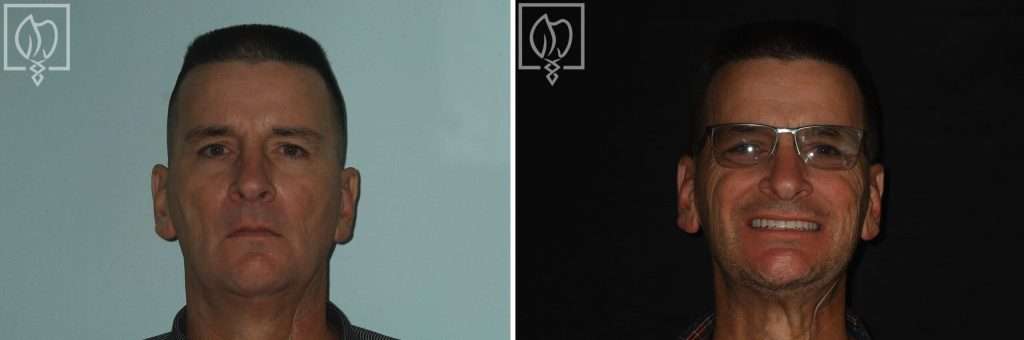
Treating Kevin’s Collapsed Bite with a Complete Smile Makeover with New Dentures
Dentures are sometimes not created to the ideal aesthetic and functional scheme. When improperly fabricated, dentures can make an individual appear almost a generation older than their actual age. They can have a poor fit that feels loose and unstable when eating or speaking, and they can actually accelerate bone loss over time.
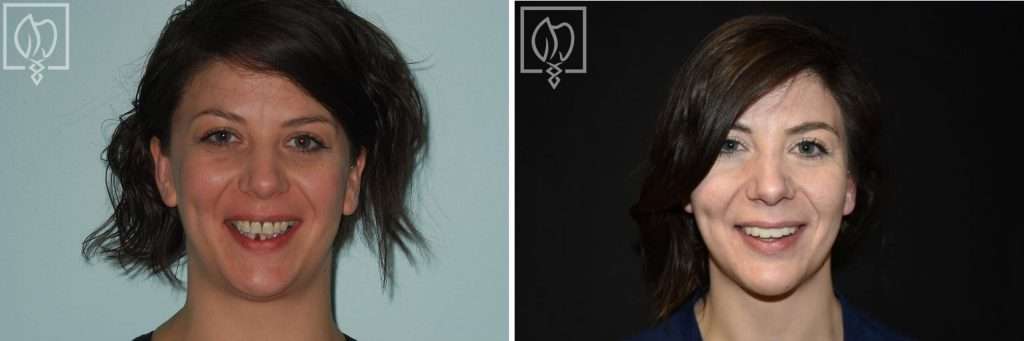
Salvaging Ms. N’s Severely Broken-Down Upper and Lower Teeth from Gum and Bone Disease
Many people in the U.S. suffer from extensive periodontal disease characterized by significant bone loss and shrinkage of the gum tissue. This condition can begin at a very young age and worsen quickly due to hereditary factors and lack of early diagnosis by their dentist.
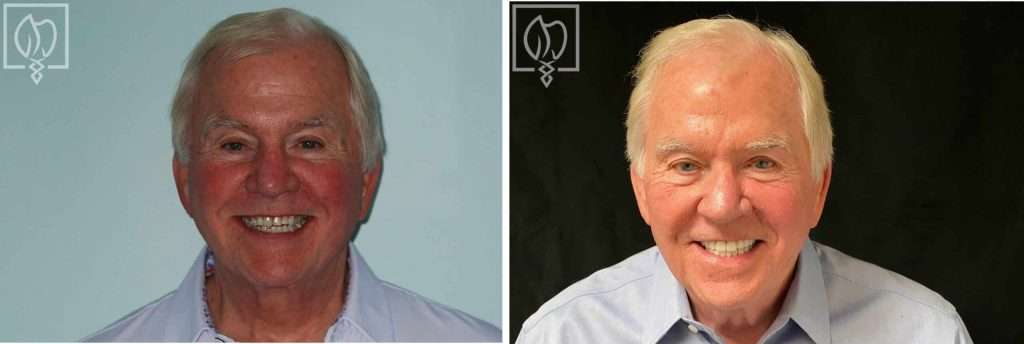
A Smile Transformation in Just Four Months: A Patient’s Dental Crown Restoration for a TV Series
A patient with dental crowns that were in poor shape was going to appear on a streaming video series on a major TV network that was scheduled to begin filming soon. Our patient, John, an author about to embark on a book tour, was anxious as his teeth were not up to his standards to appear on television.
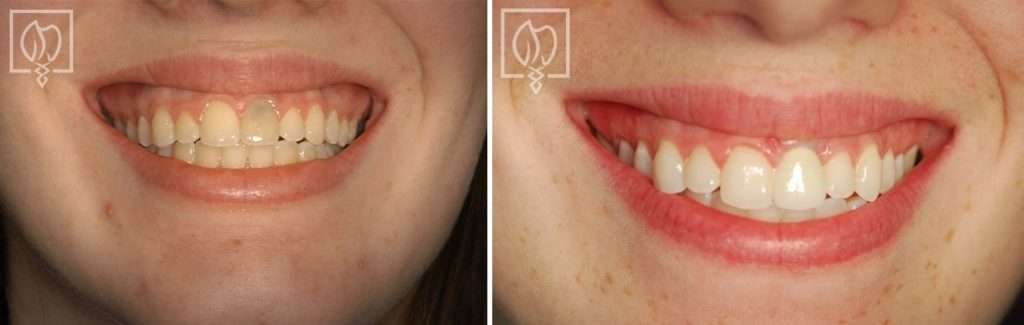
Replacing a Discolored Front Tooth with a Precision Placed Implant
Some of the most challenging restorations occur when fabricating an anterior crown to fit on an implant. Not only does one have the difficulty of matching the single front tooth to the other ones in the high visibility zone, but the dentist must also ensure the position of the underlying implant is precise through accurate preplanning and placement.
Our Services in Arlington
Beyond veneer-problems, Arlington patients rely on Dr. Gerald Marlin for a full range of advanced dental care.
More services available in Arlington:
veneer-problems Near Arlington
Dr. Gerald Marlin also provides veneer-problems services for patients in these neighboring communities.
Getting Here from Arlington
Elite Prosthetic Dentistry is conveniently located near Arlington, VA.
Arlington residents can reach our office via I-66 East toward Washington, DC, exiting near Friendship Heights, or via the scenic George Washington Parkway for a more direct commute along the Potomac River.
Address:
4400 Jenifer Street NW, Suite 220
Washington, DC 20015
Phone: (202) 244-2101
Schedule ConsultationSchedule Your Consultation from Arlington
Arlington residents trust Dr. Gerald Marlin for precision dental care. With 3,900+ implants placed and 40+ years of experience, your smile is in expert hands.