
What to Do When Your Veneer Falls Off
Immediate steps for a debonded veneer: save the veneer, protect the tooth, and learn when rebonding works versus replacement.
Immediate Steps: What to Do Right Now
A veneer falling off is alarming, but it is not an emergency in the medical sense. You will not bleed to death. You are not in danger. However, you should treat it as urgent and get professional care within days to protect the tooth and restore your smile.
Here is what to do immediately:
1. Save the Veneer
If the veneer fell out of your mouth, do not panic. Look for it. If it fell at home, it is likely nearby. If it fell at work or elsewhere, retrace your steps. A lost veneer means you will definitely need a new one. A recovered veneer might be rebondable.
Once you have found it, rinse it very gently with lukewarm water only. Do not use hot water, which could damage the ceramic. Do not use soap or other cleaners. Pat it dry with a clean tissue.
Store the veneer in a clean, dry container. A plastic bag or small container will work. Do not wrap it in a cloth, as cloth fibers can stick to the surface. Keep it at room temperature.
Do not attempt to glue the veneer back yourself. Super glue, crazy glue, dental glue from the drugstore, or any adhesive applied at home will contaminate both the veneer and the tooth surface, making professional rebonding extremely difficult or impossible. Do not do this even if the veneer feels loose or if it falls off again. Wait for professional treatment.
2. Protect the Exposed Tooth
Now that the veneer is off, the front surface of your tooth is exposed to the oral environment. Take precautions to protect it.
Avoid chewing on that side of the mouth. This reduces the risk of the tooth edge chipping or fracturing, which can compromise rebonding later.
Avoid very hard foods like nuts, hard candy, ice, or crunchy foods that might cause you to bite down forcefully. Soft foods and the opposite side of your mouth are safer.
Avoid very sticky foods like taffy or caramel that could pick at the tooth surface or grab an otherwise loose restoration if it shifts.
Avoid very hot foods and beverages for the first day or two, as the exposed tooth is often more sensitive to temperature than it was covered by the veneer.
Most importantly, maintain meticulous oral hygiene around the exposed tooth. Brush gently, floss carefully so you don’t damage the margin, and consider a soft-bristled toothbrush temporarily.
3. Call Your Dentist Immediately
Contact your dentist or prosthodontist the same day the veneer falls off, or the very next morning if it happens after hours. Explain that the veneer debonded and ask for an urgent appointment within 24-48 hours if possible.
If you do not have a regular dentist, or if your general dentist does not feel confident rebonding or replacing the veneer, call a prosthodontist. Prosthodontists specialize in this type of restorative work and will know how to assess your veneer and tooth to determine the best path forward.
Why Did Your Veneer Fall Off?
Understanding why the veneer debonded helps explain whether rebonding is likely to succeed and whether special measures need to be taken to prevent it from happening again.
Contamination During Original Placement
This is the most common reason veneers debond. When a veneer is bonded, the tooth must be completely free of any contamination before the bonding resin is applied.
The procedure should look like this: the tooth is isolated with a rubber dam or similar barrier to keep saliva away. The tooth is acid-etched with phosphoric acid for 30 seconds to demineralize the surface. The etch is rinsed away thoroughly and the tooth is dried completely with an air syringe. No moisture is allowed to contact the tooth from this point forward. The bonding resin is applied and light-cured. The veneer is tried for fit and appearance. More bonding resin is applied to the back of the veneer, the veneer is seated with pressure, and the excess resin is removed before it hardens.
Many dentists skip steps or don’t use adequate isolation. Saliva, even a tiny amount, can contaminate the etched surface. Blood from bleeding gum tissue contaminates the surface. Moisture from improper drying weakens the bond. If the patient’s lips or tongue touch the tooth before bonding, the bond fails.
Additionally, some dentists do not adequately protect the margins during bonding. The margin where the veneer meets the tooth is the most critical area for bond strength. If the margin is contaminated, bonding fails at that interface, and the veneer eventually debonds.
A prosthodontist performing rebonding will use meticulous isolation and technique to prevent contamination from recurring.
Improper Acid Etching
The acid etch is not optional or variable. Phosphoric acid at the proper concentration for the proper time creates the mechanical interlock that bonding depends on.
If the etch was applied for too short a time (less than 30 seconds on enamel), the surface is not adequately demineralized. The bond is weak. If the etch was applied to a surface that was not clean (with residual saliva, plaque, or even remnants of temporary cement), the etch is ineffective on that contaminated surface.
Some dentists skip etching the margins altogether, assuming the margin will be sealed by the veneer material itself. This is incorrect. The margin must be etched and bonded as thoroughly as the rest of the surface.
If improper etching was the cause of debonding, the solution is proper etching during rebonding, with meticulous attention to margin preparation.
Incompatible Bonding Agent or Veneer Material
Different ceramic materials have different surface characteristics and require different bonding approaches.
Feldspathic porcelain veneers can be bonded with conventional phosphoric acid etching followed by resin cement. This is reliable and well-proven.
Lithium disilicate and other high-strength ceramics require hydrofluoric acid etching, not phosphoric acid. Some dentists do not use hydrofluoric acid for these veneers, instead using conventional phosphoric acid etching. The bond is weaker. The veneer is more likely to debond.
Additionally, some bonding cements work better with certain veneer materials than others. A prosthodontist using their own laboratory knows exactly which veneer material will be used, and selects the bonding protocol accordingly. Coordination between the lab and the dentist ensures compatibility.
If a veneer debonded due to incompatible materials or incorrect etching for the veneer type, rebonding with the correct approach will give a more reliable result.
Excessive Bite Forces
Bite forces are the primary stress on veneers during chewing and swallowing. Excessive forces can eventually fail even a properly bonded veneer, though usually only if other factors are already compromised.
Clenching and grinding (bruxism) generate bite forces that normal veneers are not designed to withstand. Forces can exceed 1000 pounds per square inch. Over months, these forces exceed the strength of the bond, and the veneer debonds or fractures.
Patients with a history of grinding or clenching are at high risk for veneer failure. If this is your case, a custom nightguard worn every night is essential to prevent the problem from recurring.
Some patients have occlusal interferences where the bite is not evenly balanced. The veneer or tooth takes a disproportionate share of the bite force, overloading the bond. An occlusal analysis and adjustment by a prosthodontist can correct this.
Assessment: Can Your Veneer Be Rebonded?
Your prosthodontist will examine your veneer and tooth carefully before deciding on rebonding versus replacement. Here are the factors evaluated:
Is the Veneer Intact and Undamaged?
The veneer is examined under magnification for chips, cracks, fractures, or other damage. If the veneer is intact, rebonding is possible. If there is even a small chip at the edge, or if the surface is scratched or stained, replacement may be preferable to rebonding.
A chipped veneer that is rebonded will have a rough edge that can catch food or your tongue. The chip is visible. The veneer will not look as good as a new one. If the veneer is valuable and attractive otherwise, rebonding and refinishing might work. If the veneer is damaged in a way that diminishes its appearance, replacement is better.
Is the Tooth Surface Healthy?
The tooth is examined for decay, particularly at the margins where decay can hide beneath the overhanging veneer. Decay at the margin means the margin was not sealed during original bonding, and the same problem will recur unless the decay is treated first.
The tooth edge is examined for chipping or fracture. If the edge fractured when the veneer debonded (sometimes they chip together), the tooth structure is compromised. Depending on the extent of the fracture, the tooth might need core buildup before rebonding.
The color and condition of the tooth are assessed. If the tooth has stained or changed color since the veneer was placed, the tooth might be dying or developing internal discoloration. This requires investigation and possibly endodontic treatment before rebonding.
Is the Fit Still Accurate?
The veneer is tried in the tooth to verify that the fit is still precise. The veneer should seat fully without rocking or gaps. There should be no voids or open margins.
If the tooth has shifted (due to bone loss or gum recession), the fit might be loose. A loose-fitting veneer cannot be reliably rebonded. Replacement is necessary.
If the margins are not a tight fit to the tooth, rebonding will not create an adequate seal. Replacement is better.
Assessment Summary
If the veneer is intact, the tooth is healthy, and the fit is accurate, rebonding is likely to succeed. The prosthodontist will rebond using meticulous technique and improved bonding materials to prevent recurrence.
If the veneer is damaged, the tooth has decay or structural problems, or the fit is compromised, replacement is more reliable than rebonding.
The Rebonding Protocol
If your prosthodontist determines that rebonding is appropriate, here is what to expect:
Step 1: Cleaning and Preparation
The old resin cement is removed from both the veneer and the tooth. This is done carefully under magnification to avoid damaging the veneer or the underlying tooth.
The veneer surface is cleaned and any remaining cement or debris is removed. The veneer is not etched, as it is already porous and ready to bond.
The tooth surface is cleaned and polished to remove any stain or buildup. The margins are carefully debrided of any cement or remaining material.
Step 2: Etching the Tooth
The tooth is isolated with a rubber dam or similar barrier to prevent contamination.
Phosphoric acid is applied to the tooth surface for 30 seconds. This creates the demineralized layer that bonding depends on.
The etch is rinsed thoroughly with water and the tooth is dried completely. The tooth should look slightly chalky from the acid etch. If there is any sheen or moisture, the etch did not work properly and needs to be repeated.
Step 3: Applying Bonding Agent
A bonding agent is applied to the etched tooth surface and light-cured. This creates a physical and chemical bond between the tooth and the resin cement.
Step 4: Seating the Veneer
Resin cement is applied to the back surface of the veneer. The veneer is carefully seated onto the tooth with firm, sustained pressure. Excess cement is removed with floss or a scaler before it hardens.
The cement is light-cured from all angles to ensure complete hardening.
Step 5: Finishing and Adjustment
The margins are refined and polished to ensure they are smooth and well-contoured. The occlusion is checked to verify that the veneer does not have any premature contacts. Any necessary adjustments are made.
The final result should be a tooth that looks exactly as it did before, with the veneer fully bonded and secure.
When Rebonding Will Not Work
Rebonding is not appropriate in these situations:
Veneer is damaged. If the veneer is chipped, cracked, or otherwise compromised, rebonding will not restore the original appearance.
Tooth has decay. If decay is present at margins or on the tooth surface, it must be treated before rebonding. In many cases, the decay is extensive enough that replacement is better than rebonding.
Tooth structure has changed. If the tooth has gum recession, bone loss, or structural changes, the original veneer might no longer fit properly.
Bonding is likely to fail again. If the reason for debonding (such as untreated bruxism) has not been addressed, rebonding will likely fail again soon.
In these cases, replacement with a new veneer is the better choice.
Replacement: When a New Veneer Is Better
If your veneer cannot be rebonded, or if rebonding is not advisable, a new veneer will be fabricated and placed.
The process is similar to the original veneer, but now the prosthodontist knows the failure point and can take steps to prevent it. If bite force was the issue, the new veneer might be made thicker or from a stronger material, and a nightguard will be prescribed. If contamination during bonding was the issue, rebonding technique will be optimized. If material incompatibility was the issue, the material selection and bonding protocol will be corrected.
A new veneer is an opportunity to improve on the original. The esthetic result is typically the same or better, and the durability is improved by addressing the cause of failure.
Prevention: How to Prevent Your Veneer From Falling Off Again
Once you have had a veneer debond, you understand the problem. Here are strategies to prevent recurrence:
Work With a Prosthodontist
The most important step is having your new veneer (or rebonded veneer) placed by a prosthodontist, not a general dentist. Prosthodontists specialize in complex restorations and understand the science of bonding deeply. They use meticulous technique, superior materials, and have an in-house laboratory for quality control.
Get a Nightguard If You Grind or Clench
If you have any signs of bruxism (flat cusps, wear facets on your teeth, jaw pain, or a history of clenching), a custom nightguard is essential. This reduces bite forces on your veneer and protects it from fracture.
Maintain Excellent Oral Hygiene
Plaque and tartar accumulation around the margins can lead to decay and bonding failure. Brush twice daily with a soft-bristled brush and floss daily.
Avoid Hard Foods and Habits
Do not chew on hard candies, nuts, ice, pens, or fingernails. Do not use your teeth as tools. These habits generate excessive force on your veneer and can cause fracture or debonding.
Visit Your Prosthodontist Regularly
Regular check-ups allow your dentist to identify and address problems before they become serious. Margins are examined for staining or breakdown. The bite is checked for changes. The overall health of the tooth and veneer is verified.
Address Bite Problems
If your prosthodontist identifies an occlusal interference or bite problem, have it corrected. Uneven bite forces are a common cause of veneer failure.
Timeline: What to Expect
Understanding the timeline helps you plan your dental treatment:
Immediately (day of debonding): Call your dentist for urgent appointment.
Within 24-48 hours: Initial appointment. The veneer and tooth are examined. Decision is made about rebonding vs. replacement. If rebonding is planned, the rebonding procedure may be done during this visit (typically 1-2 hours). If replacement is planned, impressions are taken and a treatment plan is discussed.
If replacement: 1-2 weeks for lab fabrication of your new veneer.
Delivery appointment: Your new veneer is tried in, the bite is adjusted, and the veneer is bonded. Approximately 1-2 hours.
Follow-up: A check-up appointment in 1-2 weeks to verify that everything is comfortable and the bite is perfect.
Cost Considerations
Rebonding is much less expensive than a new veneer because no lab work is required. Rebonding typically costs 200-400 dollars, while a new veneer typically costs 800-1200 dollars or more depending on the material and lab.
However, rebonding is only worth doing if it will succeed long-term. If the veneer is likely to debond again within months, paying for replacement now is better than paying for two rebonding appointments plus replacement later.
Your prosthodontist will advise you honestly about whether rebonding or replacement is the better investment for your situation.
Moving Forward
A debonded veneer is frustrating, but it is completely fixable. With expert evaluation and treatment, you can have your smile restored and protected against future problems.
Contact Elite Prosthetic Dentistry to schedule an urgent appointment with Dr. Gerald Marlin if your veneer has fallen off. We will assess your veneer and tooth, discuss your options, and restore your smile with care designed to last.
Your Best Smile Is Within Reach
Schedule a consultation with Dr. Gerald Marlin to discuss your treatment options and take the first step toward a healthier, more confident smile.
Frequently Asked Questions
What should I do immediately if my veneer falls off?
First, save the veneer. Rinse it gently with lukewarm water and store it in a clean container or plastic bag. Do not attempt to glue it back yourself with super glue or other adhesives, as these will contaminate the surface and prevent professional rebonding. Call your dentist immediately to schedule an urgent appointment. While waiting, avoid chewing on the affected tooth and avoid very hard, sticky, or hot foods that could stress the exposed tooth.
Can my veneer be rebonded or does it need to be replaced?
Many veneer debonding cases can be successfully rebonded if the veneer is intact and undamaged, the tooth surface is healthy with no decay at margins, and the fit is still accurate. A prosthodontist will examine both the veneer and tooth under magnification to assess whether rebonding is reliable. If the veneer is chipped, cracked, or if there is decay or structural changes to the tooth, replacement is more predictable than rebonding.
Why did my veneer fall off?
Veneers debond due to failure at the bonding interface. Common causes include contamination during original placement (saliva, blood, or moisture on the tooth before bonding), improper acid etching during placement, incompatible bonding agent for the veneer material, or excessive bite forces from clenching or grinding. Sometimes bonding failure results from a combination of factors that compound over time. Your prosthodontist will investigate the cause to prevent recurrence.
Is the tooth underneath damaged?
In most cases, the underlying tooth is not damaged when a veneer debonds. The veneer simply failed to maintain its bond to the healthy tooth structure. However, your dentist must examine the tooth carefully for any decay that may have started at the margins, or any damage from trauma that caused the debonding. If decay is present, it must be treated before the veneer is replaced or rebonded.
What's the cost difference between rebonding and replacement?
Rebonding is significantly less expensive than fabricating a new veneer, typically one-third to one-half the cost of a new restoration. However, rebonding only makes financial sense if it is likely to succeed long-term. If the reason for debonding is likely to recur, or if the veneer is damaged or the tooth structure has changed, replacement is the better investment despite higher upfront cost. Your prosthodontist can advise which approach offers better long-term value.
How can I prevent my veneer from falling off again?
Prevention depends on why it debonded. If the original bonding was flawed, a prosthodontist using meticulous technique and superior materials can minimize recurrence. If you clench or grind your teeth, a custom nightguard is essential to reduce bite forces. If you have an occlusal interference, it should be corrected before rebonding. Excellent oral hygiene and avoiding hard foods protect the margins. Ultimately, working with a prosthodontist who controls all variables of material selection, preparation, and technique gives you the best chance of success.
Can I wait to have the veneer replaced or rebonded?
You should schedule treatment as soon as possible, ideally within a few days. The exposed tooth surface can accumulate stain, and the edges can chip or fracture easily. If the tooth is sensitive, sensitivity can worsen over time. Additionally, the exposed tooth is at risk for decay if you cannot maintain perfect oral hygiene around the bare surface. Most importantly, the longer you wait, the greater the chance that the tooth condition changes in a way that makes rebonding less reliable.
Related Patient Success Stories
Explore similar patient success stories demonstrating our expertise in advanced prosthetic dentistry.

Temporary Crowns Restore Patient's Smile in Just One Day with an Immediate Smile Makeover
A patient from Potomac, Maryland, came to Elite Prosthetic Dentistry with the chief complaint of pain from a failing dental implant and its significant impact on her appearance.
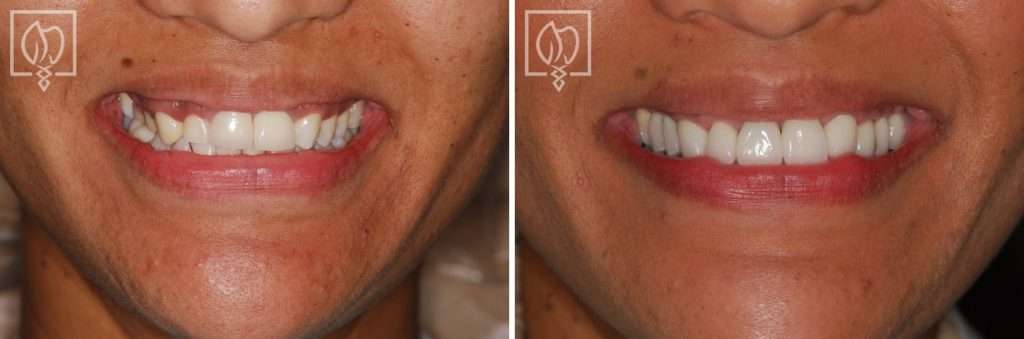
Multi-Faceted Treatment for Patient Unhappy With Her Artificial-Looking Crowns, Teeth and Gums
Many patients come to Elite Prosthetic Dentistry unhappy with the appearance of their smile. However, this particular patient presented with multiple interconnected problems that together created a smile she found deeply unsatisfying.
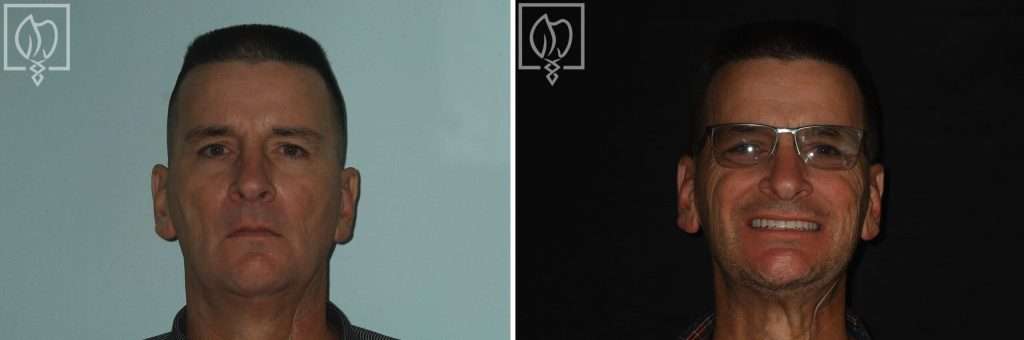
Treating Kevin’s Collapsed Bite with a Complete Smile Makeover with New Dentures
Dentures are sometimes not created to the ideal aesthetic and functional scheme. When improperly fabricated, dentures can make an individual appear almost a generation older than their actual age. They can have a poor fit that feels loose and unstable when eating or speaking, and they can actually accelerate bone loss over time.

Salvaging Ms. N’s Severely Broken-Down Upper and Lower Teeth from Gum and Bone Disease
Many people in the U.S. suffer from extensive periodontal disease characterized by significant bone loss and shrinkage of the gum tissue. This condition can begin at a very young age and worsen quickly due to hereditary factors and lack of early diagnosis by their dentist.
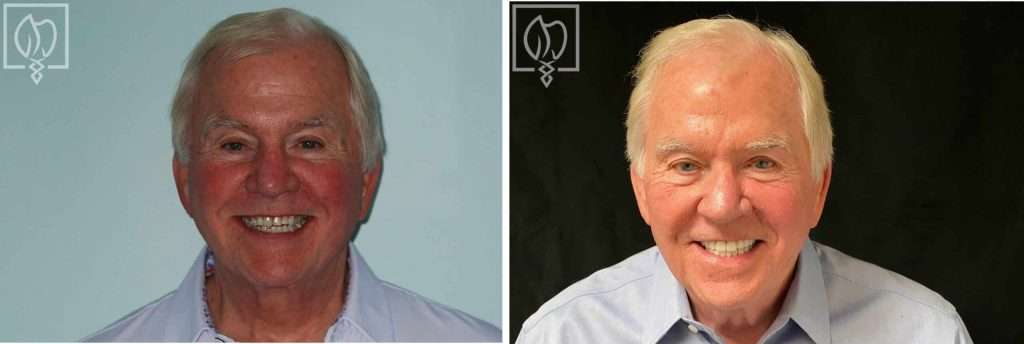
A Smile Transformation in Just Four Months: A Patient’s Dental Crown Restoration for a TV Series
A patient with dental crowns that were in poor shape was going to appear on a streaming video series on a major TV network that was scheduled to begin filming soon. Our patient, John, an author about to embark on a book tour, was anxious as his teeth were not up to his standards to appear on television.
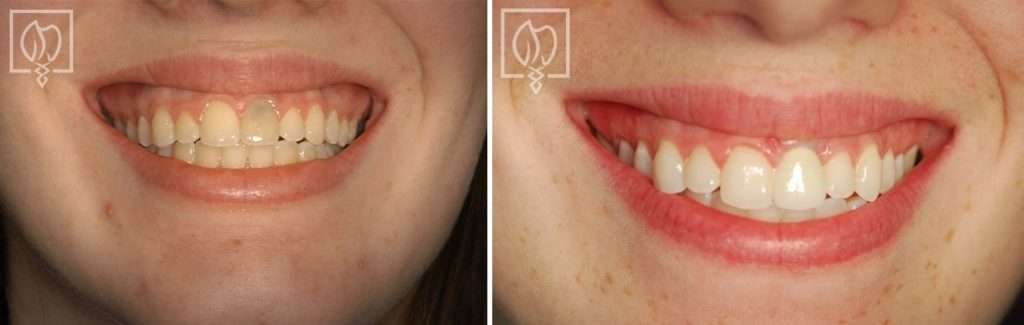
Replacing a Discolored Front Tooth with a Precision Placed Implant
Some of the most challenging restorations occur when fabricating an anterior crown to fit on an implant. Not only does one have the difficulty of matching the single front tooth to the other ones in the high visibility zone, but the dentist must also ensure the position of the underlying implant is precise through accurate preplanning and placement.
What to Do When Your Veneer Falls Off Near You
Dr. Gerald Marlin provides what to do when your veneer falls off services to patients throughout the Washington, DC metropolitan area. Select your community to learn more.
Ready to Transform Your Smile?
With 40+ years of experience and 3,900+ dental implants placed, Dr. Gerald Marlin delivers results that last. Schedule your consultation today.