

Why Your Dental Crown Keeps Coming Loose
Why your crown keeps coming loose and what dentists can do to fix it permanently. Expert diagnosis and proven treatment solutions.
Why Your Dental Crown Keeps Coming Loose
A dental crown that repeatedly comes loose is frustrating, embarrassing, and worrying. You had a crown placed to fix a problem. It was supposed to last for years. Instead, it’s spinning, moving, or actually falling out of your mouth. This raises immediate questions: Is something wrong with the crown? Is something wrong with the underlying tooth? Will this ever be permanently fixed, or will you be dealing with this problem indefinitely?
The good news is that loose crowns are solvable. The better news is that understanding why your crown is loose often leads to a better solution than simply re-cementing it again.
Why Crowns Come Loose: The Main Failure Modes
A crown comes loose for specific reasons. Understanding which reason applies to your situation determines the best treatment approach.
Inadequate Retention Form in the Original Preparation
Every tooth that receives a crown must be prepared in a way that creates mechanical retention. This means the walls of the prepared tooth must diverge slightly (at approximately 6 degrees from vertical), providing a taper that allows the crown to seat fully but still grip the preparation like a sleeve around a roll of paper towels.
If the original preparation wasn’t done correctly, retention is compromised from day one. The walls might be too parallel, reducing the mechanical grip. The tooth might have been reduced too much, leaving insufficient surface area for retention. The preparation might have been rushed, creating an uneven internal surface. Any of these preparation errors create a crown that moves easily.
This problem shows up immediately or within weeks of crown placement. The crown rocks, spins slightly, or falls out during eating. Simple re-cementing might temporarily stabilize it, but because the preparation itself is flawed, the cement won’t hold permanently. The only lasting solution is remake with a proper preparation.
Short Clinical Crown and Insufficient Retention Height
Sometimes the problem isn’t the taper but the sheer length of the preparation walls. If the original tooth was short to begin with, or if extensive decay required removal of significant tooth structure, the remaining preparation might be short relative to its width. This creates a retention form that’s mathematically weak, even if the taper is correct.
A short preparation simply doesn’t provide enough surface area for the crown to grip securely. Every chewing force tries to dislodge the crown. Over time, the cement weakens and the crown becomes loose.
When the tooth is too short, the solution sometimes involves crown lengthening surgery (moving the gum line to expose more tooth) or a post-and-core system (placing a post inside the tooth to add retention). These approaches provide additional mechanical grip, allowing the new crown to stay stable.
Cement Failure and Washout
Even with a perfect preparation, the cement must hold. Cement fails when:
-
The original cementation wasn’t done properly. Water or saliva contamination during cementation severely weakens the bond. Inadequate pressure while the cement sets creates voids. Using a temporary cement for a “permanent” crown (some dentists do this) results in failure within months.
-
The crown margin isn’t perfectly sealed. If there’s any gap between the crown and tooth at the margin, bacteria and oral fluids gradually wash away the cement. The crown loosens incrementally until it finally falls out.
-
Time and use degrade the cement. Even excellent cement is a material that wears over 5-10 years of chewing forces and temperature cycling (hot coffee, cold ice, hot soup). Some cements hold better than others, and the type of cement chosen by your original dentist affects longevity.
Cement failure typically shows up gradually. The crown slowly becomes looser over months. You might notice slight movement or rocking before it actually falls out. This is different from a crown that’s been loose since placement, which suggests a preparation problem.
Decay Developing Underneath the Crown
When decay develops under a crown, the underlying tooth structure softens and shrinks. As the decayed structure breaks down, the crown loses contact with it. The crown becomes loose as it sinks into the space left by the decayed tooth. Additionally, the decayed structure can’t provide retention, so even if the preparation is re-sealed, the crown will loosen again as decay continues to develop.
Decay develops under crowns when margins aren’t sealed properly, when the margin is exposed due to gum recession, or when the crown margin fits loosely. The patient often notices:
- A bad taste or smell from under the crown
- Discoloration around the crown margin (gray or brown staining)
- The crown suddenly becoming loose after years of stability
- Sensitivity or pain around the crown
Radiographs (X-rays) show decay under the crown, though decay directly under a metal crown can be hard to see on radiographs. We often discover it only after removing the crown and examining the underlying tooth.
If decay is present, simply re-cementing the crown won’t solve the problem. The decay must be cleaned out first, and the preparation might need adjustment or additional treatment to get the tooth stable again.
Bite Forces and the Short Crown Problem
Your bite generates tremendous force, particularly on back teeth. If a crown is loose or poorly retained, every chewing motion works to dislodge it. Over time, the movement itself weakens the cement-crown-tooth interface, accelerating looseness.
Additionally, if a crown is positioned too short (i.e., it doesn’t fully protect the prepared tooth), the margin of the prepared tooth takes some of the chewing force directly. This puts stress on the tooth-cement interface and accelerates cement failure. A properly fitting crown should bear all the occlusal force, with the margin below the bite plane and the prepared tooth taking no direct forces.
This is why bite adjustment sometimes helps with a loose crown: equalizing bite forces reduces the stress that’s working to dislodge it, buying time until a permanent solution can be implemented.
Loose Crown Behaviors: What They Tell You
The way your crown comes loose offers diagnostic clues about what’s wrong.
Rocking or Wobbling
A crown that rocks side-to-side or front-to-back suggests inadequate retention form or a preparation that’s too short. The crown has space to move because the preparation doesn’t grip it properly. This is usually a preparation problem requiring remake, not a cement problem requiring simple re-cementation.
Spinning or Rotating
A crown that rotates around its long axis indicates that the cement has failed or that the retention form is insufficient. Sometimes this happens when a crown is cemented on an inadequate preparation where the sides have grip but there’s no mechanical resistance to rotation. This is a permanent design flaw that re-cementation won’t fix.
Intermittent Looseness
A crown that seems loose sometimes but feels tight other times might be responding to chewing direction, temperature-related expansion or contraction, or moisture in the cement. This often indicates marginal cement failure (cement intact in most places but missing at one area of the margin). Re-cementing might temporarily fix this, but if decay exists or if the margin doesn’t fit properly, it will fail again.
Complete Detachment
A crown that falls out completely typically indicates major cement failure or decay, or occasionally a preparation that’s so short that one particularly hard bite dislodges it completely. If the crown fell out, examine it. Is it intact (looks fine, no fractures)? If so, the problem is likely cement or preparation. Is there visible decay or breakage on the underlying tooth? If so, decay or tooth fracture is involved.
Evaluating and Diagnosing a Loose Crown
Before treating a loose crown, we need to understand why it’s loose. This requires careful examination and often radiographs.
Clinical Examination
We inspect the crown for fit, listen for movement or clicking during testing, examine the margins under magnification, and assess the underlying tooth structure visually. We perform percussion testing (tapping the crown gently to detect changes in sound that might indicate looseness or decay). We check the bite to see if the crown is hitting harder than surrounding teeth.
Radiographic Assessment
Periapical radiographs show decay under the crown, changes in bone level around the supporting tooth, and sometimes the quality of the preparation if it’s visible. CBCT imaging provides more detail when necessary.
Try-in of the Crown
If we determine that removal and evaluation is necessary, we gently remove the crown and examine the underlying tooth thoroughly. We can now see the preparation quality, identify any decay, and determine whether the crown was cemented to a healthy tooth with a good preparation (suggesting cement failure) or to a compromised tooth (suggesting decay or preparation inadequacy).
Treatment Approaches for Loose Crowns
The treatment depends entirely on the diagnosis.
Re-cementation
If the crown is intact, the preparation is adequate, there’s no decay, and the problem is purely cement failure, re-cementation can work. We carefully remove any remaining old cement, dry the tooth thoroughly (moisture control is critical), apply fresh cement, and seat the crown with firm pressure while the cement hardens.
For re-cementation to succeed long-term, we must address whatever caused the original cement failure. If the margin doesn’t fit properly, re-cementation alone won’t solve the problem because new cement will wash out just as the old cement did.
Re-cementation is most successful when done within the first year or two of crown placement, because the preparation is less likely to have become compromised or to have developed decay underneath.
Bite Adjustment
Sometimes a crown becomes loose because it’s bearing excessive bite force. If the crown is hitting harder than adjacent teeth, we can relieve that force slightly, reducing the stress on the crown-tooth interface and the cement. This can extend the functional life of the crown while you plan for permanent remake.
Complete Removal and Remake
If the crown needs to come off to evaluate the underlying tooth, if decay is present, or if the preparation is inadequate, we remove the crown completely, treat any decay, and fabricate a new crown.
This process involves:
- Careful crown removal using techniques designed to minimize trauma to the underlying tooth
- Removal of remaining cement
- Examination and treatment of any decay
- Evaluation of the remaining tooth structure
- Re-preparation if the original preparation is inadequate
- Detailed impression and shade selection
- New crown fabrication by our in-house lab
- Try-in and adjustment at a second visit
- Final cementation with proper moisture control
The new crown is made with correct preparation geometry, ensuring proper retention. The in-house lab allows real-time quality control and communication, preventing the shortcuts that sometimes occur with outside labs.
Post and Core for Short Teeth
For teeth that are short relative to their width, or teeth where the preparation must be made short due to the amount of remaining structure, adding a post and core can provide additional retention.
A post is placed inside the tooth root (following any existing root canal treatment or before it if the tooth is non-vital), and a core is built up on top of the post. This gives the final crown restoration more mechanical grip. For severely compromised teeth, a post and core combined with a proper crown preparation can successfully stabilize a previously loose crown.
Crown Lengthening Surgery
If excessive gum tissue is covering the tooth, or if bone is too high, crown lengthening surgery can expose more tooth structure. This provides more preparation height, which improves retention and allows for better margin placement. Crown lengthening is often combined with a crown remake to ensure success.
Implant Consideration
For patients with severely compromised teeth that have repeatedly failed despite proper crown replacement, an implant offers an alternative. An implant doesn’t depend on natural tooth retention, doesn’t decay, and doesn’t have the complications of supporting complex restoration geometry. If a tooth has required multiple crown remakes, if root canal treatment has failed, or if the remaining tooth structure is minimal, implant replacement is worth discussing.
Preventing Loose Crowns in the Future
Once your crown is stable and functioning well, prevention matters.
Maintenance and Monitoring
Regular dental visits allow early detection of problems before they cause looseness. During routine cleanings, we assess crown margins, check for any signs of cement washout, evaluate bite forces, and look for early signs of decay. Early intervention prevents major problems.
Proper Home Care
Brush and floss normally around crowns, but be gentle at the margins. Avoid using the crown to bite off hard objects. Be mindful of extreme temperature changes (alternating very hot and very cold foods). While crowns are durable, thoughtful care extends their life.
Bite Assessment
If you notice that your crown hits differently than other teeth when you chew or clench, mention this at your next visit. Excessive bite force on a single crown can accelerate cement failure. Early bite adjustment can prevent future looseness.
Prompt Attention to Changes
If your crown suddenly feels different, starts to move, or develops any sensitivity, contact us promptly. Small problems caught early are far easier to manage than allowing a loose crown to reach the point of falling out or causing decay.
The Cost and Timeline of Crown Stabilization
Many patients worry about the financial and time investment required to fix a chronically loose crown. Here’s what to realistically expect.
Re-cementation
Cost: Usually $75-200 depending on the difficulty of removal Time: One visit, approximately 20 minutes
Crown Remake
Cost: Usually $500-1,200 per crown (higher than initial crown due to removal time and comprehensive evaluation) Time: Two visits approximately 10-14 days apart
Crown Lengthening Surgery
Cost: Usually $1,000-2,000 depending on extent Time: One visit, then a 2-3 week healing period before the crown can be prepared and made
Post and Core
Cost: Usually $300-700 Time: One or more visits depending on whether root canal is needed
Implant Replacement
Cost: Usually $3,500-6,500 for implant, abutment, and crown Time: 4-6 months from implant placement to final crown delivery
Insurance often covers crown replacement if adequate time has passed since the original placement. If a crown fails within two years, many insurance plans consider it a dentist-responsibility remake. If it fails after five years, it’s typically covered as a new restoration. We’ll verify your coverage before treatment.
When to Seek a Second Opinion
If you have a loose crown and your dentist has simply re-cemented it multiple times without investigating the underlying cause, or if they’re reluctant to remake it even though it keeps failing, a second opinion is warranted. Some dentists default to re-cementation indefinitely because it’s quick and profitable. This isn’t in your best interest.
A prosthodontist evaluates a loose crown differently. We investigate why it’s loose, consider whether the underlying tooth is adequate, and recommend an approach that addresses the root cause rather than simply postponing the inevitable.
Next Steps
If your crown is loose and you want a permanent solution, schedule an evaluation. We’ll determine whether re-cementation can work, or whether remake with a better approach is necessary. Our goal is to provide you with a stable crown that functions properly and lasts for decades, not one that keeps requiring adjustment.
Request Your Evaluation View Our Crown Cases Contact Our Team
Your Best Smile Is Within Reach
Schedule a consultation with Dr. Gerald Marlin to discuss your treatment options and take the first step toward a healthier, more confident smile.
Frequently Asked Questions
Is a loose crown an emergency that needs immediate attention?
A loose crown isn't immediately life-threatening, but it should be addressed within days rather than weeks. A loose crown leaves the underlying tooth exposed to bacteria and moisture, accelerating decay. Additionally, when the crown moves or spins during chewing, it can damage the underlying preparation. If your crown falls out completely, rinse it clean, store it safely, and contact our office for an urgent appointment. Don't attempt to glue it back in yourself with super glue or similar products, as this can damage the restoration and make professional removal more difficult.
Can a loose crown be re-cemented instead of replaced?
Sometimes. If the crown is recent (within one year), the preparation is adequate, and the looseness is purely a cement failure with no decay underneath, re-cementing can be successful. However, re-cementing a crown that keeps coming loose often fails again if the underlying preparation wasn't adequate or has decayed. A proper solution involves removing the crown, examining the tooth and preparation thoroughly, treating any decay, and either re-cementing with better technique or fabricating a new crown if the preparation is insufficient. We evaluate each case individually to determine whether re-cementing is likely to hold long-term.
What causes cement to fail on a crown?
Cement fails for several reasons: inadequate moisture control during the original cementation (water or saliva contamination), cement voids at the crown-tooth interface, decay developing under the crown margin, or the normal degradation that occurs over 5-10 years of chewing and temperature cycling. The margin location matters too, because if the margin is slightly exposed or if the crown margin fits loosely, cement washes away faster. Some dentists use less-soluble cements, while others use temporary cements for crowns, which fail much sooner. The original technique significantly impacts how long cementation lasts.
How can I tell if my loose crown is caused by decay underneath?
A loose crown with decay underneath often produces a bad smell or taste, discoloration around the crown margin, or pain when biting. Radiographs (X-rays) will show decay if it's present underneath the crown. We can often see decay visually once the crown is removed, as the underlying tooth appears dark or compromised. If decay is present, simply re-cementing won't work because the decayed structure must be cleaned out first, and the preparation may need to be modified. This is why proper diagnosis before re-cementation is essential.
Does a loose crown mean I eventually need a root canal?
Not necessarily. A loose crown doesn't cause nerve damage by itself. However, if the looseness allows decay to develop under the crown, that decay can progress to the nerve and eventually require root canal treatment. This is why addressing a loose crown promptly is important. We evaluate the health of the underlying tooth, check for decay, and take appropriate measures to prevent nerve damage. If the tooth is already showing signs of nerve damage (extreme sensitivity, discoloration, swelling), root canal treatment might be needed before placing a new crown.
If my crown keeps falling off, should I replace it or get an implant instead?
That depends on why the crown keeps failing. If the underlying tooth is healthy and the problem is purely technique-related (poor original preparation or inadequate re-cementation), a well-made replacement crown can succeed long-term. However, if the tooth has severe decay, if the remaining tooth structure is minimal, or if the tooth has already required root canal treatment, an implant might be the more reliable long-term option. We'll evaluate the underlying tooth thoroughly and recommend the approach that offers the best combination of longevity, function, and cost.
How long does it take to fix a loose crown?
If re-cementing is appropriate, the process is quick: the crown is cleaned, the tooth is dried carefully, fresh cement is applied, and the crown is seated and held under pressure while the cement sets. This takes 15-20 minutes. If a new crown is needed because the preparation is inadequate or decay is present, you'll need two visits: one for removal, treatment, and impression (30-45 minutes), and one for try-in and final cementation after the lab completes the new crown (7-10 days later). The most important part is taking time for a proper diagnosis before proceeding with treatment.
Related Patient Success Stories
Explore similar patient success stories demonstrating our expertise in advanced prosthetic dentistry.

Temporary Crowns Restore Patient's Smile in Just One Day with an Immediate Smile Makeover
A patient from Potomac, Maryland, came to Elite Prosthetic Dentistry with the chief complaint of pain from a failing dental implant and its significant impact on her appearance.
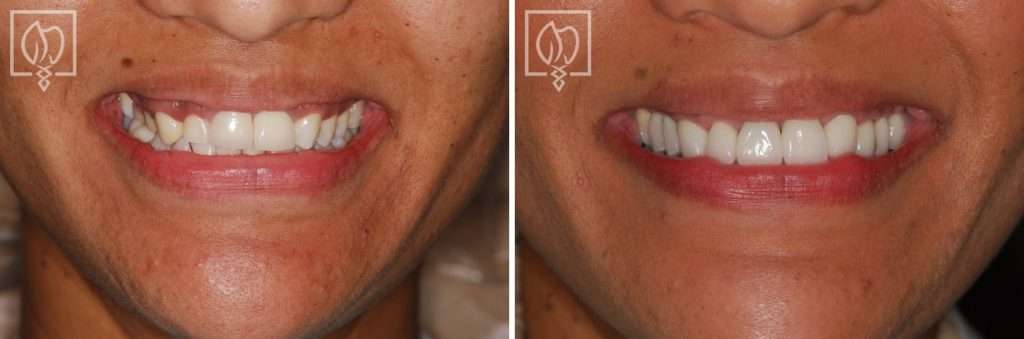
Multi-Faceted Treatment for Patient Unhappy With Her Artificial-Looking Crowns, Teeth and Gums
Many patients come to Elite Prosthetic Dentistry unhappy with the appearance of their smile. However, this particular patient presented with multiple interconnected problems that together created a smile she found deeply unsatisfying.

Salvaging Ms. N’s Severely Broken-Down Upper and Lower Teeth from Gum and Bone Disease
Many people in the U.S. suffer from extensive periodontal disease characterized by significant bone loss and shrinkage of the gum tissue. This condition can begin at a very young age and worsen quickly due to hereditary factors and lack of early diagnosis by their dentist.
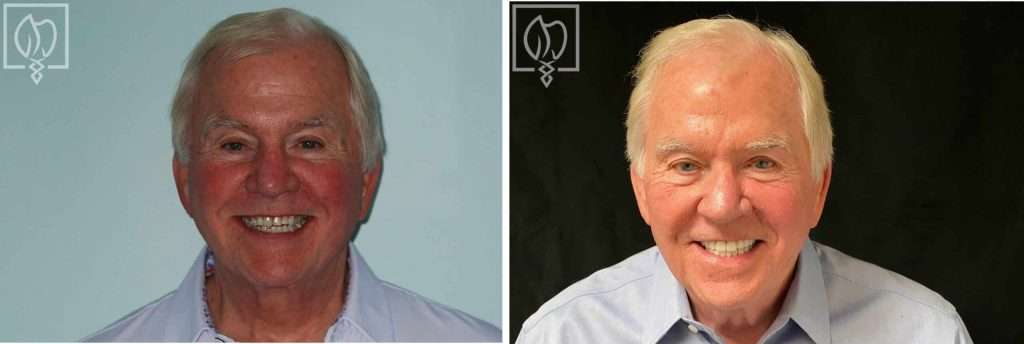
A Smile Transformation in Just Four Months: A Patient’s Dental Crown Restoration for a TV Series
A patient with dental crowns that were in poor shape was going to appear on a streaming video series on a major TV network that was scheduled to begin filming soon. Our patient, John, an author about to embark on a book tour, was anxious as his teeth were not up to his standards to appear on television.
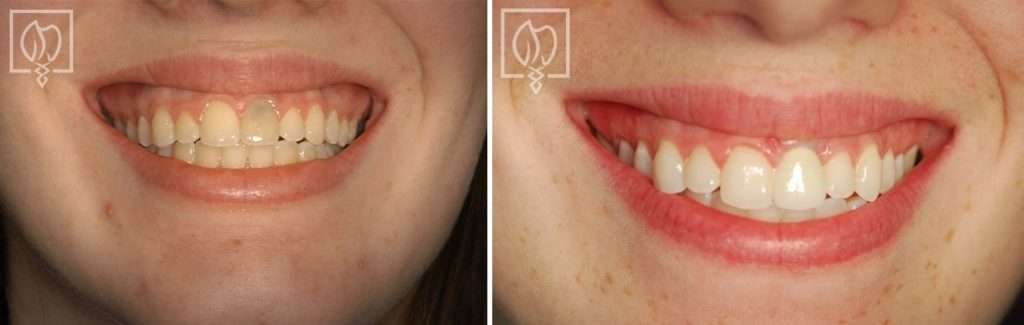
Replacing a Discolored Front Tooth with a Precision Placed Implant
Some of the most challenging restorations occur when fabricating an anterior crown to fit on an implant. Not only does one have the difficulty of matching the single front tooth to the other ones in the high visibility zone, but the dentist must also ensure the position of the underlying implant is precise through accurate preplanning and placement.
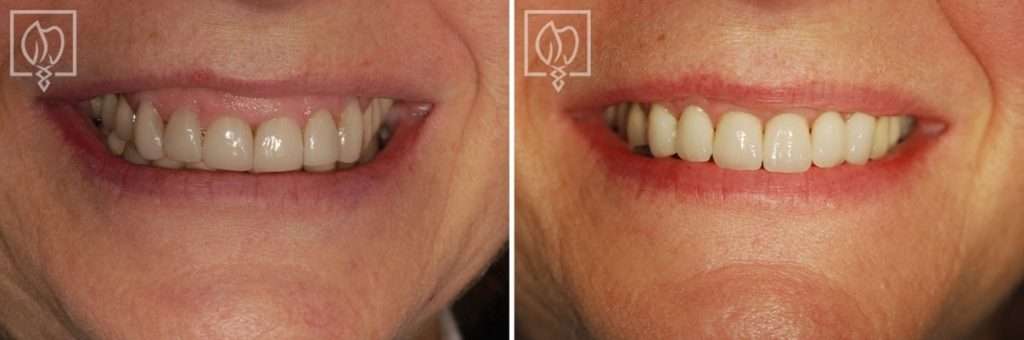
Patient Was Dissatisfied With Her 'Gummy' Smile
Excessive gingival tissue, commonly referred to as a "gummy smile," can significantly impact the appearance of a person's smile and their self-confidence. When someone smiles and a large amount of gum tissue is visible above the teeth, it can create the perception that the teeth are too small or short, even when they are actually normal size.
Why Your Dental Crown Keeps Coming Loose Near You
Dr. Gerald Marlin provides why your dental crown keeps coming loose services to patients throughout the Washington, DC metropolitan area. Select your community to learn more.
Ready to Transform Your Smile?
With 40+ years of experience and 3,900+ dental implants placed, Dr. Gerald Marlin delivers results that last. Schedule your consultation today.