
Second Opinion on Poorly Fitting Crowns and Bridges
When a crown or bridge does not feel right, a prosthodontist's examination reveals what others miss. We assess marginal integrity, internal fit, occlusal balance, and underlying tooth health with precision that general dentists cannot match.
Elite Prosthetic Dentistry
Specialist Prosthodontic Practice · 40+ Experience · 35+ years Crown Longevity
35+ years
Crown Longevity
40+
Prosthodontic Experience
1985
In-House Lab Since
97%
Restoration Success
When Your Crown or Bridge Does Not Feel Right
These six warning signs indicate that your crown or bridge needs professional evaluation. Do not ignore them.
Persistent Sensitivity
Ongoing sensitivity to hot, cold, or pressure on a crowned tooth indicates a gap, inadequate seating, or underlying decay. This requires diagnostic imaging and evaluation.
Looseness or Movement
A crown or bridge that feels loose or moves slightly when you touch it is unstable. This indicates inadequate retention, cement failure, or changes in the underlying tooth. This must be addressed immediately.
Visible Gaps at Margins
You can see a line or gap between the crown and your tooth, especially at the gum line. This indicates poor marginal fit and creates space for bacteria and decay.
Pain When Biting
Discomfort or sharp pain when biting on a crowned tooth means the crown is out of alignment with your bite. Forces are concentrated on that tooth, creating trauma that accelerates damage.
Food Trapping Underneath
Debris accumulating under or around a crown indicates improper contours or margin placement. This creates a space for bacteria to colonize and can lead to decay on the supporting tooth.
Unnatural Appearance
A crown that looks fake, too white, too opaque, or oversized was made without attention to shade, translucency, or natural tooth characteristics. Appearance matters, and better restorations are possible.
What a Prosthodontist Examines That Others Cannot
A prosthodontic evaluation goes far deeper than a routine dental examination. We assess restorations from multiple clinical dimensions simultaneously.
Marginal Integrity Under Magnification
We examine the crown margin using surgical magnification and probe carefully to detect even microscopic gaps between the crown and tooth. A gap as small as 50 microns allows bacterial infiltration and cement washout. Visual examination alone cannot detect these problems. We use radiographs to assess whether the margin is sitting on tooth or on cement, and whether decay is forming underneath.
Occlusal Contacts with Articulating Paper
We use articulating paper and precise contact marking techniques to visualize exactly how the crown contacts your opposing teeth. We can identify prematurities, areas of excessive contact, or areas of zero contact. Unbalanced bite forces are a leading cause of crown failure, implant failure, and tooth fracture. We map the bite to understand force distribution.
Shade, Translucency, and Contour Assessment
We evaluate the crown's ability to mimic natural tooth optics. A crown that is too opaque, too white, or too gray will always look artificial, regardless of the material. We assess surface contour, curvature matching, and the relationship of the crown to adjacent teeth. These details matter for cosmetic success.
Internal Fit and Seating
We examine how fully the crown seats on the tooth preparation. Poor seating indicates inadequate tooth preparation, a lab error, or a mismatch between the crown and the tooth. We assess whether the crown is fully passive or whether it requires excessive pressure to seat. An unseated crown will eventually fail.
Underlying Tooth Structure and Remaining Tooth Health
We evaluate the health of the tooth supporting the crown. We assess whether adequate tooth structure remains for retention, whether decay is present, and whether the tooth can support another crown or needs alternative treatment. Radiographs show bone levels, existing decay, and the health of root canals if present.
Cement Seal Integrity and Microleakage
We assess the quality of the cement seal. Cement that has failed or washed out allows bacteria to colonize the space between crown and tooth, leading to decay. We evaluate whether recementing would resolve the problem or whether the crown must be replaced. Different cements have different properties, and we select cement based on the clinical situation.
This comprehensive assessment reveals why a crown or bridge is failing and what steps will actually fix the problem rather than temporarily masking symptoms. We often identify issues that would be missed by general dentists, allowing us to recommend solutions that prevent future failure.
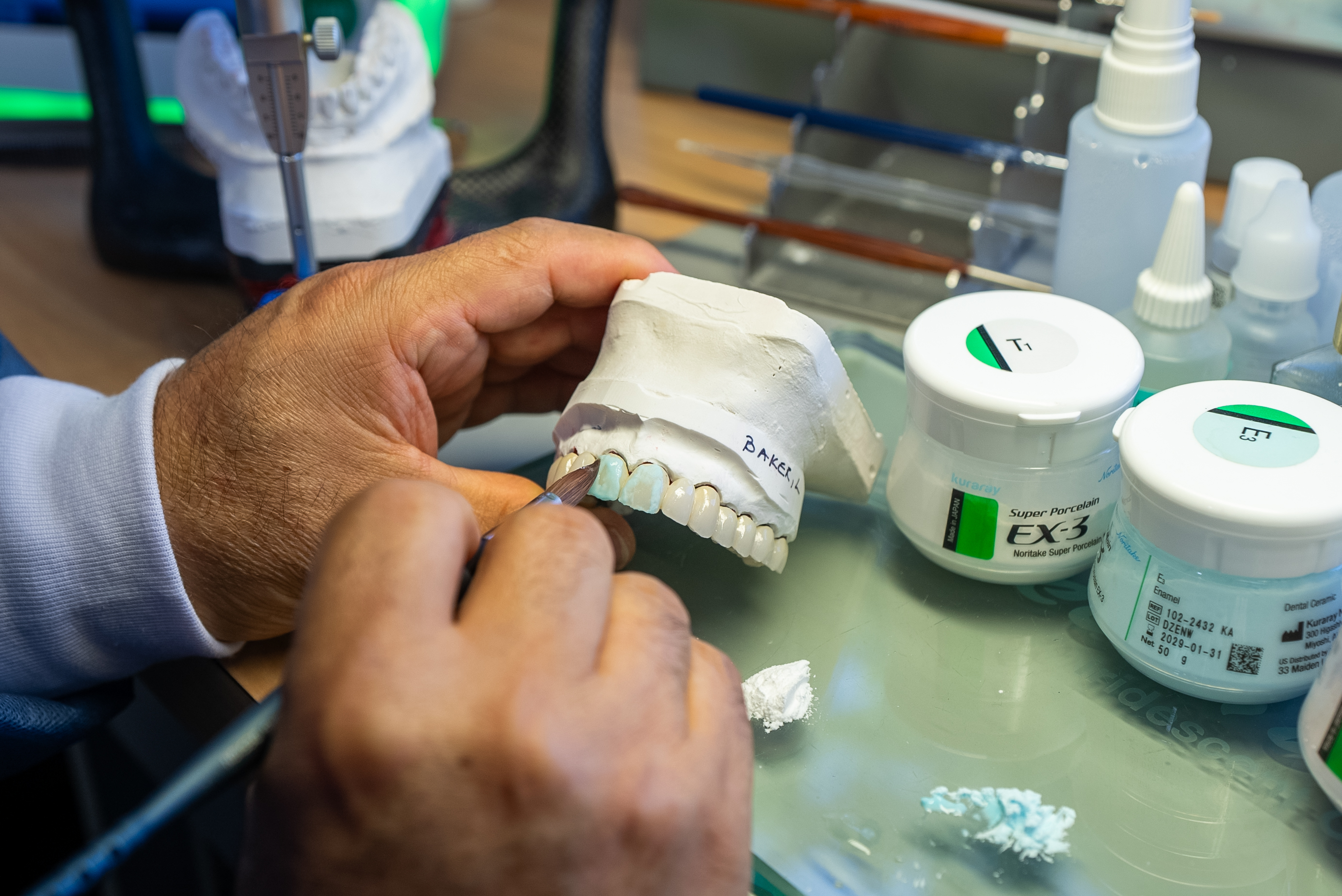
Precision Fabrication in Our Private Laboratory
Every poorly fitting crown we evaluate reveals a specific fabrication problem that could have been prevented. Our in-house laboratory since 1985 allows us to control precision at every stage, from initial impression through final delivery.
When we craft your replacement crowns or bridges, our lab team works directly with our clinical team. We check fit during fabrication, adjust margins in real time, and verify shade and contours before delivery. This direct control creates restorations that fit perfectly and last decades.
Explore our lab advantageCommon Crown and Bridge Problems
We regularly diagnose and resolve these types of failing restorations.
Loose or Falling Crown
A crown that moves, falls off, or requires repeated recementing indicates inadequate tooth preparation, poor retention, or cement failure. We assess whether the underlying tooth prep still has adequate retention or whether the crown must be replaced.
Get a second opinion →Pain Under a Crown
Pain under a crown can result from an unbalanced bite, inadequate seating, underlying decay, or a fractured tooth. Radiographs and clinical examination reveal the cause so we can provide targeted treatment.
Get a second opinion →Bridge That Does Not Fit
A bridge that feels loose, sits unevenly, or rocks on the supporting teeth may have abutment problems, inadequate preparation, or material that warped after fabrication. We evaluate each component separately.
Get a second opinion →Unnatural Looking Crowns
Crowns that appear fake, overly bright, or mismatched to your natural teeth were made without proper attention to shade, translucency, and natural tooth character. Replacement crowns can match your smile.
Get a second opinion →Custom Crafted Crowns
Understand how precision tooth preparation, custom shade matching, and in-house lab control create crowns that are indistinguishable from natural teeth and built to last decades.
Learn more →Bridges and Fixed Partial Dentures
Bridges restore missing teeth using natural teeth as support. Our prosthodontic approach ensures longevity, proper aesthetics, and function that preserves remaining tooth structure.
Learn more →Why Crowns and Bridges Fail
Failed crowns and bridges are rarely due to accident. Most failures stem from specific, identifiable errors in preparation design, impression technique, lab work, or bite mechanics.
Poor Preparation Design
Tooth preparation is the foundation of crown success. A preparation that lacks proper taper, has rough or irregular walls, or does not provide adequate path of insertion creates retention problems. Undercut areas that trap cement create stress points. Inadequate length or bulk creates insufficient retention. A prosthodontist designs preparations with precise geometry that maximizes retention while preserving tooth structure. General dentists often do not have training in proper preparation design for different restoration types and materials.
Inadequate Impression Technique
Impressions must be accurate and capture proper soft tissue contours. Digital scanning has improved some practices, but many still use impression materials with shrinkage and distortion. An inaccurate impression creates a crown that does not seat properly or that leaves gaps at the margin. We verify impression quality through radiographic assessment of the final restoration and clinical fit evaluation. Poor impressions compromise everything downstream.
Commercial Lab Limitations versus In-House Precision
Generic commercial laboratories handle hundreds of cases weekly and operate with standardized protocols. They cannot customize restorations to the degree that complex cases require. Our in-house laboratory since 1985 allows us to fabricate restorations with attention to your unique preparation, your bite, and your aesthetic goals. We control every step of the process. We can perform try-ins during fabrication, make adjustments immediately, and achieve marginal fit and shade that commercial labs struggle to replicate.
Bite Mechanics Ignored
Teeth function within a dynamic bite system. Restorations placed without analyzing occlusal contacts create stress points that accelerate failure. A crown with premature contacts generates concentrated force on that tooth and adjacent teeth. A bridge with unbalanced pontic contacts can cause abutment teeth to fail. We analyze bite carefully and adjust contacts before delivery to distribute forces evenly and prevent future fractures or loosening.
Material Selection Errors
The right material for the right location matters. All-ceramic crowns are beautiful but require adequate tooth structure and ideal bite mechanics. PFM crowns are durable but can show dark margins over time. All-resin crowns are weak and stain easily. Full zirconia crowns are strong but can be brittle. Material selection without understanding the clinical situation creates restorations that fail or disappoint. We select materials based on your anatomy, bite, and goals.
Advanced Technology for Comprehensive Crown Evaluation
Your poorly fitting crown or bridge reveals a story that only proper diagnostic tools can tell. We use digital radiography, magnification, articulating paper analysis, and bite force evaluation to understand exactly what went wrong.
This detailed diagnosis informs every decision we make about repair versus replacement, and when replacement is necessary, it guides our approach to prevent the same problems from recurring. We do not guess. We measure, analyze, and then act with purpose.
Schedule Your Evaluation
The In-House Lab Difference for Crown and Bridge Work
Controlling fabrication in-house transforms what is possible with crowns and bridges.
Precision Fitting During Fabrication
Our lab team fabricates your crown or bridge while our clinical team can check fit, verify margins, and assess contacts during multiple stages of construction. We can adjust immediately. Commercial labs cannot offer this level of real-time collaboration. This direct communication and rapid iteration creates superior margins and contacts.
Custom Shade Matching
Our lab technicians can match your natural teeth shade by examining your teeth in person, trying different materials, and making real-time adjustments. This is impossible with commercial labs, which must rely on shade tabs and digital photos. The result is crowns that blend seamlessly.
Same-Day Adjustments and Resolutions
If your crown or bridge needs adjustment after delivery, our lab can perform modifications the same day or within hours. Contour corrections, contact adjustments, or shade refinements can be completed immediately. This responsiveness improves your experience and reduces discomfort during adjustment periods.
Problem Solving at Every Stage
When a challenge arises during fabrication, we can problem-solve in real time. Our lab director has 40 years of experience and can adapt techniques to your specific tooth anatomy or restoration goals. This level of expertise and responsiveness is what distinguishes elite prosthodontic practices.
Many patients who have experienced crown or bridge failure elsewhere discover that our in-house lab advantage translates directly to better outcomes. We can build restorations that last because we control quality at every step.
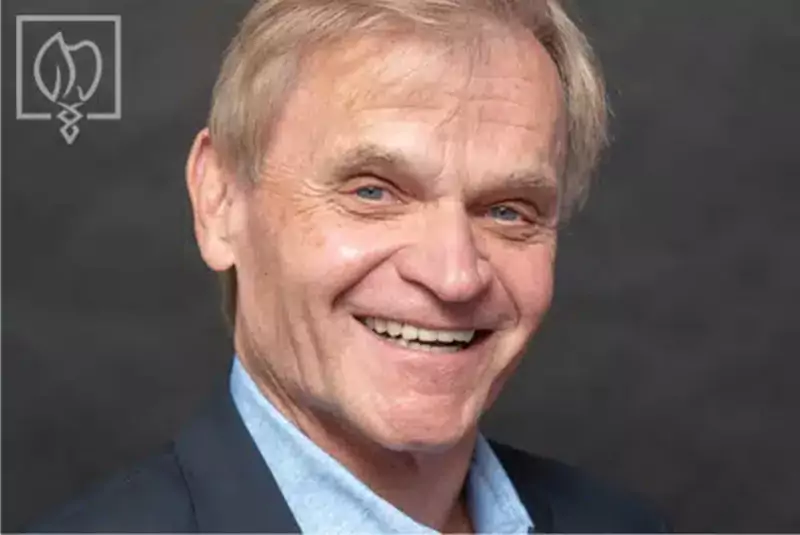
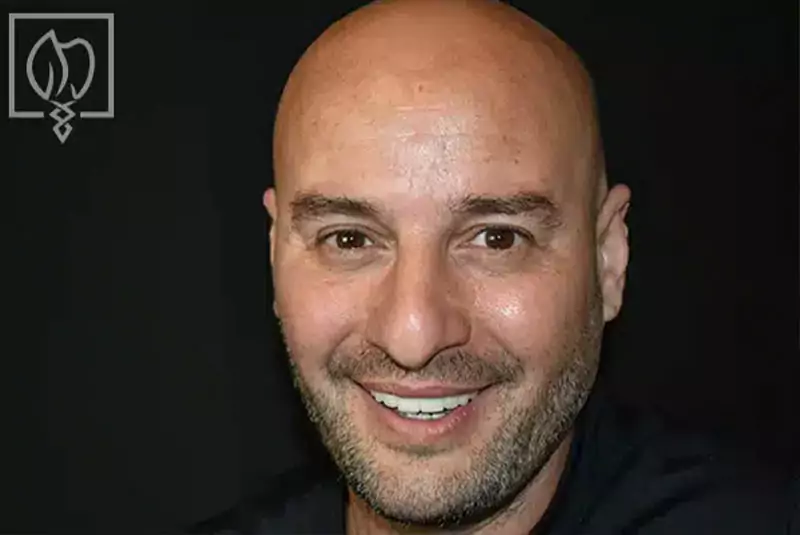
Precision Crown and Bridge Results

Frequently Asked Questions
How can I tell if my crown was poorly made?
Why does my crown keep falling off?
Should I get a second opinion before replacing a bridge?
What is the difference between a crown adjustment and a crown replacement?
Can you fix a crown placed by another dentist?
How long should a well-made crown last?
Why does food get trapped around my crown?
Your Restoration Deserves Expert Evaluation
A crown or bridge that does not feel right warrants a specialist examination. A prosthodontist can identify exactly what is wrong and recommend solutions that actually work. You deserve restorations that function perfectly and look natural.
Call or schedule online. Let us know you need a second opinion on crown or bridge problems, and we will arrange a consultation focused on thorough diagnosis.
We Are Your Source of Information for Every Area of Implant, Cosmetic, and Restorative Dentistry
Anxious about your visit? Learn about our sedation and comfort options.