
Second Opinion on Implant-Supported Denture Problems
Your implant-supported denture should be stable, comfortable, and easy to use. If it is loose, clicking, or difficult to maintain, the problem is fixable. A specialist prosthodontist evaluation identifies what is wrong and shows you how to correct it.
Elite Prosthetic Dentistry
Specialist Prosthodontic Practice · 40+ Experience · Expert in Denture Solutions
10,000+
Denture Cases
500+
Implant Dentures
100%
Custom Designed
MSD
Prosthodontics
Signs Your Implant Denture Is Problematic
These symptoms indicate that your implant denture needs adjustment, repair, or replacement. Do not tolerate discomfort.
Denture Won't Snap In Properly
The denture is difficult to insert or seat fully. It feels loose even after insertion. The attachment components may be too tight or too loose to engage properly.
Looseness During Eating or Speaking
The denture shifts, clicks, or moves around during normal function. It is unstable when you eat or talk. You have to reposition it frequently.
Sore Spots That Won't Resolve
You have chronic sore spots or areas of discomfort on the tissues under the denture. These spots do not improve even after adjustments.
Clicking or Rocking Motion
The denture makes a clicking sound, or it rocks side to side when you bite. This indicates unstable attachment or improper implant positioning.
Attachment Components Wearing Quickly
You need frequent adjustment or replacement of ball attachments or other retention components. Wear is accelerated because of improper fit or implant positioning.
Overall Discomfort or Frustration
You regret having the implant denture. It is more trouble than it is worth. You wish you had chosen a different tooth replacement option.
Why Implant Dentures Fail or Become Uncomfortable
Most implant denture problems stem from planning errors or anatomical issues that develop over time.
Poor Implant Positioning for Denture Support
Implants must be positioned in a specific three-dimensional relationship to support a denture. If implants are too far apart, too close together, or at incorrect angles, the denture will be unstable. Denture teeth will hit incorrectly. The tissue-bearing surface will not fit properly. Proper positioning requires careful pre-surgical planning with CBCT imaging.
Wrong Attachment System Selected
Different attachment systems (ball attachments, bar attachments, magnetic attachments) are appropriate for different implant configurations. If the wrong attachment type is chosen for your implant arrangement, the denture will not retain properly or will be uncomfortable. Selecting the right attachment requires knowledge of implant anatomy and prosthetic principles.
Framework Flexing or Movement
The denture framework can flex or move if it is not rigid enough or if it is not properly supported by implants. This creates clicking sounds, looseness, and accelerated wear of attachment components. A properly designed implant denture has a rigid framework that is passively (without force) seated on the implants.
Tissue Changes Over Time
After tooth loss, bone resorbs (shrinks) continuously. The shape of the ridge changes. The tissue-bearing surface of your denture no longer fits as well as it did when first made. This causes looseness and sore spots. A denture that fit perfectly on day one may fit poorly after two years. Periodic adjustments and relining help, but eventually a new denture may be necessary.
Inadequate Number of Implants
Two implants can support a mandibular (lower) denture adequately if positioned correctly. However, more implants generally provide better retention and stability. Three or four implants may be needed for a maxillary (upper) denture or for patients with significant wear patterns. If too few implants are used or if they are poorly positioned, retention will be inadequate.
Inadequate Prosthetic Planning
Some dentists place implants without adequate planning for how the denture will be designed. They may not consider denture tissue coverage, the relationship between denture teeth and implant positions, or whether implant spacing will allow a functional denture. Prosthodontic planning at the time of implant placement prevents these problems.
Most implant denture problems are preventable with proper planning and execution. If your current denture is problematic, we can often address the issue through adjustment, repair, or remake using correct design principles.
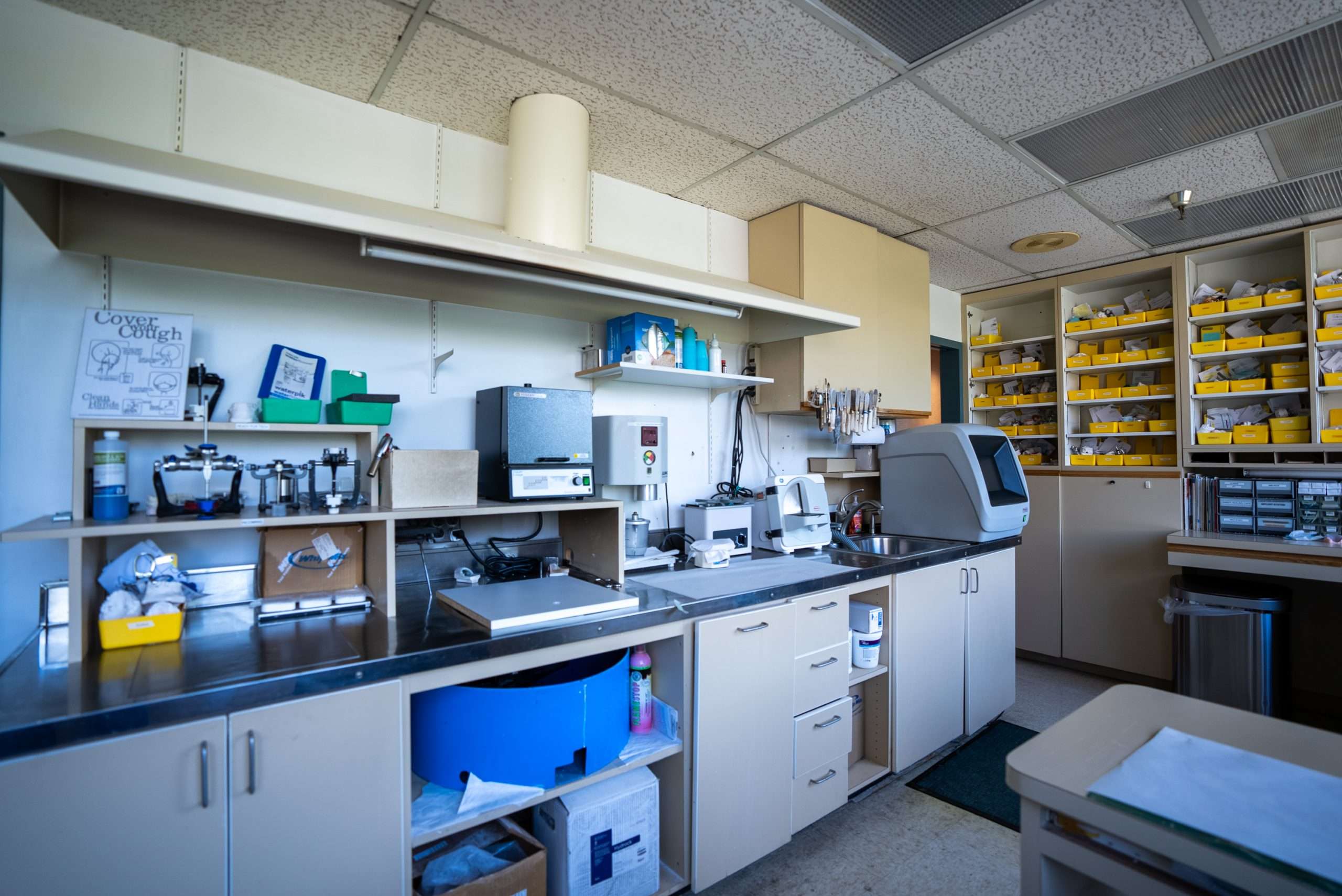
Specialty Prosthodontist with 40+ Years Experience
Dr. Gerald Marlin is a specialty-trained prosthodontist with decades of experience diagnosing and solving implant denture problems. He understands the biomechanics of implant support, the precision required in attachment fabrication, and the subtle design principles that separate successful dentures from problematic ones.
If your denture is failing, Dr. Marlin will identify exactly what went wrong and explain your options for correction. His in-house laboratory ensures that any denture remake is executed with the precision and customization that commercial labs cannot provide.
Request Your EvaluationOur Detailed Evaluation Process
We systematically assess your implants, denture design, and function to identify all problems.
Implant Position Assessment
We order CBCT imaging to visualize the three-dimensional position of each implant. We measure the angles, spacing, and positioning relative to the planned denture path. We determine whether implants are positioned optimally to support a denture or whether poor positioning is contributing to problems.
Bone Quality and Quantity Analysis
We examine CBCT images to assess bone height and width around each implant. We look for bone loss patterns that might indicate implant movement, poor osseointegration, or areas where bone resorption has been accelerated. Adequate bone support is essential for long-term implant success.
Attachment System Examination
We visually inspect the ball attachments, bar attachments, or other retention components. We assess their condition, wear patterns, and whether they are appropriately sized and engaged. We determine whether components can be adjusted, need replacement, or if the entire attachment system is inadequate for your situation.
Framework Evaluation
We examine the denture framework for cracks, warping, or flexing. We check whether the framework is rigid or whether it flexes during function. A flexible framework indicates structural deficiency. We also assess the tissue-bearing surface for proper contour and fit to the underlying tissues.
Tissue Assessment and Resorption Analysis
We examine the tissues underneath the denture. We assess the extent of bone resorption that has occurred. We identify areas of tissue trauma, sore spots, or poor denture fit. We compare the current tissue anatomy to radiographs from when the denture was made to determine how much resorption has occurred.
Bite and Occlusal Analysis
We evaluate how your denture teeth contact when you bite. We perform a detailed occlusal analysis to identify prematurities, incorrect force distribution, or bite plane problems. Improper occlusion contributes to looseness, clicking, and discomfort.
Comprehensive Problem Report and Options
We compile our findings and explain exactly what is wrong. We discuss whether adjustment, component replacement, relining, or complete remake is appropriate. We present all options with the pros and cons of each. You will understand your choices and the expected outcomes.
Implants Placed Correctly the First Time
Many implant denture problems originate from incorrect implant positioning during the surgical phase. Implants must be placed in a precise three-dimensional relationship to support a denture properly.
Dr. Marlin works with a network of surgical specialists who understand the requirements for prosthetically-driven implant placement. If you need additional implants or implant replacement as part of your solution, we ensure that positioning is ideal for supporting a stable, comfortable denture.
Proper planning and execution during implant placement prevents the complications that plague poorly positioned cases. When implants are positioned correctly, dentures function as they should.
Related Services and Solutions
If your implant denture is problematic, these related services may provide solutions or alternatives.
Loose Snap-In Denture
Specific evaluation of retention problems. We diagnose whether attachment components need adjustment or replacement.
Get a second opinion →Uncomfortable Implant Denture
Detailed assessment of denture fit, tissue adaptation, and comfort issues.
Get a second opinion →Denture Moves During Eating
Evaluation of stability problems and solutions to achieve a secure, functional denture.
Get a second opinion →Full and Partial Dentures
Comprehensive denture services if you need fabrication, repair, or reline of existing restorations.
Learn more →Denture Relines and Repairs
Adjustment and maintenance services for existing implant-supported dentures.
Learn more →Dental Implants DC
If implants need replacement or additional implants are needed, learn about our implant expertise.
Learn more →Custom Denture Fabrication in Our In-House Laboratory
If your implant denture needs to be remade, our in-house laboratory since 1985 ensures superior customization, precision attachment fabrication, and perfect fit.
Precise Attachment Fabrication
We fabricate ball attachments, bar attachments, and other retention components with precision. We match the exact specifications for your implant configuration. Commercial labs cannot customize attachments like we can because they produce them in volume. We make them specific to your case.
Custom Framework Design
We design the denture framework for maximum rigidity and minimal flexing. We plan the framework path and thickness based on your specific implant positions and anatomy. Every dimension is customized for your case.
Try-In and Adjustment
We fabricate the denture in acrylic for try-in so you can approve the design and feel before final processing. We adjust framework, occlusion, and fit. We make changes in-house, not weeks later after shipping to a lab.
Material Selection
We choose denture base materials based on your specific needs for strength, color matching, and durability. We understand how different materials respond and select appropriately.
Occlusal Refinement
We adjust the bite and occlusion during fabrication. We ensure that denture teeth contact properly in all jaw positions. We verify that force is distributed evenly.
Ongoing Support
After delivery, we maintain the denture. We adjust attachment retention, perform relines as needed, and make repairs. We know every detail of your denture and support it for years.
If your current implant denture is failing, many of the problems could have been prevented with proper initial planning and fabrication. When we make a new denture, we apply everything we have learned from the failed denture so that your replacement is stable, comfortable, and functional for decades.
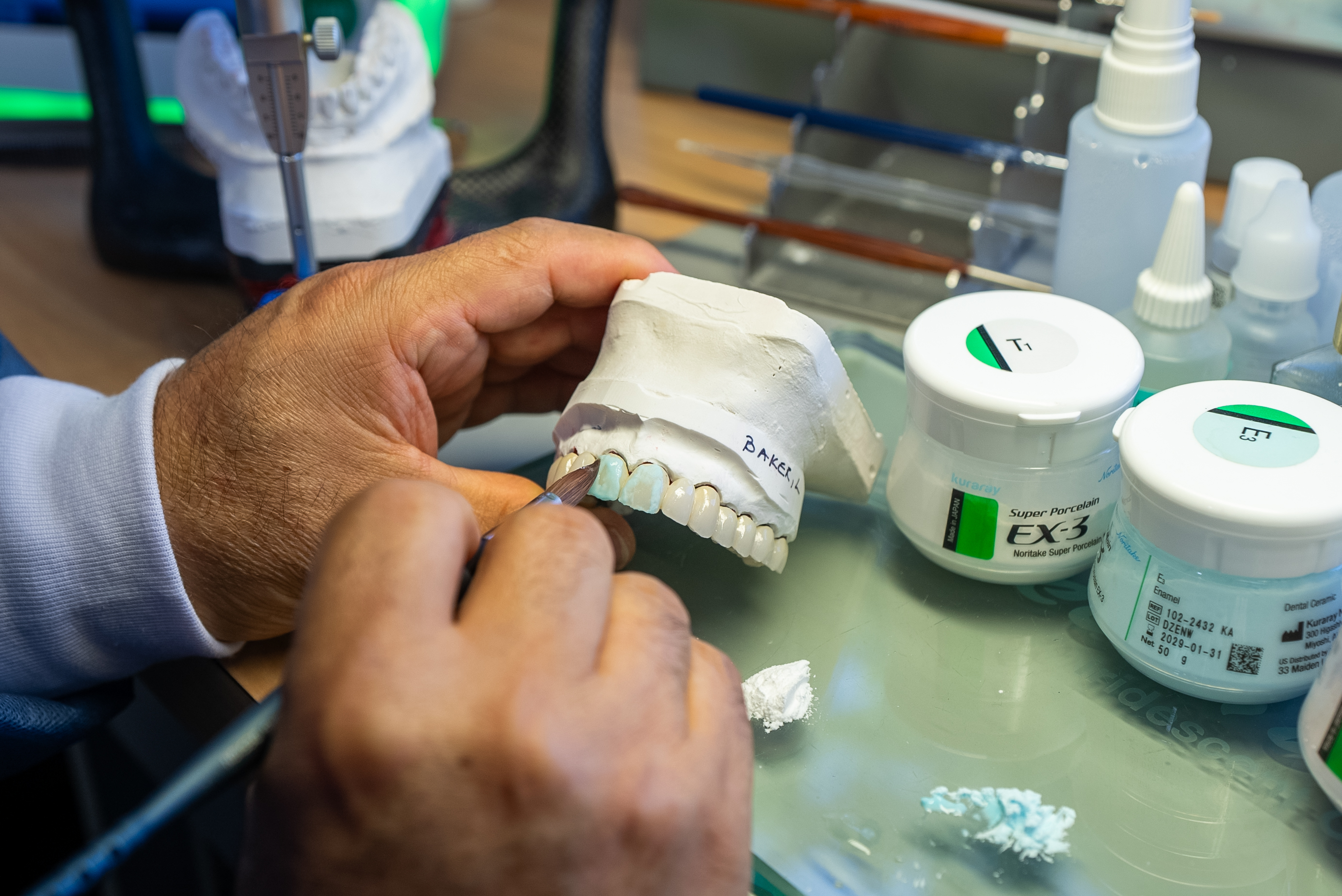
Laboratory Precision That Makes the Difference
Our in-house laboratory has been operating since 1985. This means Dr. Marlin controls every aspect of denture fabrication. He does not rely on commercial labs to execute his specifications. He fabricates the denture himself, ensuring that every dimension, every attachment, and every design element meets his exacting standards.
Commercial dental labs operate on volume and standardization. They cannot customize attachments or framework design to the degree that your case may require. In our lab, customization is the rule, not the exception.
If your evaluation determines that a new denture is necessary, the precision of our in-house fabrication ensures that your replacement denture is stable, comfortable, and built to last.
Frequently Asked Questions About Implant Denture Problems
What is the difference between a snap-in denture and a fixed implant restoration?
Why won't my snap-in denture stay in place?
Can the attachment components be tightened, or do I need a new denture?
What is bone resorption, and does it cause denture problems?
Can I have my denture relining adjusted instead of replaced?
Should I have a fixed implant restoration instead of a removable denture?
How long should an implant-supported denture last?
What happens if the implants need to be removed? Do I lose the denture?
Your Comfort Is Not Optional
An implant-supported denture should make your life better, not harder. If your denture is loose, uncomfortable, or problematic, the issue is correctable. A specialist prosthodontist evaluation identifies exactly what is wrong and provides clear options for improvement. Many problems can be solved through adjustment, repair, or component replacement. When remake is necessary, proper design using specialist knowledge ensures your new denture succeeds.
Call or schedule online. Let us know you need an implant denture evaluation, and we will arrange a consultation.
We Are Your Source of Information for Every Area of Implant, Cosmetic, and Restorative Dentistry
Anxious about your visit? Learn about our sedation and comfort options.