
The Importance of Precision Implant Placement (PIP) Using Guided Surgery
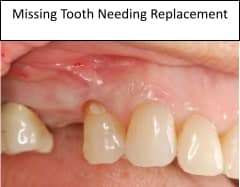
Missing tooth location requiring implant replacement
The Gold Standard of Implant Surgery
In our office, every dental implant case, from a single implant through full-mouth reconstruction, is planned on a CBCT (cone beam CT) scan. Where bone anatomy, esthetic demands, or proximity to nerves and sinuses call for it, a surgical guide generated from the scan transfers the planned implant position precisely into the mouth. With this technique the implant is centered inside the future overlying crown, while accounting for restricting bony angulations and undercuts, nerve pathways, and sinus locations.
Why insist on it? Because the alternative is estimation, and in implant surgery, estimates have consequences that are measured in years and paid for by the patient. This article is about those consequences: what precision prevents. For the definitional groundwork, see what Precision Implant Placement (PIP) is.
What Freehand Placement Risks
Titanium does not bend and implants do not get repositioned; wherever an implant is placed is where it lives. When placement relies on hand-eye estimation, the failure modes are well documented, and we regularly see them in patients seeking second opinions.
An implant angled a few degrees off can approach the nerve canal in the lower jaw or the sinus floor in the upper. Implants placed too close together or too close to natural roots leave no room for healthy bone and gum between them. An implant positioned outside the envelope of the planned crown forces the laboratory to build a distorted, over-contoured restoration that traps plaque, and plaque-retentive crowns are a documented on-ramp to gum inflammation, bone loss, and implant failure. Worst of all is the implant that integrates solidly in the wrong place: healthy, stable, and unrestorable.
Before surgery ever begins, Dr. Marlin uses advanced imaging to map every anatomical detail of your jaw, identifying the optimal location while avoiding vital structures. The result is safer surgery with more predictable outcomes.
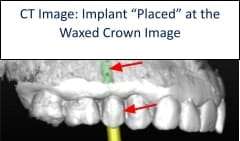
Ideal crown positioned in the implant space
The Crown Comes First
The process begins in an unexpected place: not with the implant, but with the tooth. Our in-house technician waxes up an ideal crown in the empty space, defining exactly where the finished tooth must sit, how it must emerge from the gum, and what it must support. Only then is the implant planned, positioned virtually on the CT scan to sit dead-center beneath that crown.
A guide fabricated from this plan directs the surgery to millimeter accuracy; the different guide designs are compared in what makes an ideal surgical guide. The payoff arrives at restoration: an abutment and crown that mimic the natural tooth so faithfully that you forget which tooth is the replacement, with an emergence profile the gums stay healthy around. That healthy, cleanable architecture is a large part of why our documented in-practice implant success rate is above 97% for implants placed more than 20 years ago.
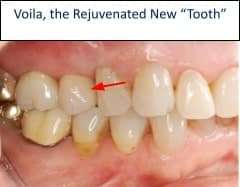
CT scan surgical guide for precise implant placement
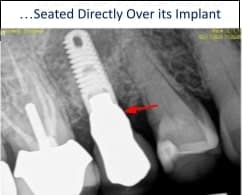
Final restored implant with natural-looking crown
Why This Matters to You
Freehand and guided placement are both used in implant dentistry. In our office, a guide is used whenever the site calls for one, because in those cases the technique protects more than the implant. It protects your nerves, your sinuses, your neighboring teeth, and your bone, and it determines whether the crown above can be built correctly; the practical differences are detailed in guided versus freehand implant placement.
Whether you are replacing a single failing tooth or planning comprehensive reconstruction, the precision decisions made before surgery are the ones your mouth lives with for decades. Dr. Gerald Marlin, a specialty-trained prosthodontist with more than 3,900 dental implants placed, leads a practice where every implant case is planned crown-first on a CBCT scan. Call 202-244-2101 or request a consultation at Elite Prosthetic Dentistry in Friendship Heights, Washington, DC.
See How We Resolve These Problems
Our patient success stories show real cases and real results. Browse outcomes from a specialist prosthodontist with decades of experience and 3,900+ implants placed.
Key Takeaways
- ✓ Guided surgery uses a CT-scan-generated surgical guide to place the implant exactly where the plan, and the future crown, require it.
- ✓ The planning is crown-first: our in-house technician waxes up the ideal tooth, and the implant is positioned to support it.
- ✓ Precision protects you from the expensive failures: implants angled into nerves or sinuses, implants placed too close together, and implants that cannot be restored.
- ✓ A precisely centered implant allows a crown with a natural emergence profile, which is what keeps the site cleanable and the bone healthy for decades.
- ✓ Every implant case in our practice is planned on a CBCT scan, and surgical guides generated from the scan are used where bone anatomy, esthetic demands, or proximity to nerves and sinuses call for them.
Frequently Asked Questions
What is guided implant surgery?
It is implant placement directed by a custom surgical guide fabricated from your CT scan and a digital plan. The dentist first positions the implant virtually, accounting for bone angulation, undercuts, nerves, and sinus anatomy, and the guide then transfers that exact position, angle, and depth into the mouth during surgery.
Why does precise implant position matter so much?
Because everything above the implant inherits its position. An implant centered inside the future crown allows a natural, cleanable restoration and healthy bone. An implant off angle or off center forces a compromised crown, traps plaque, and can encroach on nerves, sinuses, or neighboring roots. Position errors are permanent; titanium does not bend.
What does crown-first planning mean?
It means the tooth is designed before the implant. Our in-house laboratory technician waxes up the ideal crown for the space, and the implant is then planned to sit exactly beneath it. Planning the crown first is how aesthetic and hygiene compromises are kept out of the result.
Is freehand implant placement ever acceptable?
Freehand placement remains common, and experienced surgeons can do it competently in straightforward sites. But it depends on estimation, and estimation has a failure rate that guided surgery is designed to remove. For implants near nerves or sinuses, in tight spaces, or supporting visible teeth, the case for guidance is overwhelming.
Related Patient Success Stories
Explore similar patient success stories demonstrating our expertise in advanced prosthetic dentistry.
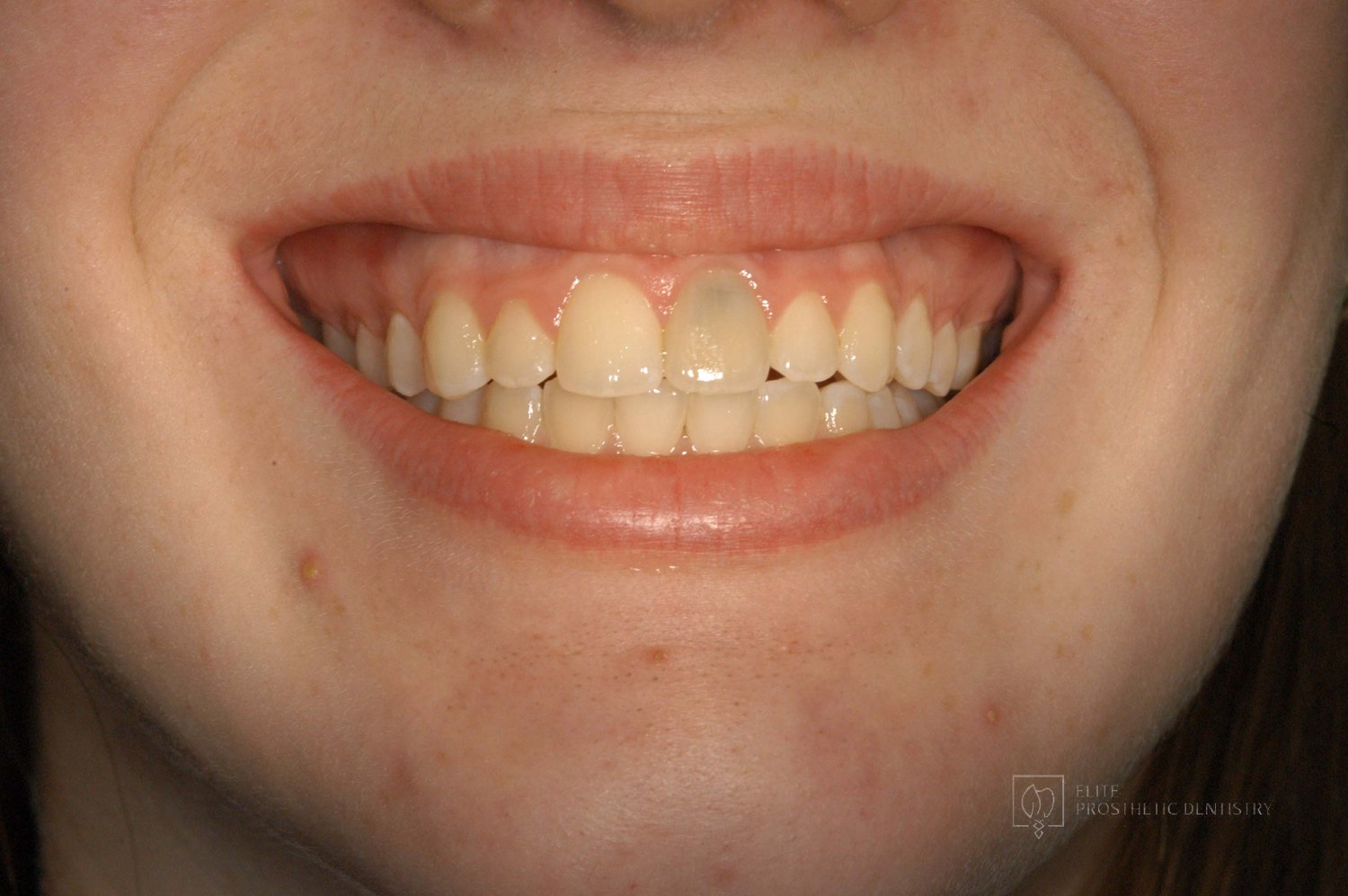 Before
 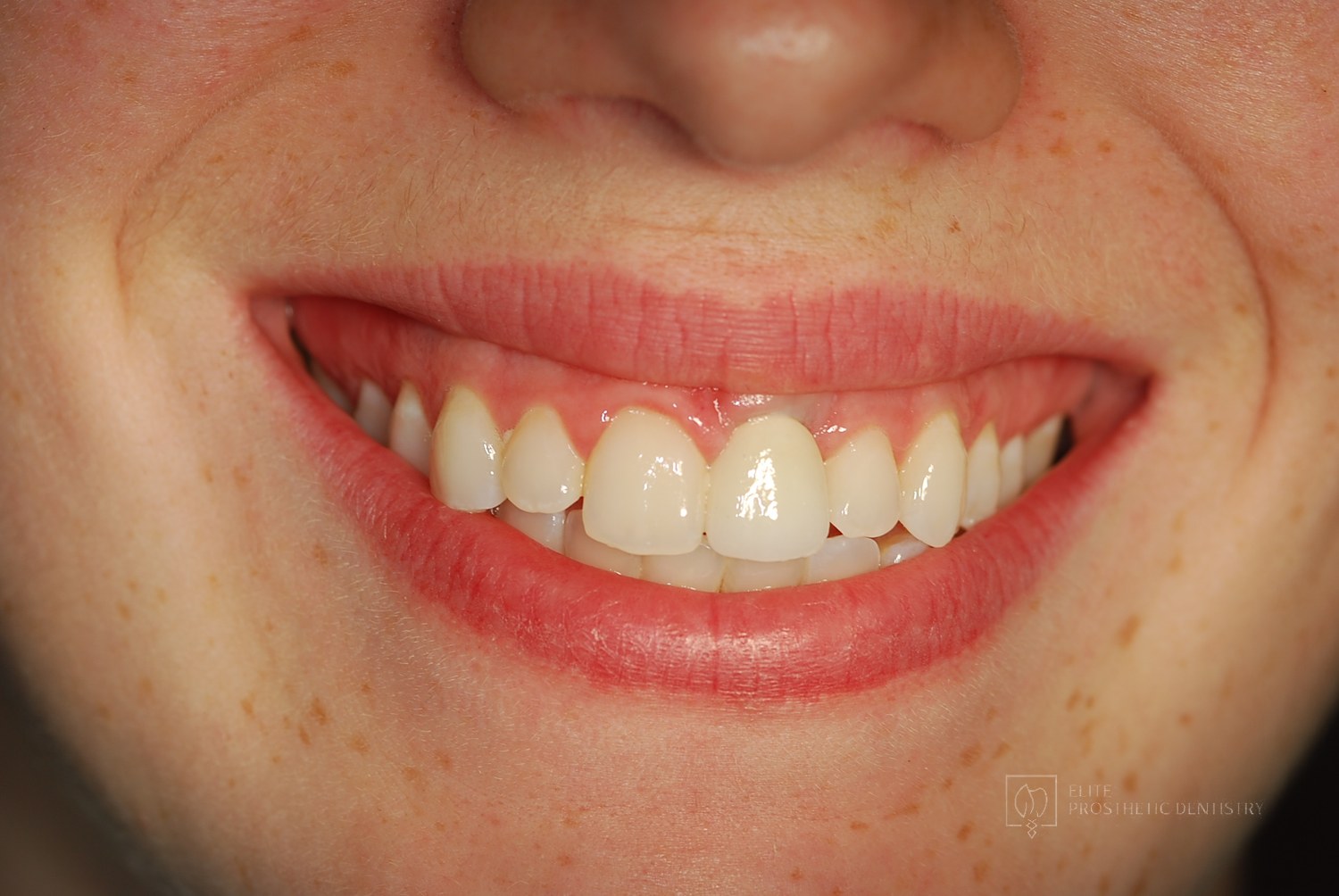 After
After How a Front Tooth Lost to Childhood Trauma Was Rebuilt with Bone Grafting and a Long-Lasting Implant
A teenager was referred by her father after earlier trauma left her upper left front tooth slowly failing from root resorption. She was still growing, so an immediate implant was the wrong move. The tooth had to be maintained to buy time, then replaced correctly once she reached skeletal maturity.
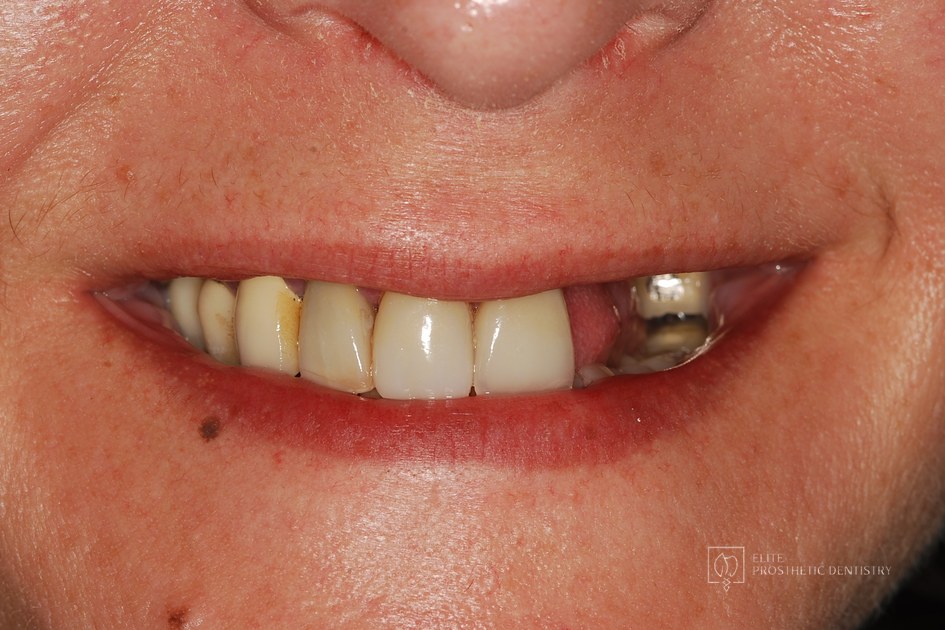 Before
 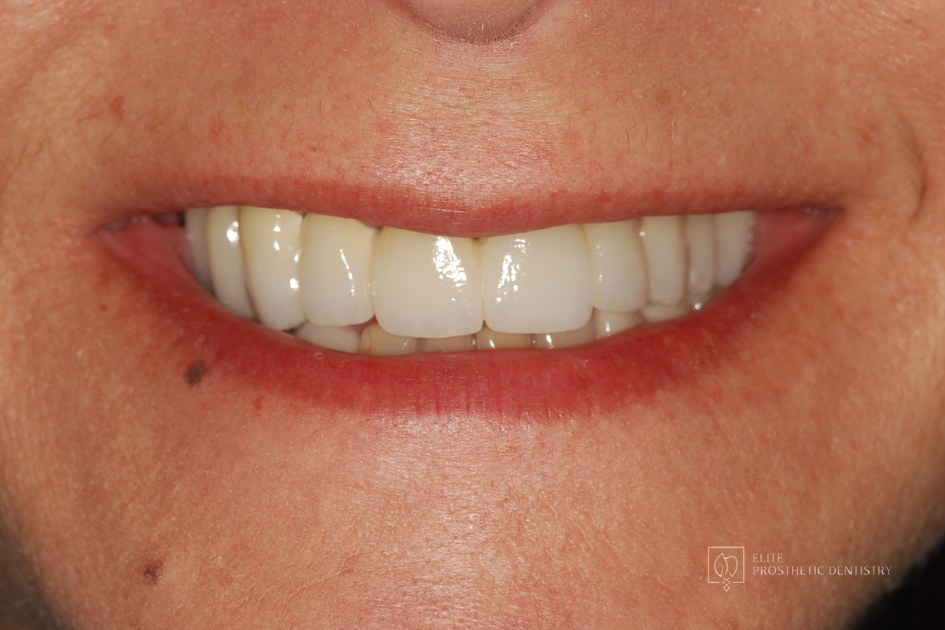 After
After Implant Supported Reconstruction: Failing Bridgework and Missing Back Teeth Rebuilt with Coordinated Specialist Care
Referred by another dental specialist with severe bone resorption on the upper left, multiple broken-down lower teeth requiring extraction, and failing lower back teeth that had left the bite without solid support. No single procedure, and no provider working in isolation, could rebuild a situation this interconnected.
 Before
  After
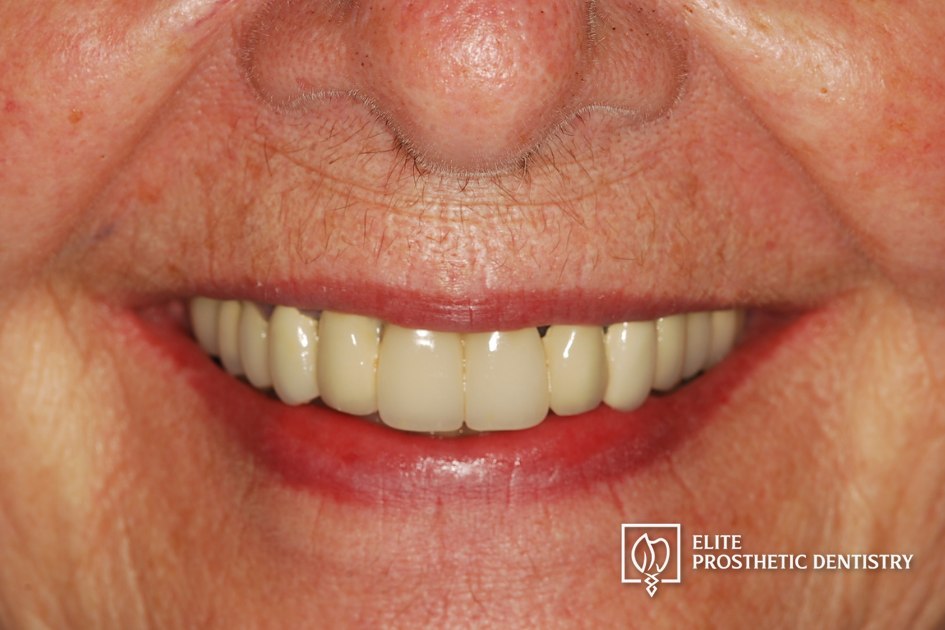
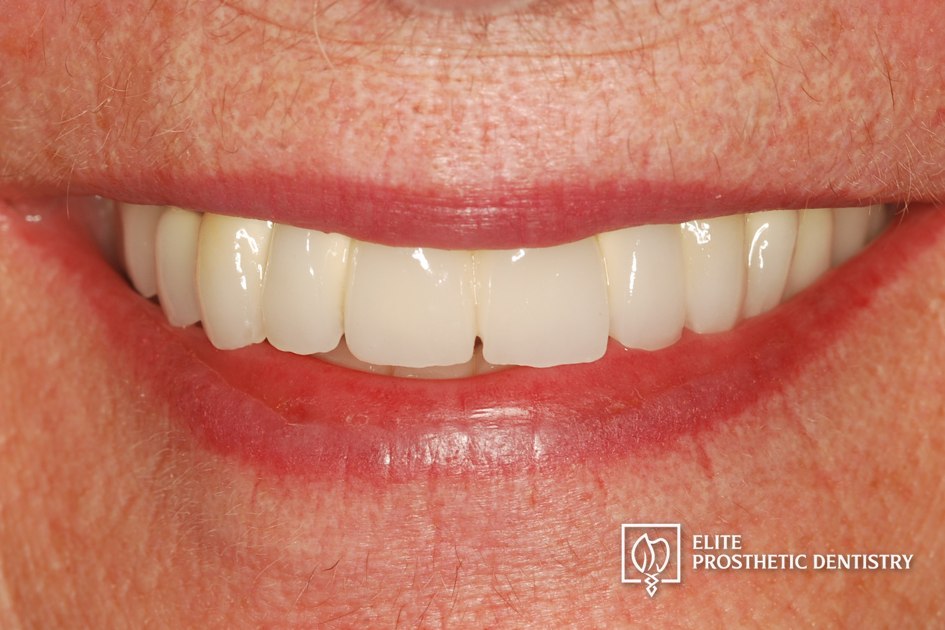
After How a Loose Upper Bridge and Aging Crowns Were Rebuilt with Staged Implant Reconstruction
A patient referred by her general dentist after years of aging dentistry no longer holding up. A loose upper bridge and crowns more than twenty years old, combined with the effects of advanced periodontal disease and severely compromised tooth abutments, required a staged surgical and restorative plan delivered with comfort planning at the same time.
Related Articles
Deepen your knowledge with additional insights on this topic.
 Bone Grafting & Surgical
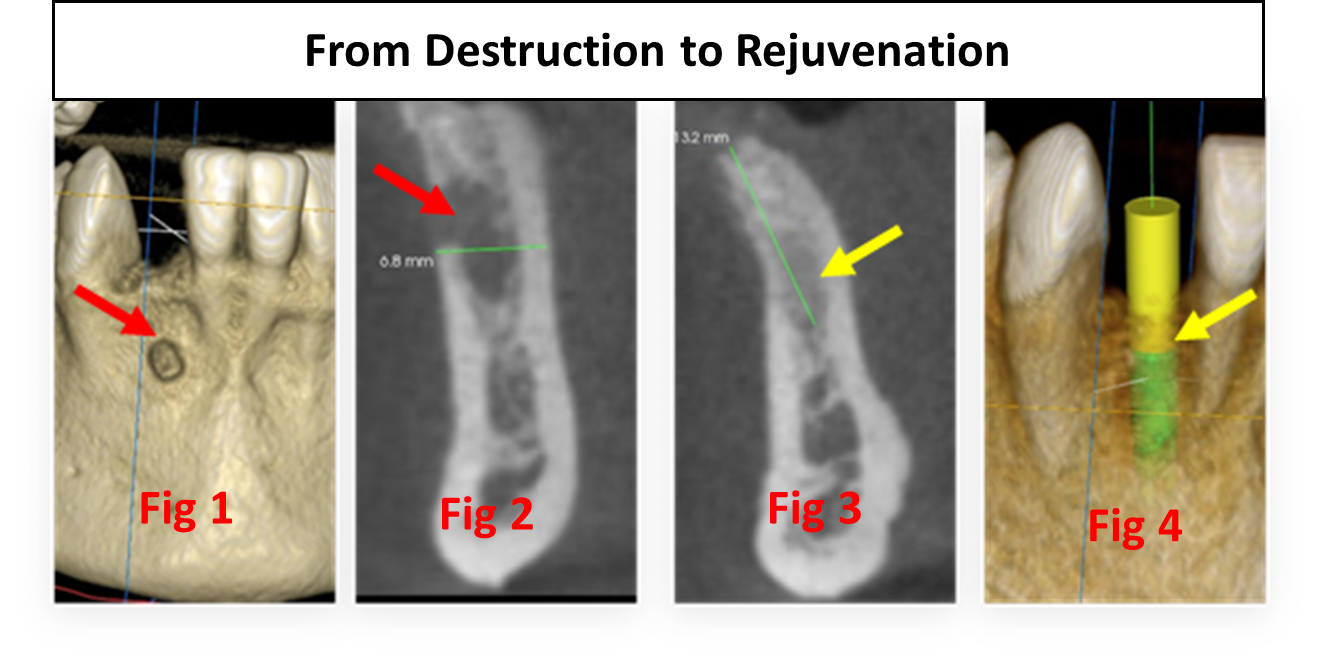
 Rebuilding a Ruined Implant Site with Severely Damaged Bone: The Three-Stage Protocol
Debridement, growth-factor grafting, CBCT-guided planning: the step-by-step protocol that turns a severely damaged implant site into a healthy ridge.
 Bone Grafting & Surgical
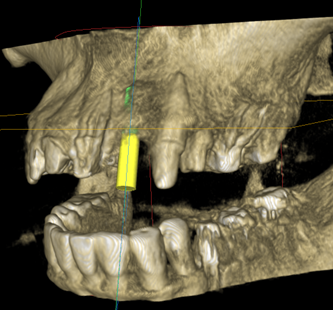
 What Is Ridge Augmentation Bone Grafting?
Ridge augmentation rebuilds a jaw ridge too narrow or angled for an implant. See real measurements from planning to precise placement. Washington DC.
 Bone Grafting & Surgical
 What Is a Partial (Internal) Sinus Lift?
A partial (internal) sinus lift adds bone at a single implant site through the implant preparation itself, often with the implant placed the same visit.