
Teeth Bleaching vs. Teeth Whitening: What Is the Difference?
You have probably seen someone with noticeably bright teeth and wondered how they got there. The answer usually involves one of two processes that sound identical but technically are not: teeth whitening and teeth bleaching. Knowing the difference helps you understand what any given treatment can actually do for your smile, and why some discoloration needs neither of them but something more.
The Technical Difference
The distinction comes largely from how the FDA classifies these products. Bleaching means lightening teeth beyond their natural color, and it requires an active agent, typically hydrogen peroxide or carbamide peroxide, that changes the shade of the tooth structure itself.
Whitening, in the strict sense, means restoring teeth to their original color by removing what has accumulated on them: surface stains, plaque, and other buildup. A thorough professional cleaning and polishing is technically a whitening treatment, even though no bleach is involved.
In everyday use, and in most dental offices, the two words are used interchangeably. What matters when you seek professional teeth whitening is not the label but which process your discoloration actually calls for.
What Each One Can Do
Stain removal works when the problem sits on the outside of the tooth. Coffee, tea, red wine, and tobacco leave deposits that polishing can lift, and many patients are surprised how much brighter their natural shade is once the surface is truly clean.
Bleaching goes further. Peroxide penetrates the tooth and lightens it from within, which is what you need when the tooth structure itself has yellowed with age or absorbed stain over decades. This is the process people mean when they talk about getting their teeth whitened, and done well it produces a shade brighter than the one nature gave you. Our article on why professional whitening outperforms store-bought kits explains what separates supervised bleaching from the drugstore version.
How We Approach It
At Elite Prosthetic Dentistry, chairside treatment uses a professional-strength peroxide gel with a protective barrier applied to your gums first. Because most smiles include a few teeth darker than their neighbors, Dr. Marlin treats whitening as a controlled, tooth-by-tooth process rather than a blanket application, so the result is even and natural rather than patchy.
Control matters at the bright end of the scale too. Teeth pushed past a certain point lose translucency and start to look chalky, a change that cannot be undone. A supervised process stops at a shade that flatters your face and still reads as a real tooth. If you are curious about common misunderstandings around all of this, see our teeth whitening myths article.
A Word on Whitening Toothpastes and Home Remedies
The terminology confusion gets worse on the drugstore shelf. Most “whitening” toothpastes are stain removers in the strict sense: they rely on mild abrasives to polish surface deposits away, which can help maintain a clean shade but cannot change the color of the tooth itself. Used too enthusiastically, abrasive pastes work against you, dulling enamel and any porcelain restorations you have. Home remedies built on the same idea, scrubbing with baking soda or charcoal, carry the same limits with less control. If the shade you want requires actual lightening, no amount of polishing will get you there; that is bleaching’s job, and it is best done under supervision.
When Neither One Is the Answer
Some discoloration will not respond to any gel. Deep intrinsic stains, such as those from childhood tetracycline exposure or dental trauma, live in the structure of the tooth where bleach cannot reach effectively. Existing crowns, veneers, and fillings also keep their manufactured color no matter what you apply to them, a common frustration for patients whose dental work has aged out of step with their natural teeth.
In those cases the lasting solution is restorative: custom porcelain veneers or crowns that establish the color you want permanently. We cover when that becomes the right path in when whitening is not enough.
Find Out Which Your Smile Needs
The starting point is an honest evaluation of where your discoloration comes from, because that single answer determines whether a cleaning, a bleaching treatment, or a restorative plan will actually deliver the smile you are picturing. Call 202-244-2101 or request an appointment with Dr. Gerald Marlin, specialty-trained prosthodontist, at Elite Prosthetic Dentistry in Friendship Heights, Washington, DC. We serve patients from DC, Bethesda, Chevy Chase, Arlington, and around the country.
See How We Resolve These Problems
Our patient success stories show real cases and real results. Browse outcomes from a specialist prosthodontist with decades of experience and 3,900+ implants placed.
Key Takeaways
- ✓ Technically, bleaching means lightening teeth beyond their natural shade with a peroxide agent, while whitening means restoring the natural shade by removing surface stains.
- ✓ In everyday use the terms are interchangeable, and most professional treatments combine both: stain removal plus controlled peroxide lightening.
- ✓ Which process your smile needs depends on where the discoloration lives: on the surface, inside the tooth, or in old restorations that no gel can change.
- ✓ Professional treatment protects your gums, sequences darker teeth first, and stops before brightness turns chalky.
- ✓ Deep intrinsic stains and discolored crowns or veneers respond to restorative solutions, not bleach.
Frequently Asked Questions
Is teeth bleaching the same as teeth whitening?
In everyday conversation, yes, the terms are used interchangeably. The technical distinction is that bleaching lightens teeth beyond their natural color using a peroxide agent, while whitening restores teeth to their original color by removing surface stains and buildup. Most professional treatments involve both.
Which do I need, bleaching or whitening?
It depends on where your discoloration comes from. Surface stains from coffee, tea, wine, or smoking often improve with a professional cleaning and polishing. If the tooth itself has darkened with age or the stain has soaked deeper, a peroxide bleaching treatment changes the underlying shade. An examination tells you which applies to your smile.
Is peroxide bleaching safe for teeth?
When supervised by a dentist, yes. Professional treatment uses protective barriers for your gums and controlled application, and it does not harm enamel. Temporary sensitivity can occur and typically resolves quickly. Unsupervised overuse of strong products is where problems arise, including over-whitened, opaque-looking teeth.
Why did my teeth stay dark after a whitening toothpaste or cleaning?
Because the discoloration is probably not on the surface. Stain removal only restores your natural shade. If the tooth structure itself is dark, from aging, medication effects during childhood, or trauma, it needs either a true bleaching treatment or, for deep intrinsic stains, restorations such as veneers or crowns.
Related Patient Success Stories
Explore similar patient success stories demonstrating our expertise in advanced prosthetic dentistry.
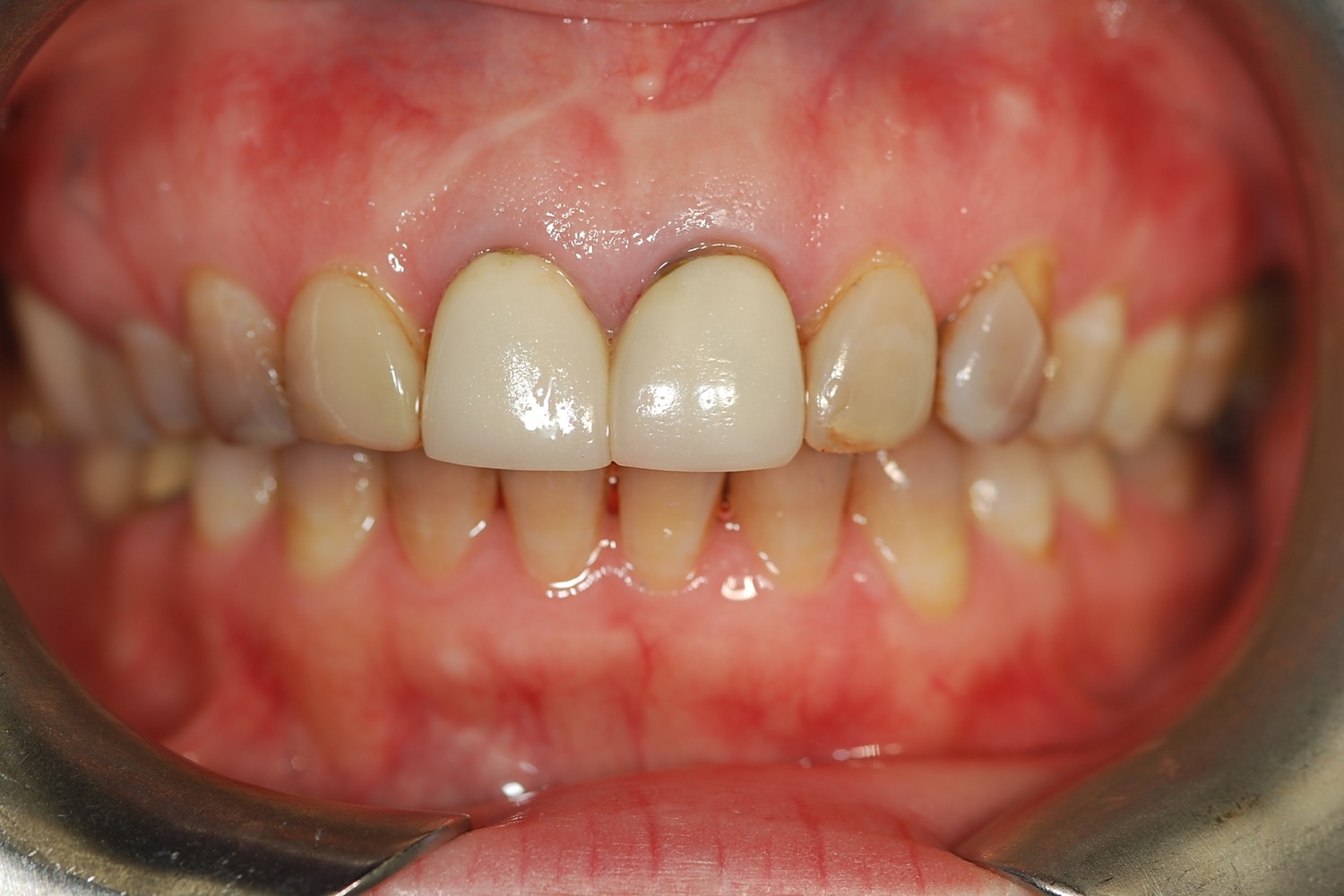 Before
 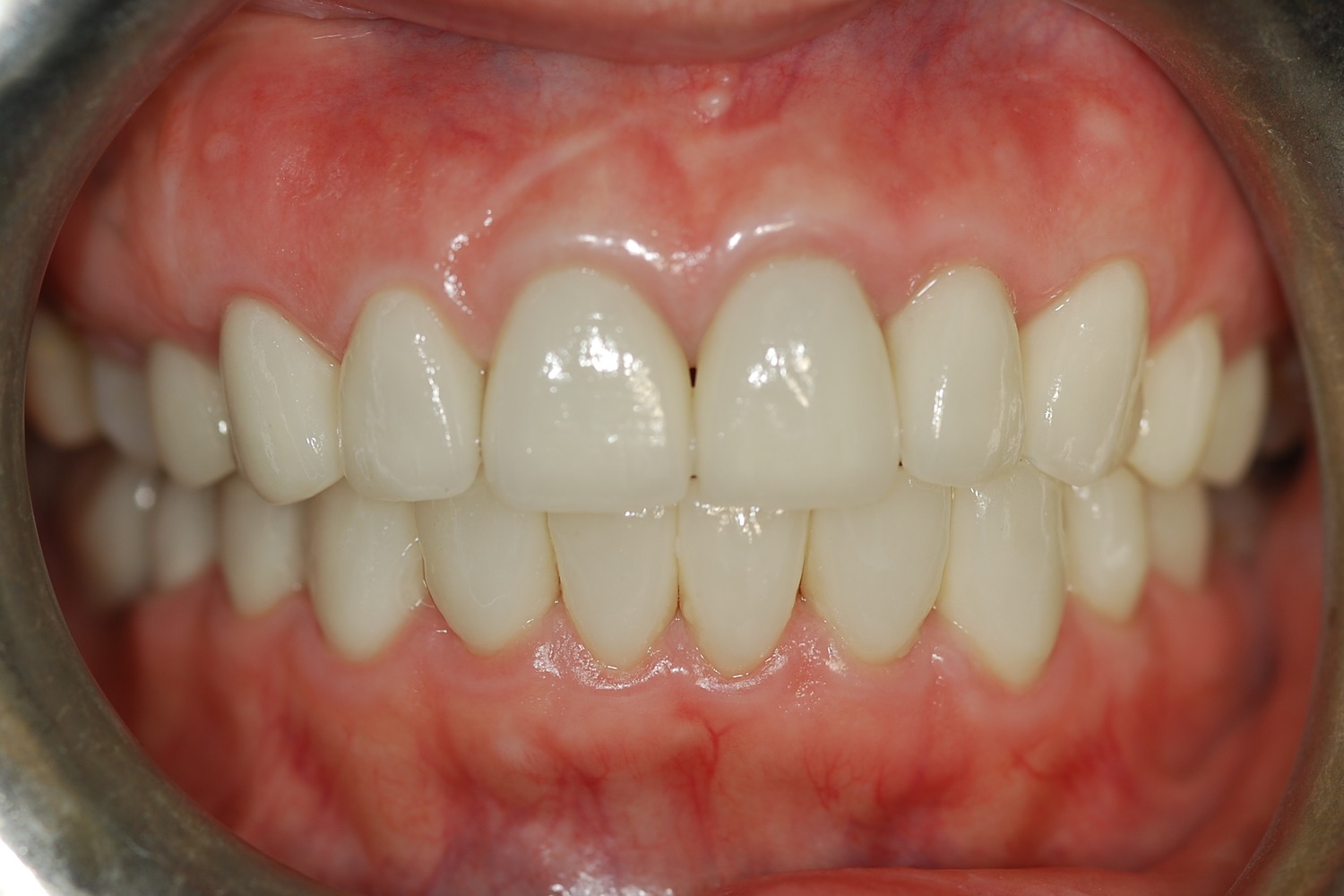 After
After How Aging, Opaque Restorations Were Replaced with Customized Ceramic Restorations Designed for Long-Term Natural Esthetics
The existing restorations appeared opaque, worn, and unnatural over time, affecting both confidence and overall smile harmony.

Temporary Crowns Restore a Patient's Smile in One Day with an Immediate Smile Makeover
A patient from Potomac, Maryland came to the practice in pain from a failing dental implant whose restoration was also compromising her appearance and her confidence.
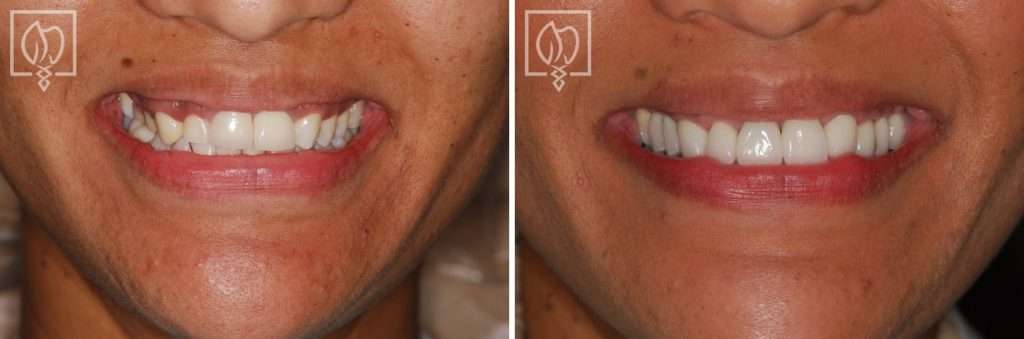
Multi-Faceted Treatment for a Patient Unhappy With the Appearance of Her Crowns, Teeth, and Gums
The patient was unhappy with how her teeth and gums affected her smile: front-tooth crowns that no longer blended with her natural teeth, a missing lateral incisor with the larger canine sitting in its space, and an uneven gum line.
Related Articles
Deepen your knowledge with additional insights on this topic.
 Cosmetic Dentistry
 Can My Tetracycline-Stained Teeth Be Made to Look Beautiful?
Tetracycline staining sits deep inside the tooth, so bleaching cannot fix it. See how translucent porcelain crowns create a bright, natural smile instead.
 Cosmetic Dentistry
 How Is a Gummy Smile Fixed?
From gum reshaping to custom crowns, a DC prosthodontist explains how a gummy smile is fixed, with a real patient transformation and healing timeline.
 Cosmetic Dentistry
 Discovering Cosmetic Dentistry Beyond Aesthetics
Cosmetic dentistry improves more than looks: easier hygiene, restored chewing function, and better long-term oral health. A DC prosthodontist explains.