
Precision Replacement of Your Front Tooth with a Dental Implant and Crown
Losing a front tooth is one of the most unsettling experiences in dentistry, and replacing one is among the most demanding. Every millimeter of the result is public. Done with precision, a dental implant and crown can replace a failing front tooth so convincingly that no one, including you, gives it a second look. This article explains the workflow that makes that possible.
Having placed more than 3,900 dental implants, Dr. Gerald Marlin approaches front tooth replacement with a combination of surgical and prosthetic precision, with each step building on the one before.
When Is Front Tooth Replacement Necessary?
Root canal (endodontic) failure, trauma, and bone loss from periodontal disease are the common paths to losing a front tooth. When emergency treatment cannot salvage the tooth, replacement with an implant and crown is usually the most complete solution, because it restores the root as well as the tooth and preserves the jawbone beneath.
When the failing tooth is still in place, treatment typically begins with a gentle extraction and a bone graft to preserve the socket. Whenever conditions allow, a temporary replacement tooth is attached the same day, so there is no moment when the gap shows. Whether that same-day temporary is possible depends on your bone and the stability achieved at surgery; it is a clinical decision, never a promise made in advance. If you are still weighing whether and how to act on a failing front tooth, our companion piece on the decision journey of replacing a failing front tooth walks through the options and timeline.
The Precision Workflow, Step by Step
It starts on the scan, not in the mouth. Before surgery, we perform a virtual “surgical insertion” on your CBCT (cone beam CT) scan, positioning the implant beneath the exact spot the future crown requires. A surgical guide fabricated from that plan then transfers the position into the mouth, ensuring the implant is placed at precisely the correct angle and depth.
The abutment does the quiet work. The abutment, the connector that holds the crown to the implant, must be custom shaped with a perfect emergence profile so the gum drapes around it exactly as it would around a natural root. This is the difference between a crown that appears to grow from the gum and one that merely sits on it.
The crown is an optical instrument. A front tooth is translucent; light enters it and glows back. The final crown must be built with internal coloration and enough translucency to match the adjacent teeth in all lights, which is exacting, artistic work performed by the technician in our in-house laboratory, working alongside Dr. Marlin rather than at a distant commercial facility.
Dr. Marlin Replaces a Front Tooth with a Dental Implant and Crown
The Workflow in Practice
One of our patients, a young woman of twenty-three, first came to us as a teenager with a failing maxillary central incisor. The tooth was removed and replaced with a bone graft and a removable appliance that served as her temporary tooth, because implants must wait until growth is complete. Once she had stopped growing, we inserted the implant using a CT-scan-generated surgical guide, placing it at the planned depth and angulation, then attached an abutment and crown fabricated by our in-house technician. The result restored her smile completely. You can see a similar outcome, with full clinical photographs, in our case study of replacing a discolored front tooth with a precision-placed implant.
Get Your Front Tooth Replaced with Precision
Whether your front tooth failed suddenly or you have been quietly living with one you know is on borrowed time, precise replacement is worth doing once and correctly. Call 202-244-2101 or request a consultation with Dr. Marlin at Elite Prosthetic Dentistry in Friendship Heights, Washington, DC. Virtual consultations are also available.
See How We Resolve These Problems
Our patient success stories show real cases and real results. Browse outcomes from a specialist prosthodontist with decades of experience and 3,900+ implants placed.
Key Takeaways
- ✓ Front tooth replacement is the most precision-demanding work in implant dentistry: the result is judged every time you smile.
- ✓ The workflow is engineered in sequence: virtual surgical insertion on a CT scan, guided placement at the exact angle and depth, then a custom abutment and crown.
- ✓ The abutment's emergence profile, the contour where it meets the gum, decides whether the crown looks like a tooth or a repair.
- ✓ The crown must be built with internal coloration and translucency matched to your adjacent teeth, which is where an in-house laboratory earns its keep.
- ✓ When conditions allow, a temporary tooth can be attached the same day as extraction, so you are never seen without a front tooth.
Frequently Asked Questions
How is a front tooth implant different from a back tooth implant?
Mechanically they are similar; aesthetically they are different worlds. A front tooth implant sits in the smile zone, where the gum line, the crown's emergence from the gum, and the way light passes through the porcelain are all on permanent display. The tolerances are tighter, and the planning must be crown-first.
What makes the emergence profile so important?
The emergence profile is the contour of the abutment and crown where they rise out of the gum. Get it right and the gum drapes naturally, exactly as it does around a real tooth. Get it wrong and the gum recedes or bunches, the crown looks artificial at the margin, and the site becomes harder to keep clean.
Will I be without a front tooth during treatment?
Our goal is that you never appear in public missing a front tooth. Depending on your bone and the stability achieved at surgery, a temporary replacement can often be attached the same day as the extraction or implant placement. When biology requires staging, a natural-looking interim tooth covers the site while everything heals.
How long does a front tooth implant take from start to finish?
It varies with your anatomy. When bone is healthy, placement to final crown commonly spans a few months while the implant integrates. If the site needs a bone graft first, or if a young patient must finish growing, the timeline extends. The sequence is dictated by biology, and respecting it is what makes the result permanent.
Related Patient Success Stories
Explore similar patient success stories demonstrating our expertise in advanced prosthetic dentistry.
 Before
  After
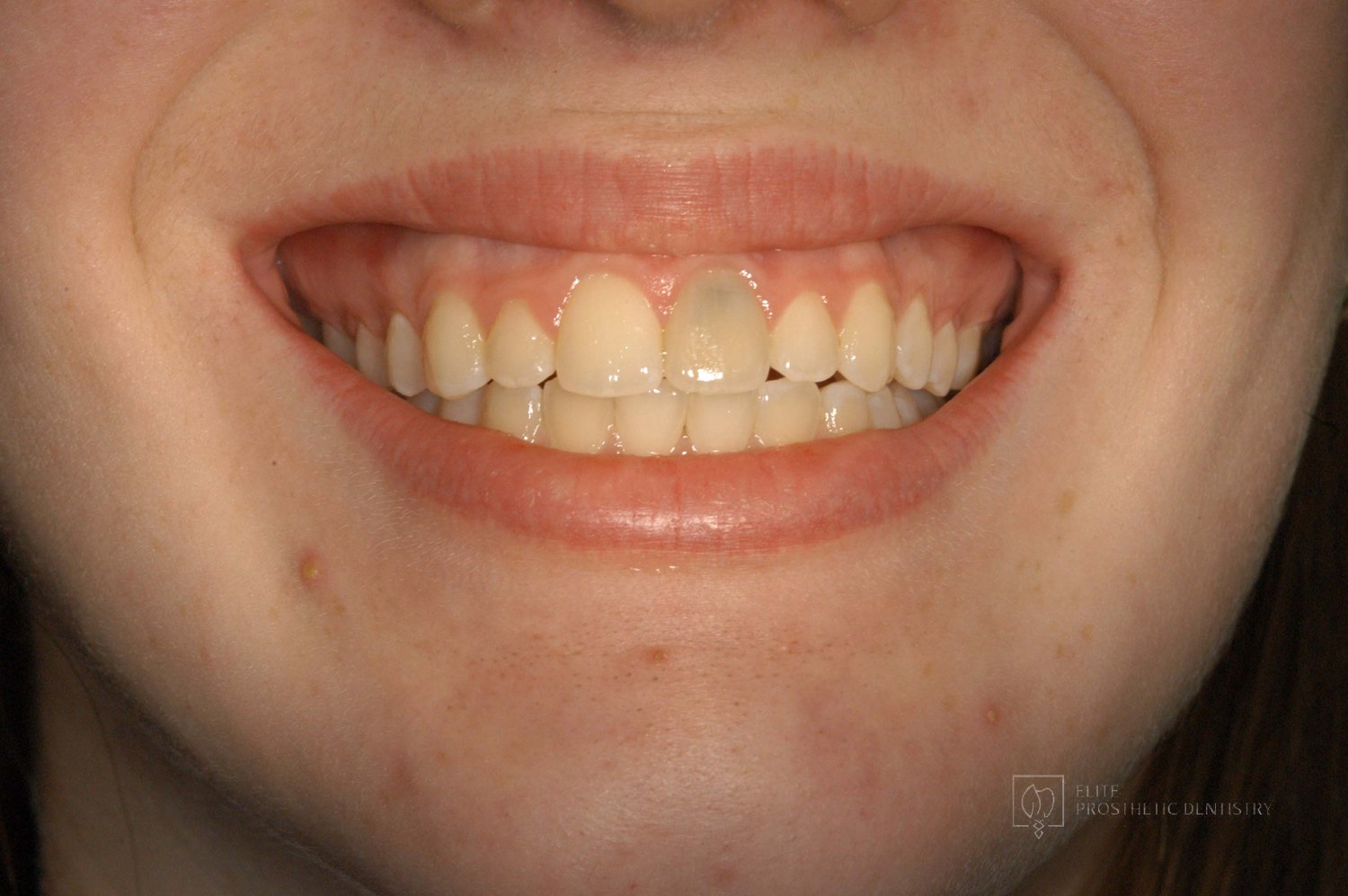
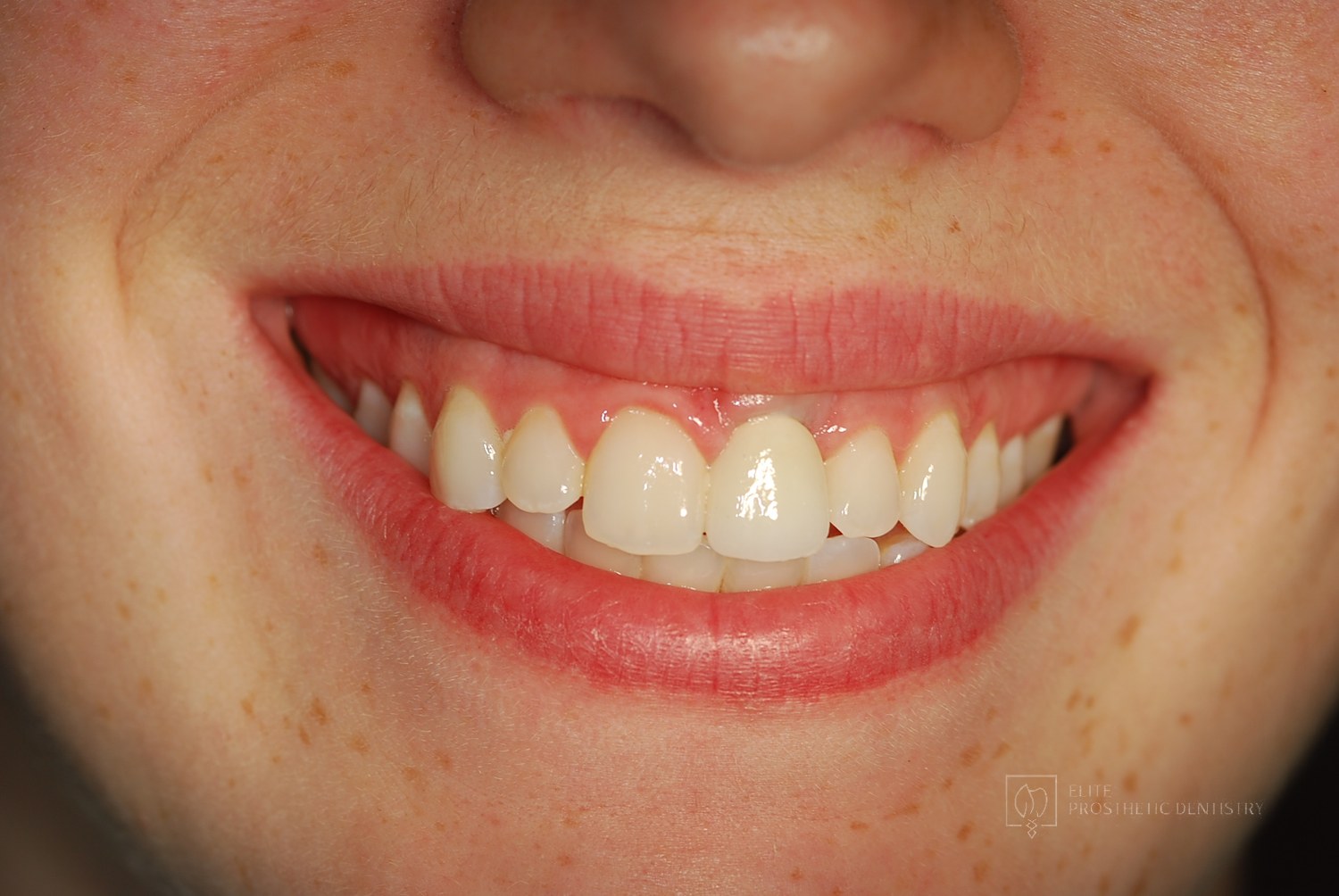
After How a Front Tooth Lost to Childhood Trauma Was Rebuilt with Bone Grafting and a Long-Lasting Implant
A teenager was referred by her father after earlier trauma left her upper left front tooth slowly failing from root resorption. She was still growing, so an immediate implant was the wrong move. The tooth had to be maintained to buy time, then replaced correctly once she reached skeletal maturity.
 Before
  After
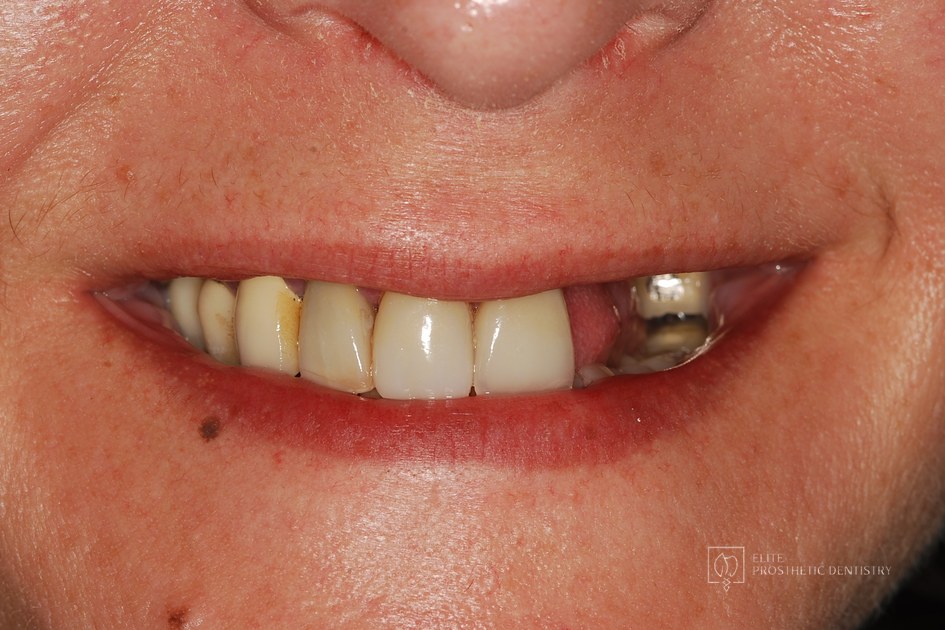
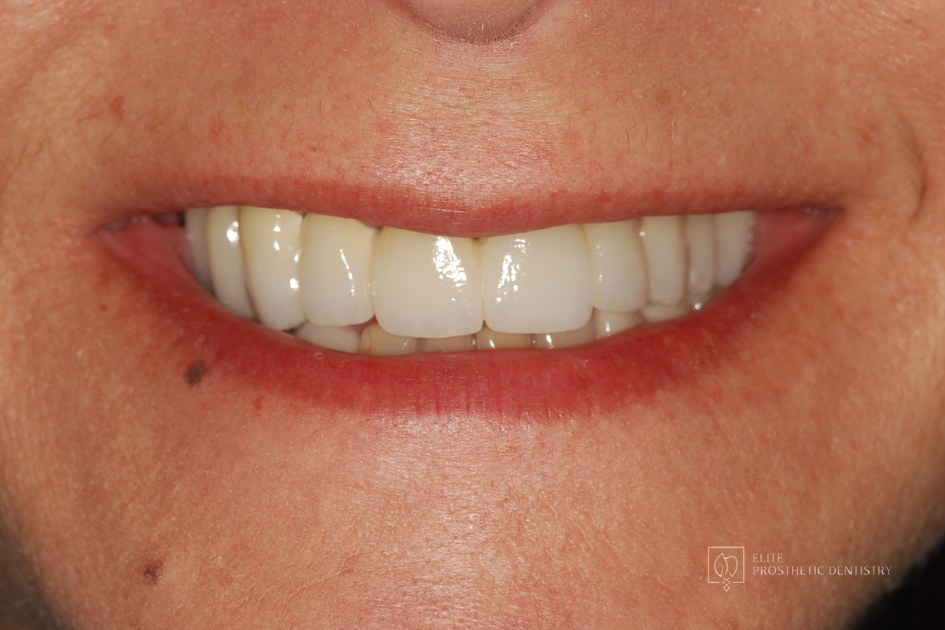
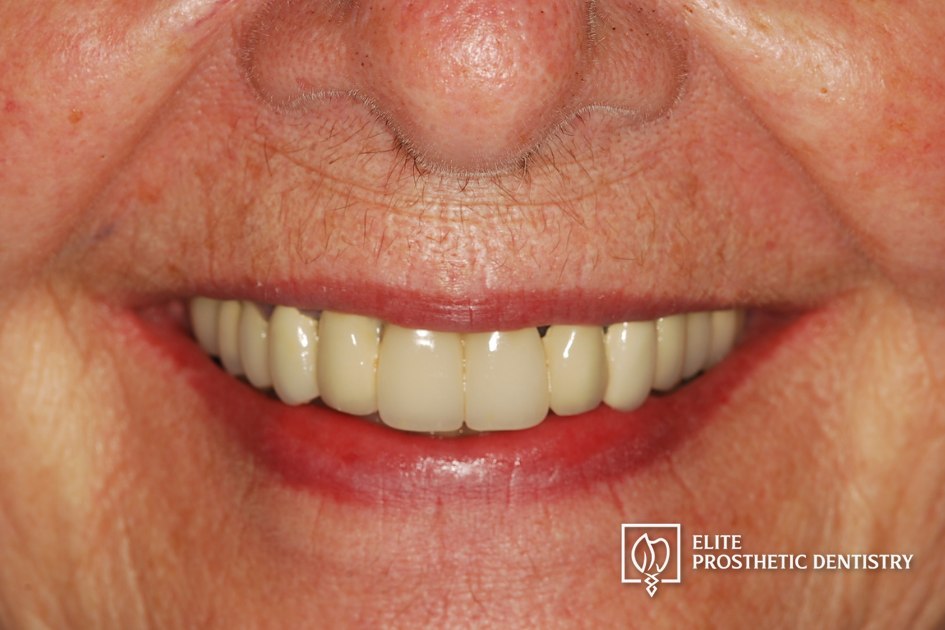
After Implant Supported Reconstruction: Failing Bridgework and Missing Back Teeth Rebuilt with Coordinated Specialist Care
Referred by another dental specialist with severe bone resorption on the upper left, multiple broken-down lower teeth requiring extraction, and failing lower back teeth that had left the bite without solid support. No single procedure, and no provider working in isolation, could rebuild a situation this interconnected.
 Before
  After
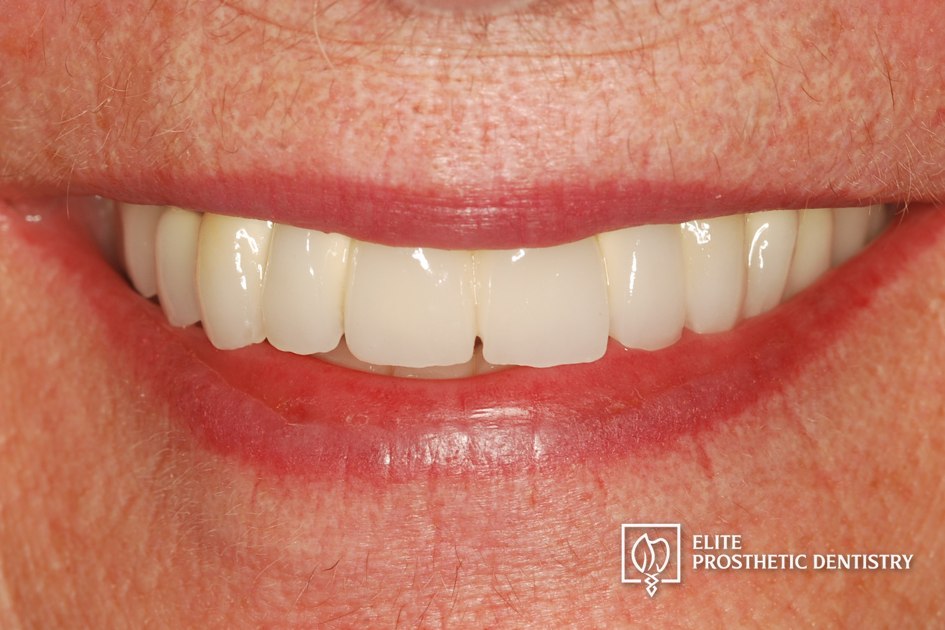
After How a Loose Upper Bridge and Aging Crowns Were Rebuilt with Staged Implant Reconstruction
A patient referred by her general dentist after years of aging dentistry no longer holding up. A loose upper bridge and crowns more than twenty years old, combined with the effects of advanced periodontal disease and severely compromised tooth abutments, required a staged surgical and restorative plan delivered with comfort planning at the same time.
Related Articles
Deepen your knowledge with additional insights on this topic.
 Bone Grafting & Surgical
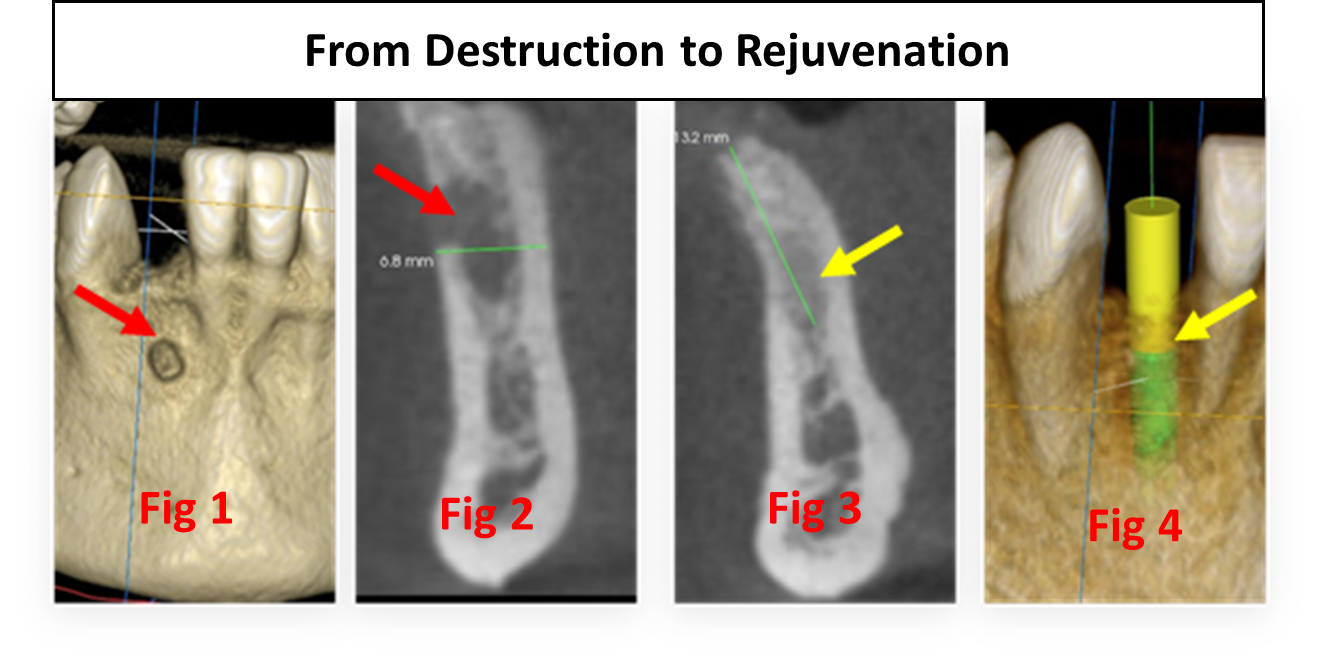
 Rebuilding a Ruined Implant Site with Severely Damaged Bone: The Three-Stage Protocol
Debridement, growth-factor grafting, CBCT-guided planning: the step-by-step protocol that turns a severely damaged implant site into a healthy ridge.
 Bone Grafting & Surgical
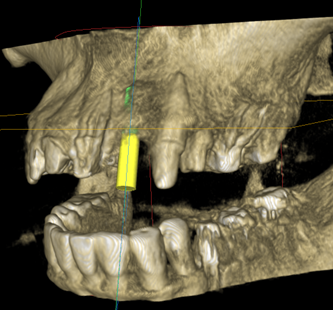
 What Is Ridge Augmentation Bone Grafting?
Ridge augmentation rebuilds a jaw ridge too narrow or angled for an implant. See real measurements from planning to precise placement. Washington DC.
 Bone Grafting & Surgical
 What Is a Partial (Internal) Sinus Lift?
A partial (internal) sinus lift adds bone at a single implant site through the implant preparation itself, often with the implant placed the same visit.